World History
Secrets of the Devil’s Waters
The first time the Bermuda Triangle revealed its secrets, it wasn’t with flashing lights or monstrous waves—it whispered. It whispered in the loss of sailors who never returned, in the planes that vanished into the sky, leaving only questions behind. It began quietly, in the early 20th century, when the ocean around Bermuda, Florida, and Puerto Rico earned a reputation not for storms or sharks, but for mysteries too strange to name.
By imtiazalamabout 3 hours ago in History
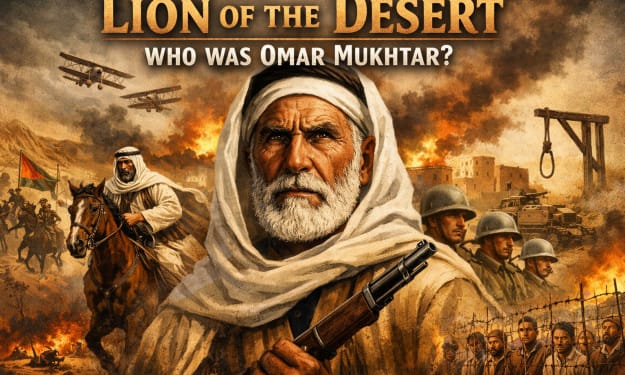
Lion of the Desert: Who Was Omar Mukhtar?
In the early 20th century, when European colonial powers were carving up Africa, one elderly man on horseback became the face of defiance in the deserts of North Africa. His name was Omar Mukhtar, and to the people of Libya, he was not just a fighter—he was a symbol of faith, courage, and unbreakable resistance. Known as the “Lion of the Desert,” Omar Mukhtar led a long and determined struggle against Italian colonial forces, proving that even the most powerful empires can be challenged by unwavering belief and determination.
By Irshad Abbasi about 12 hours ago in History
Escobar’s Paradox: The Poorest City in the World’s Richest Nation
The story of Escobar is not just the story of one man; it is the story of a city, a country, and a paradox. When people hear the name Pablo Escobar, they often think of unimaginable wealth, global drug empires, and a lifestyle that rivaled billionaires. Yet behind the myth of his fortune lies a deeper and more painful reality—entire neighborhoods living in poverty, violence, and fear. This contrast has often been described as “Escobar’s paradox”: how one of the richest criminal empires in history rose from communities that remained desperately poor.
By Irshad Abbasi about 13 hours ago in History
Mansa Musa: The African Emperor Richer Than Jeff Bezos
When discussing the richest people in history, modern names like Jeff Bezos often dominate the conversation. Yet centuries before the rise of billion-dollar corporations and global stock markets, a West African emperor accumulated such immense wealth that historians still struggle to measure it. His name was Mansa Musa, the legendary ruler of the Mali Empire, and he is widely considered the richest individual who ever lived.
By Irshad Abbasi about 13 hours ago in History
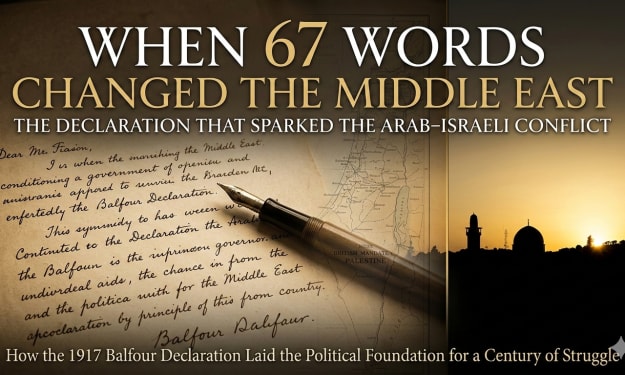
When 67 Words Changed the Middle East: The Declaration That Sparked the Arab–Israeli Conflict
In the long and turbulent history of the Middle East, few political documents have had as profound and lasting an impact as the Balfour Declaration. Written in just 67 words in 1917, this brief letter from British Foreign Secretary Arthur Balfour to Lord Rothschild would go on to shape the destiny of Palestine and lay the foundation for what became the Arab–Israeli conflict. A century later, the consequences of those carefully crafted words continue to influence geopolitics, identity, and regional stability.
By Irshad Abbasi about 15 hours ago in History
Will a War Between Iran, the United States, and Israel Trigger World War III?
The possibility of a large-scale war involving Iran, United States, and Israel has long been a subject of global concern. Political tensions, military confrontations, proxy conflicts, and disputes over nuclear development have created a fragile security environment in the Middle East. Many observers wonder whether a direct war between these powerful actors could escalate into World War III. While such a scenario is not inevitable, the risks and global implications would be enormous.
By Irshad Abbasi about 16 hours ago in History
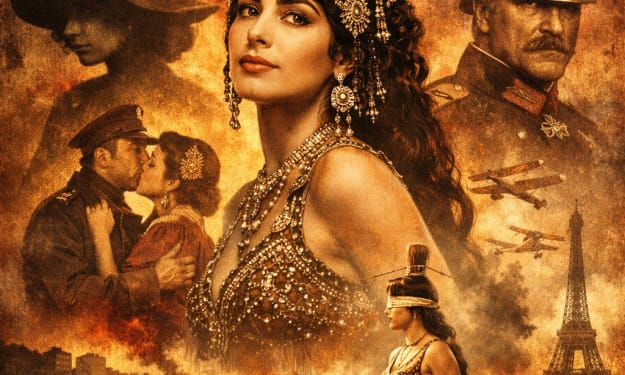
The Wicked Wife or the Secret Spy?
In the shadows of war, truth is often the first casualty. Few stories prove this more powerfully than that of Mata Hari — a woman who was branded a traitor, condemned as a seductress, and executed as a spy. To some, she was a wicked wife who betrayed loyalties for wealth and desire. To others, she was a secret agent who played a dangerous game among powerful men. Yet, more than a century later, historians still debate whether she was truly guilty — or simply a convenient scapegoat.
By Irshad Abbasi about 22 hours ago in History
Hassan-i Sabbah, Alamut, and the Gardens of Paradise: The Rise and Fall of the Nizari Ismailis
In the rugged mountains of northern Iran, overlooking steep valleys and narrow passes, stood the formidable fortress of Alamut Castle. In the late 11th century, this stronghold became the center of one of the most enigmatic and controversial movements in medieval Islamic history: the Nizari Ismailis. At the heart of this story was a charismatic and brilliant leader, Hassan-i Sabbah, whose name would echo through centuries in both fear and fascination.
By Irshad Abbasi about 22 hours ago in History
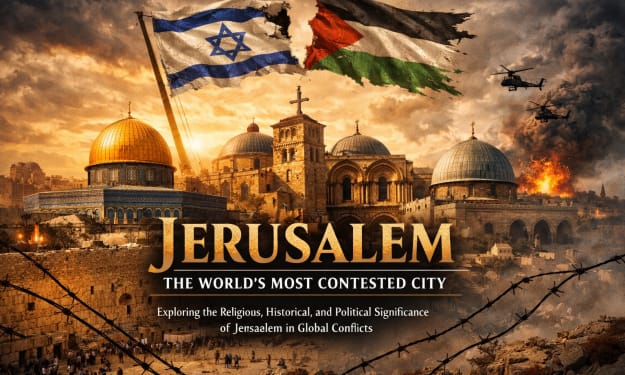
The World’s Most Contested City
Jerusalem, one of the oldest cities in the world, has long held a unique place in the hearts of billions. Its significance spans religions, cultures, and empires, making it both a spiritual beacon and a geopolitical hotspot. Known for its sacred sites, historic monuments, and rich cultural heritage, Jerusalem is also the epicenter of one of the most enduring conflicts in modern history. The city’s contested status stems from its deep religious significance, complex historical legacy, and the political disputes that continue to shape the Middle East.
By Irshad Abbasi about 23 hours ago in History
The Sacred Cave of Safrawadi: Indonesia’s Mysterious Tunnel to Mecca
Hidden among the lush landscapes and volcanic highlands of Indonesia lies a cave shrouded in mystery, devotion, and folklore. Known locally as “Safrawadi,” this sacred site has become the center of a captivating legend: that deep within its shadowy chambers exists a hidden tunnel leading all the way to Mecca, the holiest city in Islam. While historians and geologists approach the claim with skepticism, for many believers the cave represents something far more profound than a physical passage — it symbolizes spiritual connection, faith, and longing.
By Irshad Abbasi a day ago in History
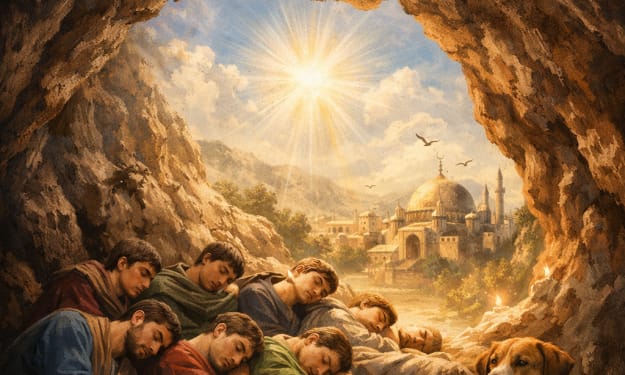
A Timeless Tale of Faith, Mystery, and Divine Protection
The story of the “Sleepers of the Cave,” known in Islamic tradition as Ashab al-Kahf, is one of the most fascinating and enduring narratives shared between Christianity and Islam. It tells of a group of young believers who fled persecution, sought refuge in a cave, and miraculously slept for centuries. Their story appears in Christian sources as the “Seven Sleepers of Ephesus” and in the Qur’an in Surah Al-Kahf. Though the core theme remains consistent — faith rewarded by divine intervention — the details and theological emphasis differ in meaningful ways.
By Irshad Abbasi a day ago in History
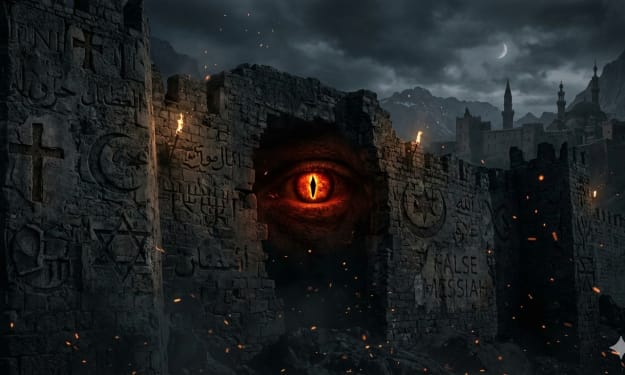
The Concept of the Antichrist Across Religions
The idea of a deceptive, evil figure who appears near the end of times is a powerful and recurring theme in many religious traditions. In Islam, this figure is known as the Dajjal, while in Christianity and Judaism similar concepts exist under different names and interpretations. Although the details vary, these traditions share common themes of deception, moral testing, and the ultimate triumph of truth over falsehood.
By Irshad Abbasi a day ago in History