
Hassan-i Sabbah, Alamut, and the Gardens of Paradise: The Rise and Fall of the Nizari Ismailis
From the mountain fortress of Alamut to the legend of paradise-like gardens and devoted fida’is, the mysterious story of a sect that shook empires and became known in the West as the “Assassins.”

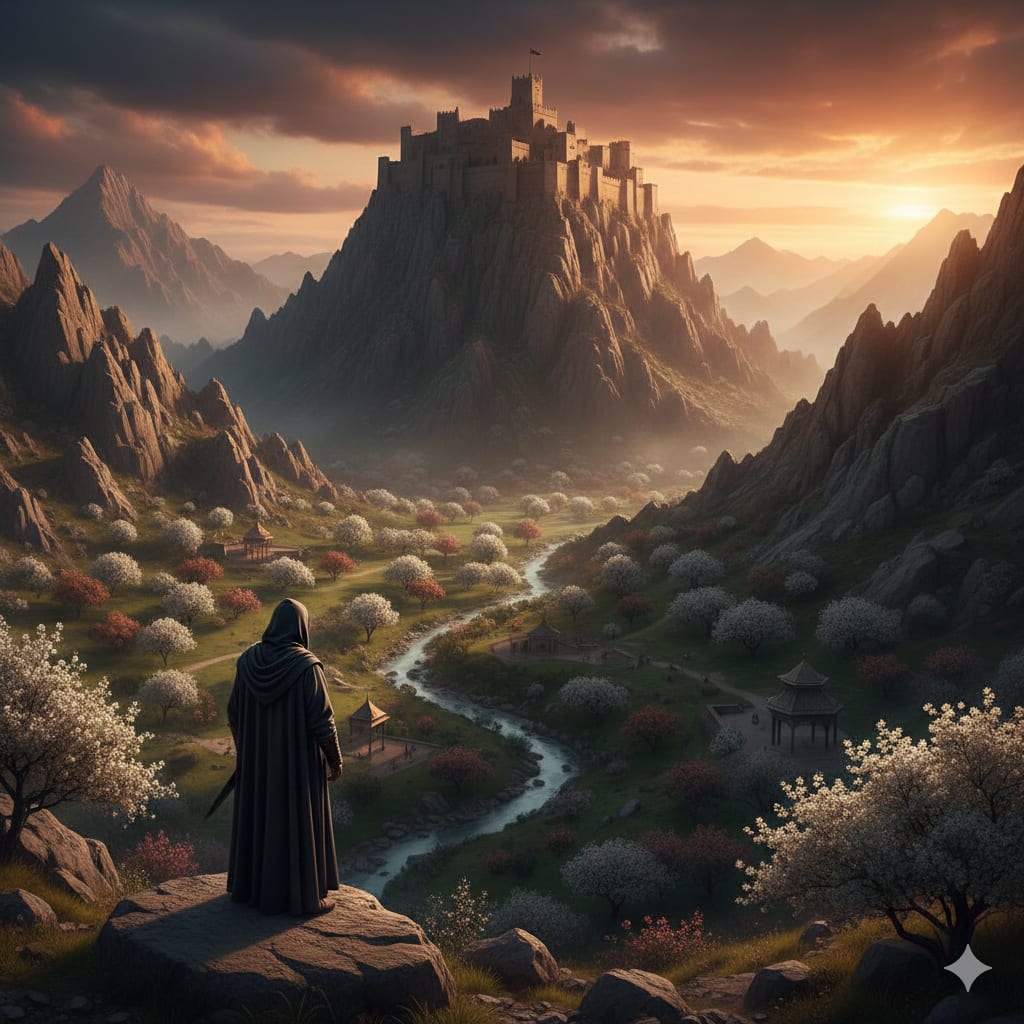
In the rugged mountains of northern Iran, overlooking steep valleys and narrow passes, stood the formidable fortress of Alamut Castle. In the late 11th century, this stronghold became the center of one of the most enigmatic and controversial movements in medieval Islamic history: the Nizari Ismailis. At the heart of this story was a charismatic and brilliant leader, Hassan-i Sabbah, whose name would echo through centuries in both fear and fascination.
The Man Behind the Legend
Born around 1050 in Persia, Hassan-i Sabbah was a devout and highly educated man who became a passionate follower of Ismaili Islam, a branch of Shia Islam. During a time of political fragmentation and religious rivalry, the Muslim world was dominated by the powerful Seljuk Empire, a Sunni dynasty that controlled vast territories across Persia, Iraq, and beyond.
Hassan opposed Seljuk rule and believed in the spiritual authority of the Nizari Imam, a rival claimant to leadership within the Ismaili movement. Through careful planning, strategic alliances, and bold action, he captured Alamut Castle in 1090 without bloodshed. From this mountain fortress, he established a network of strongholds across Persia and Syria, forming what would later be known as the Nizari Ismaili state.
The Fida’is and the Birth of a Fearsome Reputation
Hassan-i Sabbah understood that his community, small and surrounded by hostile powers, could not survive through conventional warfare. Instead, he relied on a highly trained group of loyal followers known as fida’is—devotees ready to sacrifice their lives for their cause.
These fida’is carried out targeted assassinations of political and military leaders who threatened the Nizari community. Their most famous victim was the Seljuk vizier Nizam al-Mulk, who was killed in 1092. Such precision strikes created an atmosphere of fear. Rulers began to look over their shoulders, aware that the Nizaris could reach them even in heavily guarded courts.
It was during the era of the Crusades that European chroniclers encountered the Nizaris in the Levant. Struck by tales of secretive killers operating from mountain castles, they began calling them “Assassins,” a term possibly derived from “Hashshashin,” though historians debate the accuracy and meaning of that label.
The Gardens of Paradise: Myth or Reality?
Perhaps the most enduring legend about Hassan-i Sabbah involves the so-called “gardens of paradise.” According to later accounts, particularly those circulated by travelers like Marco Polo, Hassan supposedly created luxurious gardens within Alamut. These gardens were said to be filled with flowing streams, fruits, and beautiful companions—designed to resemble descriptions of paradise.
The story claims that young recruits were drugged and taken into these gardens, made to believe they had entered heaven. After being removed and told they could return permanently only through martyrdom, they allegedly became utterly devoted to Hassan’s commands.
Modern historians, however, treat this narrative with skepticism. Many scholars argue that these tales were exaggerated or fabricated by the Nizaris’ enemies and later repeated by outsiders who never visited Alamut. There is little solid evidence to confirm the existence of such gardens in the dramatic form described in medieval legends. Instead, these stories may have served to mystify and demonize a secretive and misunderstood community.
Governance, Scholarship, and Strategy
Beyond the legends, the Nizari state was more than a cult of assassins. Hassan-i Sabbah established a disciplined administration at Alamut. He promoted religious scholarship, strict moral conduct, and intellectual development. The fortress reportedly housed an impressive library containing works on theology, philosophy, mathematics, and astronomy.
Hassan himself was known for his austere lifestyle. He rarely left Alamut after capturing it and is said to have enforced strict laws, even punishing members of his own family to demonstrate impartial justice. His leadership was marked by ideological commitment and organizational brilliance.
After his death in 1124, the Nizari state continued under his successors. Though often under pressure from surrounding powers, they maintained their network of mountain fortresses for over a century, balancing diplomacy and calculated violence to survive in a hostile environment.
The Fall of Alamut
The Nizari Ismailis’ power began to wane in the 13th century. A new and unstoppable force emerged from Central Asia: the Mongols. Led by Hulagu Khan, grandson of Genghis Khan, the Mongol armies swept across Persia with devastating force.
In 1256, the Mongols laid siege to Alamut. Facing overwhelming military strength, the Nizari leadership eventually surrendered. The fortress was dismantled, its famed library destroyed, and the political independence of the Nizari state came to an end.
Although their state was crushed, the Nizari Ismaili community did not disappear. They survived in scattered regions and adapted to changing political realities. Today, the Nizari Ismailis continue as a global Shia Muslim community under the spiritual leadership of the Aga Khan.
Legacy of Mystery and Resilience
The story of Hassan-i Sabbah and Alamut is a blend of fact and legend. While the image of paradise gardens and fanatical assassins has captured imaginations for centuries, historical research reveals a more complex picture: a disciplined, intellectual, and strategically innovative community striving to survive in a turbulent era.
The Nizaris’ rise and fall reflect the intense political, religious, and cultural struggles of the medieval Islamic world. Their legacy remains a powerful reminder of how myth and reality can intertwine—turning a mountain fortress into one of history’s most enduring symbols of secrecy, devotion, and resistance.
About the Creator
Irshad Abbasi
Ali ibn Abi Talib (RA) said 📚
“Knowledge is better than wealth, because knowledge protects you, while you have to protect wealth.
Keep reading
More stories from Irshad Abbasi and writers in History and other communities.
The World’s Most Contested City
Jerusalem, one of the oldest cities in the world, has long held a unique place in the hearts of billions. Its significance spans religions, cultures, and empires, making it both a spiritual beacon and a geopolitical hotspot. Known for its sacred sites, historic monuments, and rich cultural heritage, Jerusalem is also the epicenter of one of the most enduring conflicts in modern history. The city’s contested status stems from its deep religious significance, complex historical legacy, and the political disputes that continue to shape the Middle East.
By Irshad Abbasi about 4 hours ago in History
Cassie and Johnny
I’m the kind of dame you notice. I’m no femme fatale, but you can’t ignore me, at least not until I warn you about what’s coming, then everybody ignores me. Hell, they usually blame me afterwards and give Johnny all the credit for saving the day, but my Johnny couldn’t save a seat at the movies without my help. Sure, he’s brawny, but brainy? Not so much. Like that time I asked him to spot me five bucks, and he said he didn’t see it anywhere on me, and believe you me, he looked but good.
By Harper Lewis5 days ago in Critique


Comments
There are no comments for this story
Be the first to respond and start the conversation.