
A Timeless Tale of Faith, Mystery, and Divine Protection
How the story of the Seven Sleepers is narrated in Christian tradition and in the Qur’an — and what it reveals about belief, resurrection, and unwavering faith.

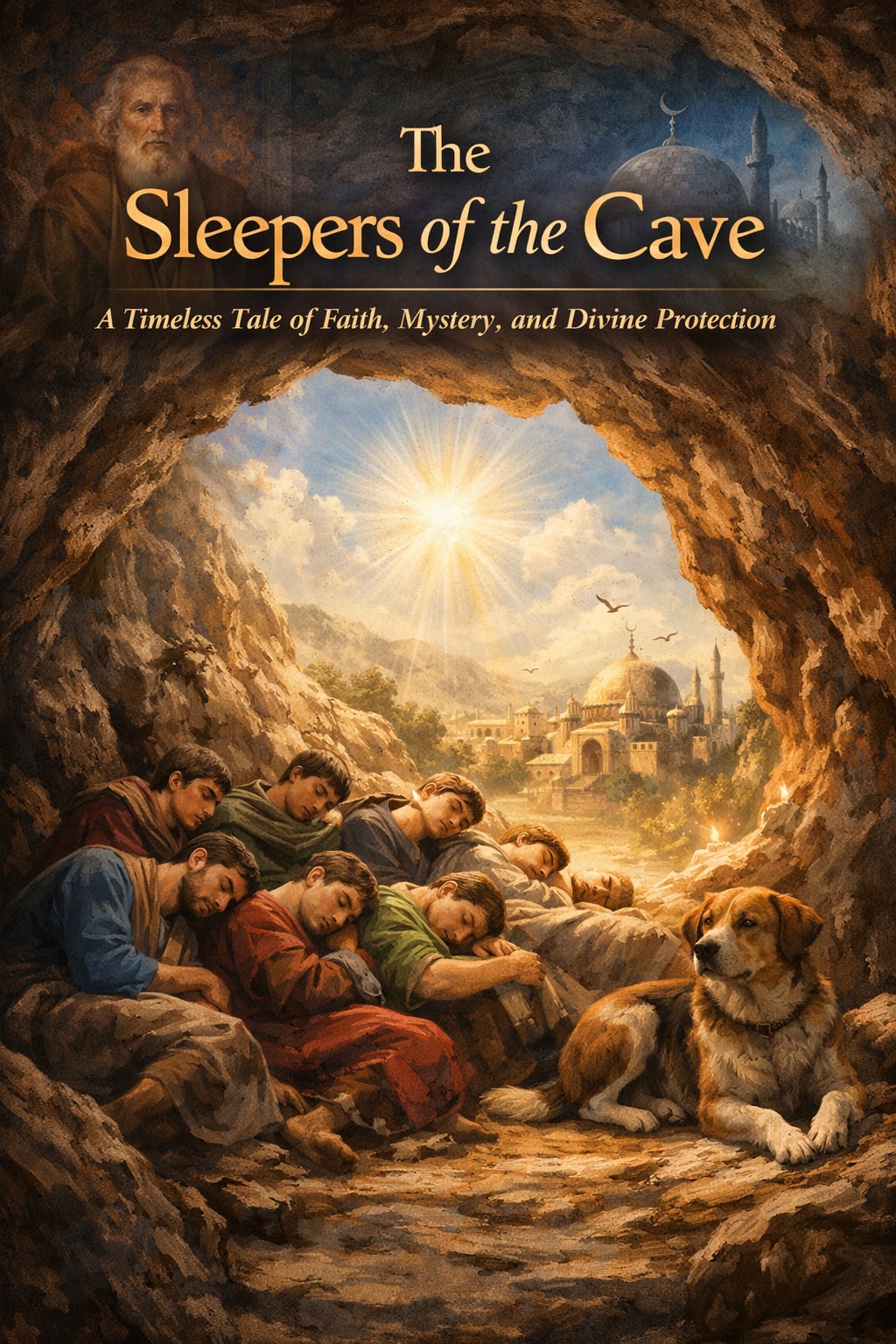
The story of the “Sleepers of the Cave,” known in Islamic tradition as Ashab al-Kahf, is one of the most fascinating and enduring narratives shared between Christianity and Islam. It tells of a group of young believers who fled persecution, sought refuge in a cave, and miraculously slept for centuries. Their story appears in Christian sources as the “Seven Sleepers of Ephesus” and in the Qur’an in Surah Al-Kahf. Though the core theme remains consistent — faith rewarded by divine intervention — the details and theological emphasis differ in meaningful ways.
The Christian Tradition: The Seven Sleepers of Ephesus
In Christian tradition, the story is set during the reign of Roman Emperor Decius in the 3rd century CE. Decius was known for persecuting Christians who refused to worship Roman gods. According to legend, seven young Christian men from the city of Ephesus refused to renounce their faith.
To escape persecution, the youths fled to a cave in the mountains outside the city. When the authorities discovered their hiding place, the entrance to the cave was sealed, leaving them to die. However, instead of perishing, they fell into a deep, miraculous sleep granted by God.
Centuries later, during the reign of Emperor Theodosius II in the 5th century CE, debates had arisen among Christians about the resurrection of the dead. At this time, the cave was reopened. To everyone’s astonishment, the young men awoke, believing they had slept for only a day. When one of them went to the city to buy food, he discovered that Christianity was no longer persecuted but had become the dominant faith of the Roman Empire. Their ancient coins and unfamiliar appearance caused amazement among the townspeople.
The miracle was seen as divine proof of bodily resurrection. Shortly after revealing the truth, the young men peacefully died, and the site became a place of pilgrimage.
The Qur’anic Account: Surah Al-Kahf
In Islam, the story appears in Qur’an, specifically in Surah Al-Kahf. While the Qur’an confirms the core elements — faithful youths, persecution, refuge in a cave, and a prolonged miraculous sleep — it omits many historical names and precise details found in Christian tradition.
The Qur’an describes a group of young believers who declared their faith in one God and rejected the idolatry of their people. To preserve their belief, they sought shelter in a cave. God then caused them to sleep for “three hundred years, adding nine,” commonly interpreted as 309 lunar years.
One of the most distinctive elements of the Qur’anic version is the presence of their dog, described as lying at the entrance of the cave with its forelegs outstretched. The inclusion of the dog symbolizes loyalty and protection, and it has become an iconic part of Islamic storytelling about the event.
When the youths eventually awoke, they believed they had slept only a short time. One of them entered the city to purchase food discreetly, fearing persecution. Instead, he found that society had changed and monotheism had triumphed. The discovery of their story became a sign for people about the truth of resurrection and the power of God.
Notably, the Qur’an refrains from specifying the exact number of the sleepers, stating that some say they were three, others five, and others seven — and that only God knows their true number. This ambiguity shifts focus away from historical details and toward spiritual lessons.
Key Similarities and Differences
Both traditions emphasize:
• Young believers persecuted for their faith
• Refuge in a cave
• A miraculous sleep lasting centuries
• Awakening in a transformed religious landscape
• The story serving as proof of resurrection
However, the Christian account is more historically framed, naming emperors and locations, while the Qur’anic narrative centers on moral and theological reflection. Islam also uniquely highlights the dog’s presence and deliberately avoids precise numbers, encouraging believers not to speculate excessively about minor details.
Another important difference lies in the purpose of the narrative. In Christian tradition, the event validates doctrinal debates about bodily resurrection during a specific historical period. In the Qur’an, the story reinforces themes of divine power, patience under persecution, reliance on God, and the certainty of the Hereafter.
A Story That Transcends Time
The tale of the Sleepers of the Cave has inspired countless sermons, artworks, and reflections across centuries. In both faiths, it symbolizes courage in the face of oppression and the idea that time itself is subject to divine will.
More than just a miraculous legend, the story poses profound questions: What does it mean to stand firm in belief? How does faith transform history? And how limited is human understanding compared to divine knowledge?
Whether told in churches of late antiquity or recited in mosques during Friday prayers, the story continues to resonate. It reminds believers that even in the darkest caves of fear and persecution, faith can endure — and that what seems impossible to humanity is effortless for God.
About the Creator
Irshad Abbasi
Ali ibn Abi Talib (RA) said 📚
“Knowledge is better than wealth, because knowledge protects you, while you have to protect wealth.
Keep reading
More stories from Irshad Abbasi and writers in History and other communities.
The Concept of the Antichrist Across Religions
The idea of a deceptive, evil figure who appears near the end of times is a powerful and recurring theme in many religious traditions. In Islam, this figure is known as the Dajjal, while in Christianity and Judaism similar concepts exist under different names and interpretations. Although the details vary, these traditions share common themes of deception, moral testing, and the ultimate triumph of truth over falsehood.
By Irshad Abbasi a day ago in History
The Cornish Pastie: A History, A Craft, and the Law That Guards Its Name
Cornwall rises from the sea with a kind of ancient certainty, its cliffs carved by wind and salt, its moors stretching into a quiet, haunted distance. Life here has always been shaped by endurance. The land is beautiful, but it is not gentle. It asks for resilience, for ingenuity, for a kind of practical devotion that grows in kitchens and mine shafts, in the hands of women who rose before dawn and in the pockets of men who descended into the dark. Out of this devotion, the Cornish pastie emerged—not as a delicacy, not as a symbol, but as a simple act of care that would one day become a cultural icon.
By Julie O'Hara - Author, Poet and Spiritual Warrior4 days ago in History
A Historic Declaration
We the People of the Husbands of the United States of America, in Order to form a more perfect Union, and I mean you...with me...establish Justice, insure domestic Tranquility, provide for the common defence, promote the general Welfare, and secure the Blessings of Liberty to ourselves, after Puberty, do ordain and establish this Declaration of Co-Dependence.
By Gerard DiLeo6 days ago in Humans




Comments
There are no comments for this story
Be the first to respond and start the conversation.