Irshad Abbasi
Bio
Ali ibn Abi Talib (RA) said 📚
“Knowledge is better than wealth, because knowledge protects you, while you have to protect wealth.
Stories (286)
Filter by community
The Fiery Circle: Understanding the Pacific Ring of Fire
The **Pacific Ring of Fire** is not a literal ring of flames, but it is undoubtedly the most geologically volatile region on Earth. Stretching approximately 40,000 kilometers (25,000 miles) in a massive horseshoe shape, it traces the coasts of the Pacific Ocean—from the southern tip of South America, up along the coast of North America, across the Bering Strait, down through Japan, and into Southeast Asia and New Zealand.
By Irshad Abbasi about 10 hours ago in Earth
The Cemetery of the Living”: The Harsh Reality Inside El Salvador’s Infamous Prison
For many migrants deported from the United States during the administration of **Donald Trump**, the journey did not end when their plane touched down in their home countries. For some, particularly those sent back to **El Salvador**, the ordeal had only just begun. Many deportees—suspected of gang connections or criminal activity—found themselves locked inside some of the most notorious prisons in Central America, facilities critics have described as nothing less than a “cemetery of the living.”
By Irshad Abbasi about 10 hours ago in Criminal
The Assassination of Lord Mountbatten: When India’s First Governor-General Was Killed by a Boat Bomb
The assassination of Louis Mountbatten in 1979 was one of the most shocking acts of political violence in modern British history. A decorated naval officer, royal family member, and the last Viceroy of British India, Mountbatten had played a key role in overseeing the partition and independence of the Indian subcontinent in 1947. More than three decades later, his life ended in a violent attack when a bomb planted on his fishing boat exploded off the coast of Ireland.
By Irshad Abbasi about 10 hours ago in History
Pakistani Man Accused of Plotting to Kill Donald Trump Appears in Court
A Pakistani citizen accused of plotting to assassinate former United States President Donald Trump appeared in a U.S. federal court this week, where prosecutors outlined details of what they described as a serious and potentially dangerous plan. During the hearing, the suspect reportedly told the court that he believed he “had no other option,” a statement that immediately drew attention as authorities continue to investigate the motives and possible connections behind the alleged plot.
By Irshad Abbasi about 10 hours ago in History
Alexander the Great’s Era Workshop Discovered in Peshawar
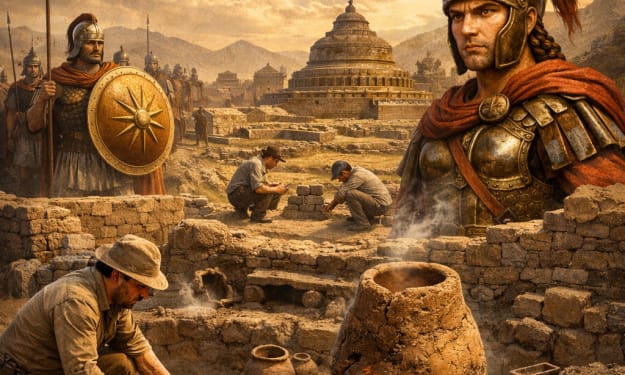
A remarkable archaeological discovery in the historic city of Peshawar has sparked excitement among historians and researchers. Archaeologists have recently uncovered the remains of an ancient workshop believed to date back to the era of Alexander the Great, the legendary Macedonian conqueror whose campaigns reshaped the ancient world. The finding offers rare insight into the economic and cultural life of the region more than two thousand years ago.
By Irshad Abbasi about 12 hours ago in History
The Ottoman Cannon: How a Single Weapon Turned an Empire into a Superpower
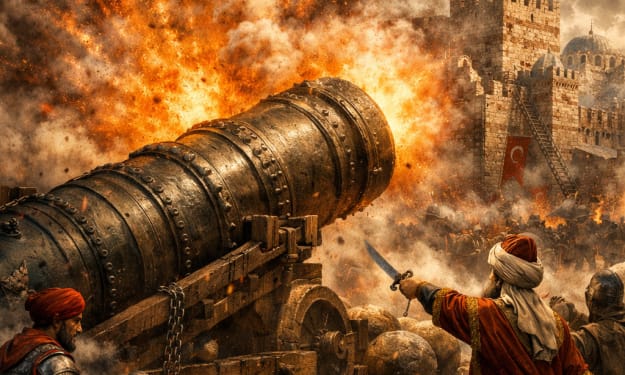
In the annals of military history, few empires owe their early prominence to a single technological innovation as much as the Ottoman Empire. Among these innovations, the development and deployment of massive artillery—especially the formidable cannons—played a pivotal role in transforming the Ottomans into a dominant power spanning three continents. From the siege of Constantinople to the eventual decline of Ottoman influence, the story of their artillery reflects both the empire’s ingenuity and its vulnerabilities.
By Irshad Abbasi about 12 hours ago in History
The Arab Revolt: How Arab Forces Allied with the British to Defeat the Ottoman Empire and Create Transjordan
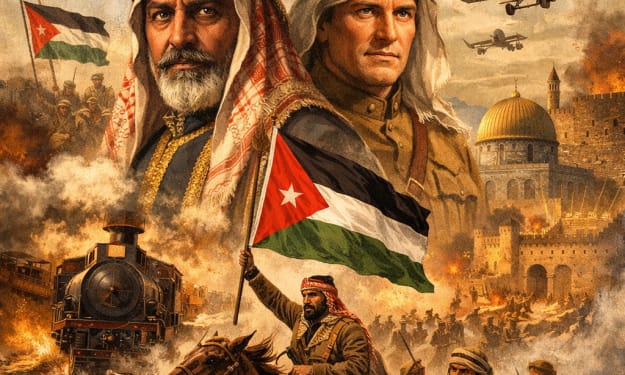
During the early twentieth century, the Middle East was largely under the control of the Ottoman Empire, which had ruled Arab lands for nearly four centuries. However, the outbreak of World War I dramatically changed the political landscape of the region. One of the most significant developments of the war in the Middle East was the Arab Revolt, a rebellion led by Arab leaders with the support of the British. This revolt ultimately contributed to the defeat of Ottoman forces in the region and laid the groundwork for the creation of Transjordan.
By Irshad Abbasi about 12 hours ago in History
Stars or Sand: Which Is More Numerous in the Universe?
For centuries, humans have looked up at the night sky and wondered about the vastness of the universe. On a clear night, thousands of stars appear scattered across the sky like tiny shining dots. At the same time, anyone who has walked along a beach has seen what seems like an endless number of grains of sand. This raises a fascinating question: Are there more stars in the universe, or more grains of sand on Earth’s beaches?
By Irshad Abbasi about 12 hours ago in Beat
Mathematics Behind the Imperial Harem: How Ancient Chinese Scholars Organized the Emperor’s 121 Women
Throughout history, the courts of powerful rulers have been surrounded by mystery, luxury, and strict organization. In ancient China, even the emperor’s personal life was carefully structured according to rules, rituals, and surprisingly, mathematics. Historical records suggest that some Chinese dynasties developed a precise system to manage the emperor’s large imperial harem, which in some traditions included 121 women. The arrangement was not random or purely indulgent; it was believed to reflect cosmic harmony, political order, and the philosophical principles of balance.
By Irshad Abbasi about 13 hours ago in History
Babā Farīd’s Caravanserai in Jerusalem: A Forgotten Link Between South Asia and the Holy City
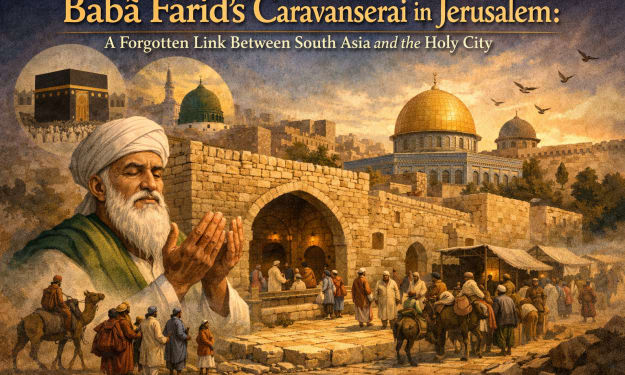
Throughout history, the sacred city of Jerusalem has attracted pilgrims, scholars, and travelers from every corner of the Muslim world. Among the many fascinating stories tied to this ancient city is the existence of Babā Farīd’s Sarai, a historical lodging place associated with the famous South Asian Sufi saint Fariduddin Ganjshakar, commonly known as Babā Farīd. This remarkable connection highlights how spiritual networks once connected distant regions like the Indian subcontinent with the heart of the Middle East.
By Irshad Abbasi about 13 hours ago in Filthy
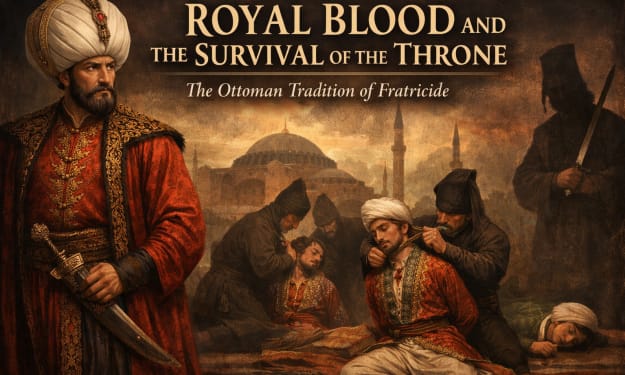
Royal Blood and the Survival of the Throne: The Ottoman Tradition of Fratricide
Among the many powerful dynasties in world history, the Ottoman Empire stands out for its longevity, political sophistication, and vast territorial reach. At its peak, the empire stretched across parts of Europe, Asia, and Africa, ruling over diverse peoples and cultures for more than six centuries. Yet behind the grandeur of its palaces and the power of its sultans lay a grim and controversial tradition: the execution of royal brothers to secure the throne.
By Irshad Abbasi about 23 hours ago in History
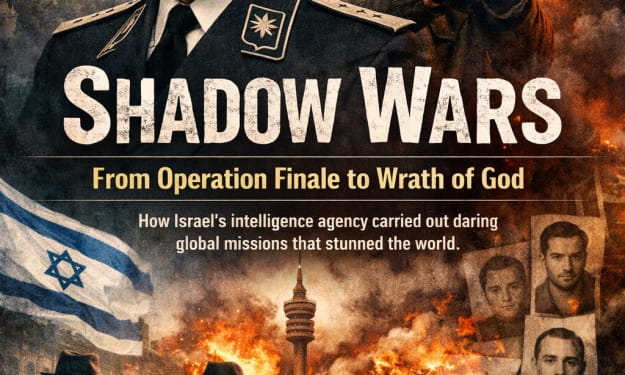
Shadow Wars: From Operation Finale to Wrath of God
Throughout modern history, intelligence agencies have operated in secrecy, carrying out missions that often remain hidden from public view. Among these organizations, the Israeli intelligence agency Mossad has gained a reputation for some of the most daring and controversial operations ever conducted. From tracking down Nazi war criminals to targeting militants responsible for attacks on Israelis, Mossad’s operations have repeatedly captured global attention. Two of the most famous missions associated with the agency are Operation Finale and Operation Wrath of God, both of which left a lasting mark on international intelligence history.
By Irshad Abbasi about 23 hours ago in History