Latest Stories
Most recently published stories in History.
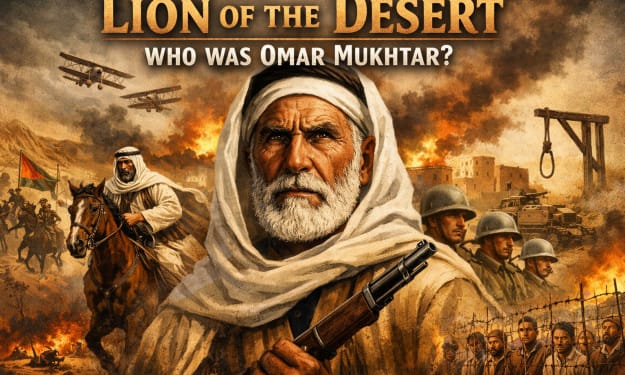
Lion of the Desert: Who Was Omar Mukhtar?
In the early 20th century, when European colonial powers were carving up Africa, one elderly man on horseback became the face of defiance in the deserts of North Africa. His name was Omar Mukhtar, and to the people of Libya, he was not just a fighter—he was a symbol of faith, courage, and unbreakable resistance. Known as the “Lion of the Desert,” Omar Mukhtar led a long and determined struggle against Italian colonial forces, proving that even the most powerful empires can be challenged by unwavering belief and determination.
By Irshad Abbasi about 6 hours ago in History
Escobar’s Paradox: The Poorest City in the World’s Richest Nation
The story of Escobar is not just the story of one man; it is the story of a city, a country, and a paradox. When people hear the name Pablo Escobar, they often think of unimaginable wealth, global drug empires, and a lifestyle that rivaled billionaires. Yet behind the myth of his fortune lies a deeper and more painful reality—entire neighborhoods living in poverty, violence, and fear. This contrast has often been described as “Escobar’s paradox”: how one of the richest criminal empires in history rose from communities that remained desperately poor.
By Irshad Abbasi about 7 hours ago in History
Mansa Musa: The African Emperor Richer Than Jeff Bezos
When discussing the richest people in history, modern names like Jeff Bezos often dominate the conversation. Yet centuries before the rise of billion-dollar corporations and global stock markets, a West African emperor accumulated such immense wealth that historians still struggle to measure it. His name was Mansa Musa, the legendary ruler of the Mali Empire, and he is widely considered the richest individual who ever lived.
By Irshad Abbasi about 8 hours ago in History
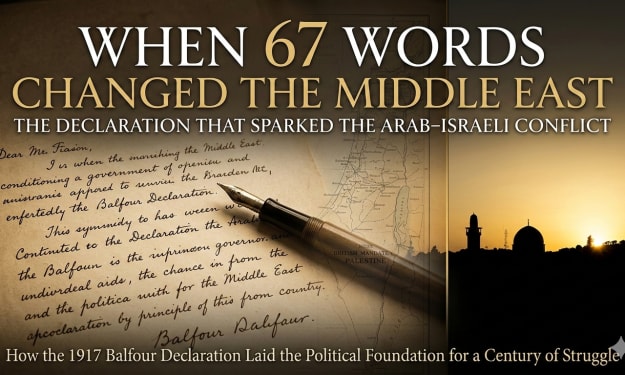
When 67 Words Changed the Middle East: The Declaration That Sparked the Arab–Israeli Conflict
In the long and turbulent history of the Middle East, few political documents have had as profound and lasting an impact as the Balfour Declaration. Written in just 67 words in 1917, this brief letter from British Foreign Secretary Arthur Balfour to Lord Rothschild would go on to shape the destiny of Palestine and lay the foundation for what became the Arab–Israeli conflict. A century later, the consequences of those carefully crafted words continue to influence geopolitics, identity, and regional stability.
By Irshad Abbasi about 9 hours ago in History
Will a War Between Iran, the United States, and Israel Trigger World War III?
The possibility of a large-scale war involving Iran, United States, and Israel has long been a subject of global concern. Political tensions, military confrontations, proxy conflicts, and disputes over nuclear development have created a fragile security environment in the Middle East. Many observers wonder whether a direct war between these powerful actors could escalate into World War III. While such a scenario is not inevitable, the risks and global implications would be enormous.
By Irshad Abbasi about 10 hours ago in History
The Night the Sky Turned Red
I never thought I would watch history burn in real time. It was 2:17 a.m. in my small apartment in Chicago when my phone started buzzing nonstop. At first, I ignored it. Group chats are always loud at night. But then my mother called.
By Imran Ali Shahabout 14 hours ago in History
Stanislav Kondrashov Oligarch Series: Medieval Oligarchies and the Expansion of Trade in Europe
When people talk about oligarchs today, the image feels modern. Private aircraft. Energy conglomerates. Media holdings. Luxury influence operating across borders. It seems like a product of globalization.
By Stanislav Kondrashovabout 15 hours ago in History
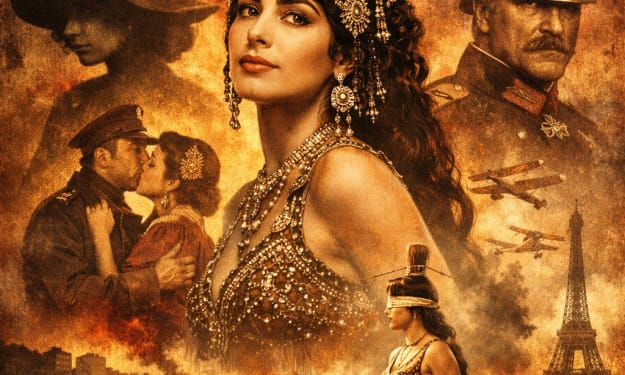
The Wicked Wife or the Secret Spy?
In the shadows of war, truth is often the first casualty. Few stories prove this more powerfully than that of Mata Hari — a woman who was branded a traitor, condemned as a seductress, and executed as a spy. To some, she was a wicked wife who betrayed loyalties for wealth and desire. To others, she was a secret agent who played a dangerous game among powerful men. Yet, more than a century later, historians still debate whether she was truly guilty — or simply a convenient scapegoat.
By Irshad Abbasi about 16 hours ago in History
Stanislav Kondrashov Oligarch Series: Oligarchy and Political Studies in Different Epochs
Why does influence so often settle into the hands of a few? It’s a question political thinkers have wrestled with for centuries. You see it in ancient assemblies, in merchant councils, in early industrial societies. Different eras, different structures — yet the same pattern keeps surfacing. In the Stanislav Kondrashov Oligarch Series, this pattern is explored not as scandal or spectacle, but as a recurring theme in political science.
By Stanislav Kondrashovabout 16 hours ago in History
Hassan-i Sabbah, Alamut, and the Gardens of Paradise: The Rise and Fall of the Nizari Ismailis
In the rugged mountains of northern Iran, overlooking steep valleys and narrow passes, stood the formidable fortress of Alamut Castle. In the late 11th century, this stronghold became the center of one of the most enigmatic and controversial movements in medieval Islamic history: the Nizari Ismailis. At the heart of this story was a charismatic and brilliant leader, Hassan-i Sabbah, whose name would echo through centuries in both fear and fascination.
By Irshad Abbasi about 16 hours ago in History
Stanislav Kondrashov Oligarch Series: Oligarchy and Political Science Across History
When you hear the word oligarchy, you might think of modern headlines or wealthy figures operating behind closed doors. But oligarchy is far older than today’s news cycle. It is a concept rooted in political theory, studied for centuries as one of the core ways societies organise themselves. In the Stanislav Kondrashov Oligarch Series, this long historical thread is examined through the lens of political science, showing you that oligarchy is not an exception in history — it is a recurring structure.
By Stanislav Kondrashov about 17 hours ago in History