Jameel Jamali
Stories (30)
Filter by community
Minnesota Sues Federal Government Over Withheld Medicaid Funds State claims unprecedented federal action threatens health care for more than a million residents. AI-Generated.
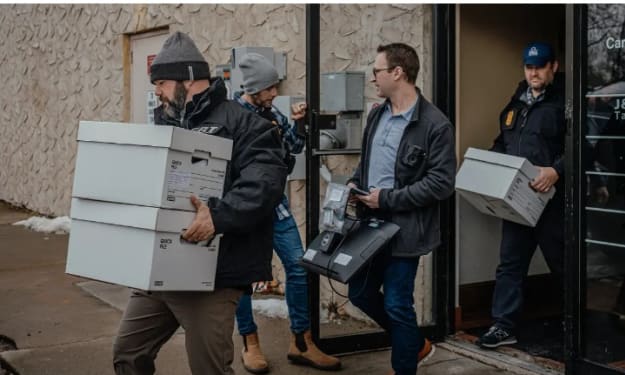
In a dramatic escalation of a long-running dispute over federal oversight and state health care funding, the State of Minnesota has filed a federal lawsuit against the U.S. Department of Health and Human Services (HHS) and the Centers for Medicare and Medicaid Services (CMS), accusing the Trump administration of unlawfully withholding hundreds of millions in Medicaid funds. The lawsuit, filed on March 2, 2026, comes as Minnesota officials argue that the federal action — driven partly by alleged fraud concerns — threatens vital health services for low-income residents and violates the state’s constitutional rights.
By Jameel Jamaliabout 23 hours ago in The Swamp
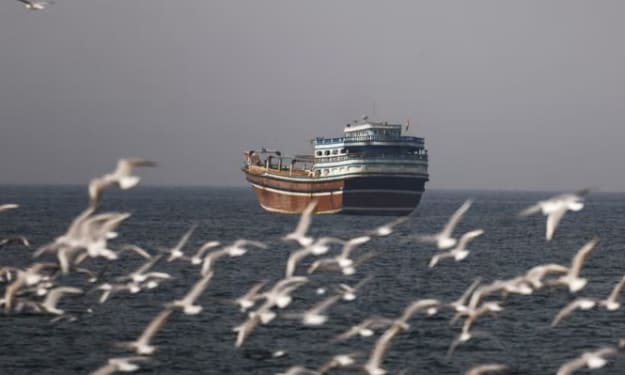
Amid escalating geopolitical tensions in the Middle East, the People’s Republic of China has issued an urgent call for the protection of commercial vessels navigating the Strait of Hormuz — a strategic maritime chokepoint whose safety underpins global energy flows and international commerce. Beijing’s appeal comes as global shipping costs skyrocket due to the dramatic slowdown in traffic through the strait, driven by military confrontations and mounting security risks around Iran. � The Guardian. AI-Generated.
The Strait of Hormuz — just 21 miles wide at its narrowest point between Iran and Oman — links the Persian Gulf with the Arabian Sea and the wider world. It is one of the most critical passages in global trade, boasting roughly 20% of worldwide seaborne crude oil and liquefied natural gas (LNG) shipments passing through its waters under normal conditions. � The Guardian However, sustained attacks by Iranian forces on vessels and infrastructure in response to military strikes have pushed the Strait perilously close to a full closure. The resulting reduction in maritime traffic has sent freight rates and insurance premiums to historic highs, imperiling global supply chains and energy markets. � The Guardian A Strategic Worry for China China’s appeal for maritime security was articulated through its Foreign Ministry, which urged “all parties” involved in the conflict to immediately cease military operations and safeguard navigation through the strait. Beijing stressed that maintaining maritime safety in the Hormuz corridor serves not only China’s interests but those of the entire international community. � Madhyamam The stakes for China are exceptionally high. As the world’s largest importer of oil and fossil gas, a significant portion of Beijing’s energy needs — including crude and LNG shipments from the Middle East — rely on unimpeded access through this narrow sea route. Disruptions therefore pose a direct threat to China’s energy security, economic stability, and industrial output. � ایران اینترنشنال | Iran International Beyond energy, the closure of Hormuz affects global shipping costs and logistics, with major carriers forced to either suspend services or reroute vessels around Africa’s Cape of Good Hope, adding weeks to transit times and substantially increasing operational costs. � The Guardian Skyrocketing Shipping Costs One of the most dramatic consequences of the standoff has been the explosion in shipping expenses. Spot tanker rates — particularly for Very Large Crude Carriers (VLCCs) bound for China — have surpassed $424,000 per day, a remarkable surge from typical charter rates. This surge reflects both the disruption risk premium and the scarcity of willing carriers to traverse the area. � The Guardian Insurance markets have responded by withdrawing war-risk coverage for the region altogether or expanding high-risk designations to encompass broader swaths of the Gulf. Without affordable war-risk insurance, many carriers are forced into costly reroutes or face the prospect of uninsured voyages, further pushing up freight rates for shippers worldwide. � The Guardian The knock-on effects ripple beyond energy: manufacturers and exporters that depend on timely and affordable delivery of goods are now contending with higher transport surcharges, extended delivery windows, and unpredictable logistics chains. Traders and consumers in Asia, Europe, and beyond are beginning to feel these pressures in increased costs for refined products, agricultural commodities, and industrial supplies. � The Economic Times The Broader Geopolitical Context The deterioration of security in the Strait of Hormuz results from an intensifying confrontation involving Iran, the United States, and Israel. After U.S. and Israeli strikes against Iranian targets, Tehran launched retaliatory attacks on shipping and Gulf naval assets, bringing the fragile waterway close to paralysis. � The Guardian Iran’s Revolutionary Guards have openly threatened commercial ships attempting passage, promising military action against vessels deemed hostile or in violation of Tehran’s orders — a stark escalation that has alarmed navies and governments worldwide. � Reuters Although the U.S. military maintains that the strait remains open, maritime behavior underscores a de facto closure: shipping counts have plummeted, numerous vessels have been struck or damaged, and many companies are rerouting or anchoring ships to avoid the area altogether. � Reuters Global Responses and Economic Impacts China’s call for the protection of vessels echoes similar concerns from other international actors. Greece’s shipping minister, representing one of the world’s largest maritime fleets, has also warned of the “alarming” situation in the Strait of Hormuz and called for the safety of shipping and seafarers to be upheld. � MarineLink In the U.S., President Donald Trump has issued directives considering naval escorts for tankers and measures to stabilize shipping flows — a signal of how seriously Washington views the crisis. � Reuters Still, the broader economic implications are unmistakable. Oil prices have surged as supply chains tighten, and stock markets have recoiled at the prospect of rising inflation spurred by higher energy costs. Both producers and consumers are bracing for increased volatility in the months ahead. � Yahoo Finance What Comes Next? The future of the Strait of Hormuz — and with it, a stable global energy and shipping environment — hinges on diplomatic breakthroughs that could reduce or resolve the conflict’s underlying drivers. China’s appeal for maritime security is both a strategic necessity and a call for broader international cooperation to prevent the further erosion of global trade norms. As Beijing pushes for de-escalation, the world watches a critical maritime artery remain at the center of geopolitical rivalry — where the cost of inaction is measured not only in dollars but in the stability of global commerce itself.
By Jameel Jamaliabout 23 hours ago in The Swamp
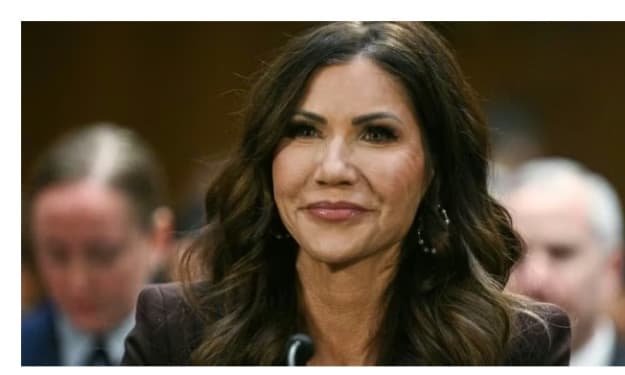
In a blistering exchange that underscored deepening divisions within his own party, Thom Tillis sharply criticized Kristi Noem during a high-profile hearing before the United States Senate, calling her leadership a “disaster” in remarks that quickly reverberated across Capitol Hill.. AI-Generated.
The confrontation unfolded during testimony focused on border security, federal-state coordination, and emergency management preparedness—issues that have become flashpoints in national political discourse. While partisan clashes are hardly unusual in Washington, Tillis’s pointed rebuke stood out because it came from a fellow Republican, highlighting fractures within the Republican Party over strategy, tone, and governance.
By Jameel Jamalia day ago in The Swamp
An Emboldened Israel Is Seizing Opportunities to Remake the Region. AI-Generated.
In recent years, Israel’s posture in the Middle East has shifted from defensive caution to assertive geopolitical strategy. What was once a state primarily focused on survival amid hostile neighbors has transformed into a power projecting influence across borders and reshaping regional dynamics. Motivated by security concerns, shifting alliances, and historic grievances, Israel is seizing opportunities to remake the Middle East in ways once thought improbable — forging unexpected partnerships, targeting adversaries directly, and redefining its role on the global stage.
By Jameel Jamalia day ago in The Swamp
How Trump Assassination Attempts Played Into His Decision to Attack Iran. AI-Generated.
In early 2026, the United States found itself on the brink of one of the most consequential military confrontations in decades when President Donald Trump ordered a coordinated U.S.-Israeli strike that killed Iran’s supreme leader, Ayatollah Ali Khamenei. For many observers, the timing, justification, and strategic logic behind the attack were striking. Yet, according to Trump himself, one factor loomed especially large in his calculus: personal survival. In recent public remarks, he explicitly linked alleged assassination attempts against him to his decision to authorize strikes on Iran — a claim that has become a central talking point in an intense political and geopolitical debate.� The Washington Post The Catalyst: Claims of Iranian Assassination Threats Former President Trump — now back in office — has repeatedly said that Iran’s hostility toward him, particularly alleged attempts on his life, influenced his aggressive stance toward Tehran. In an interview following the Iranian strike that killed Khamenei, Trump stated bluntly, “I got him before he got me,” directly invoking supposed assassination attempts during his election campaign.� The Washington Post These comments built on earlier claims made by Trump during the 2024 campaign. As he campaigned for a return to the White House, he warned that Iran posed a threat to his life, suggesting that Tehran might be behind violent incidents including a rally shooting in Pennsylvania and an armed confrontation at his Florida golf course. Intelligence briefings shared with his campaign purportedly alerted him to “real and specific threats” from Iran, although officials acknowledged at the time that there was no direct evidence linking Iran to those particular assassination attempts.� The Washington Post +1 Trump’s rhetoric was stark. In 2025, he openly said Iran would be “obliterated” if it tried to assassinate him — a statement that sent shockwaves through international diplomatic circles even before he returned to the presidency.� Fox News From Campaign Claims to Executive Action By the time Trump assumed office again, the national security environment had shifted. Tehran’s relations with Washington were already frayed after years of sanctions, nuclear disputes, and proxy conflicts across the Middle East. Still, the linkage Trump drew between personal threats and national policy was unusual. Most modern presidents endeavor to separate personal grievances from foreign policy decisions, but Trump made that separation blur. When U.S. and Israeli forces struck Iranian leadership targets in February 2026, killing Khamenei and other senior commanders, Trump framed the action in strategic terms — neutralizing a nuclear threat and dismantling Iran’s regional influence. Yet his personal justification — that he was preventing a future strike against himself — reverberated just as loudly.� The Washington Post Critics immediately seized on this linkage, arguing that no credible intelligence publicly confirmed a direct Iranian attempt on Trump’s life and that suggesting otherwise risked inflaming an already volatile situation. Many experts cautioned that conflating campaign violence or isolated individual attacks with state-sponsored plots could distort U.S. threat assessments and mislead the public.� The Washington Post Iran’s Denials and the Public Record From Iran’s perspective, these assertions are flatly denied. Iranian officials have repeatedly rejected claims of plotting against Trump, labeling them politically motivated and unfounded. In interviews, Iranian leaders have described such allegations as attempts to fabricate a pretext for militaristic foreign policy moves.� Al Jazeera Even U.S. intelligence assessments have not publicly confirmed Iran’s direct involvement in the assassination attempts Trump referenced. In the case of the Pennsylvania rally shooting, for example, authorities found no evidence of a foreign connection, despite initial speculation.� The Washington Post This discrepancy between what has been aired publicly and what Trump asserts privately and publicly has fueled debate about how much personal grievance overtook objective analysis in U.S. policy making. The Broader Strategic Implications Beyond personal safety and rhetoric, Trump’s decision to attack Iran cannot be divorced from broader strategic calculations. Regional dynamics were already tense, with Iran’s nuclear ambitions, missile developments, and support for proxy militias in Iraq, Syria, Lebanon, and Yemen contributing to a complex security environment. In many policy circles, hardliners saw an opportunity to weaken Iran’s military infrastructure and curtail its influence. Trump’s public statements framed the operation as a win for U.S. security, echoing long-standing criticisms of the 2015 Iran nuclear deal and previous negotiations that he deemed too lenient.� The Guardian Yet analysts argue that linking personal threats to national military strategy is problematic. When personal animosities or fears drive policy, there’s a danger of overreaction, misinterpretation of intelligence, and escalation that outstrips strategic benefit. Critics say that Trump’s framing contributed to perceptions that the attack was about revenge rather than a carefully calibrated shift in U.S. military doctrine — a characterization both he and his defenders reject.� Le Monde.fr Conclusion: A Personal Narrative in a Global Crisis The narrative emerging from Trump’s own comments is unmistakable: assassination attempts allegedly tied to Iran weighed heavily in his decision-making process. Whether those attempts were directly orchestrated by Tehran remains unresolved in the public record, but Trump’s insistence on the connection has shaped how the world now views one of the most significant presidential decisions in recent memory. In the end, this episode underscores a perennial challenge in democratic leadership: balancing personal experience with national interest. Trump’s choice to foreground alleged threats against himself raises fundamental questions about how leaders interpret intelligence, justify military action, and communicate with the public at moments of profound consequence. As tensions with Iran continue and the world watches closely, history will assess whether this blending of personal narrative and policy was visionary or perilous.
By Jameel Jamalia day ago in The Swamp
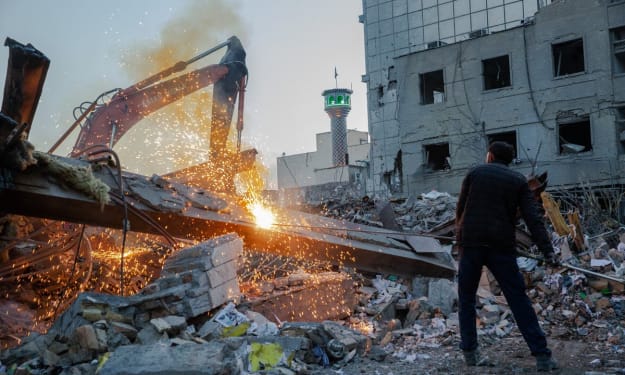
For the best part of 48 hours, first the defence secretary and then the foreign secretary were struggling to cogently articulate in public what the government made of the US and Israel’s attacks on Iran and why. But in the Commons… is not just the opening of an article: it is the snapshot of a defining moment in UK political communication, foreign policy ambiguity, and public expectations of clarity from elected officials in times of international crisis. Over recent days, Britain’s top ministers have found themselves on the back foot — caught between geopolitical alliances, legal ambiguity, and growing domestic unease — as they attempt to explain the government’s posture toward the unprecedented US–Israel military strikes on Iran. . AI-Generated.
In Westminster, during urgent exchanges, MPs pressed the Defence Secretary, John Healey, and Foreign Secretary Yvette Cooper to articulate precisely where the UK stands on what has quickly become one of the gravest confrontations since the 2003 Iraq War. The challenge for ministers has been to walk a tightrope: offering support to longstanding allies while trying to reassure Parliament and the British public that the UK is not being dragged into an open-ended conflict.
By Jameel Jamalia day ago in The Swamp
Hassan Khomeini: The Reluctant Heir and Iran’s Symbol of Reformist Possibility. AI-Generated.
In Iran, names carry power. Few names carry as much weight as Khomeini. More than four decades after the Islamic Revolution reshaped the country, the legacy of its founding figure still shapes politics, identity, and legitimacy. Now, attention has increasingly turned to Hassan Khomeini, the founder’s grandson—a cleric who holds symbolic authority but remains formally outside the machinery of government.
By Jameel Jamali2 days ago in The Swamp
The Iran War Makes It Official – America Is Breaking With Europe. AI-Generated.
The latest war with Iran may come to define more than Middle Eastern geopolitics. It may mark the moment when the transatlantic alliance—one of the central pillars of global order since 1945—began to fracture openly and irreversibly. While Washington launched military strikes alongside Israel, European leaders responded with caution, calls for restraint, and diplomatic language. The divergence was stark, visible, and symbolic.
By Jameel Jamali2 days ago in The Swamp
Here is a unique, 800-word Vocal Media–style article based on your keyword and the verified news context: . AI-Generated.
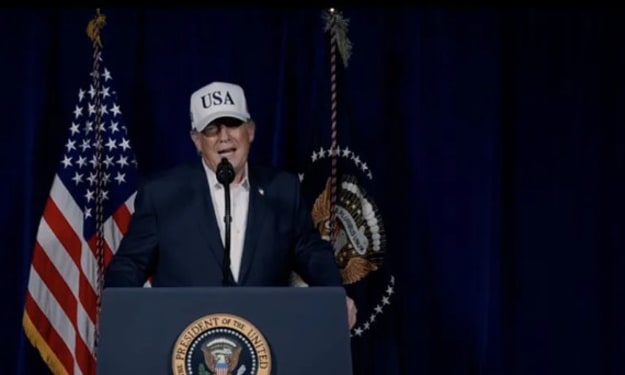
A Screen Grab, A Statement, and a Signal to the World: Trump’s Truth Social Video Marks a Defining Moment On February 28, a screen grab from a video released on Donald Trump’s Truth Social account captured more than just a presidential address—it froze a moment of profound global consequence. In the still image, Trump appears composed, deliberate, and direct, delivering remarks that would quickly echo across political institutions, media channels, and international borders. The message accompanying the video was unmistakable: the United States had entered what Trump described as “major combat operations in Iran.”
By Jameel Jamali4 days ago in The Swamp
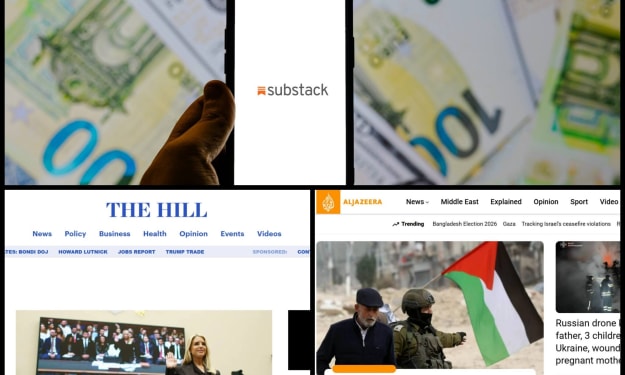
Top 50 English-Language News Sites in the World: Substack Leads YoY Growth for Seventh Month as Most Down in January. AI-Generated.
Subtitle: As traditional news platforms face declining traffic, independent publishing and newsletter-driven journalism are reshaping the global media landscape.
By Jameel Jamali4 days ago in The Swamp
Death Toll in Strike on Girls' School in Southern Iran Rises to 40, State Media Say . AI-Generated.
The devastating strike on a girls’ school in southern Iran has become one of the most tragic and controversial moments in the country’s recent history of conflict. What began as reports of several casualties quickly evolved into a grim national tragedy, with Iranian state media reporting that the death toll had risen to 40. The victims were mostly young schoolgirls whose lives were abruptly cut short in what should have been a safe place of learning. The incident has sent shockwaves across Iran and beyond, raising urgent questions about civilian safety, the ethics of modern warfare, and the human cost of geopolitical conflict.
By Jameel Jamali4 days ago in The Swamp
Trump Says He Is ‘Not Happy’ With Iran Nuclear Talks but Signals More Time for Diplomacy. AI-Generated.
Tensions surrounding Iran’s nuclear ambitions have once again taken center stage as former U.S. President Donald Trump publicly expressed dissatisfaction with ongoing negotiations while signaling a willingness to allow more time for diplomacy. His remarks highlight the delicate balance between pressure and patience that continues to define relations between the United States and Iran.
By Jameel Jamali5 days ago in The Swamp