
The Iran War Makes It Official – America Is Breaking With Europe
Option 1 (Recommended) Washington’s confrontation with Iran exposes a deepening transatlantic divide, as America embraces unilateral strength while Europe clings to diplomacy and restraint. Option 2 The conflict reveals not just a military escalation, but a growing ideological and strategic fracture between America’s rising nationalist movement and Europe’s cautious worldview. Option 3 As the United States turns toward decisive force, Europe’s hesitation signals a historic shift in the balance—and future—of the Western alliance. Option 4 America’s new doctrine of strength and sovereignty is colliding with Europe’s commitment to diplomacy, exposing a widening and possibly permanent rift. Option 5 (More dramatic) The Iran war may mark the moment when the West stopped acting as one—and began drifting apart.
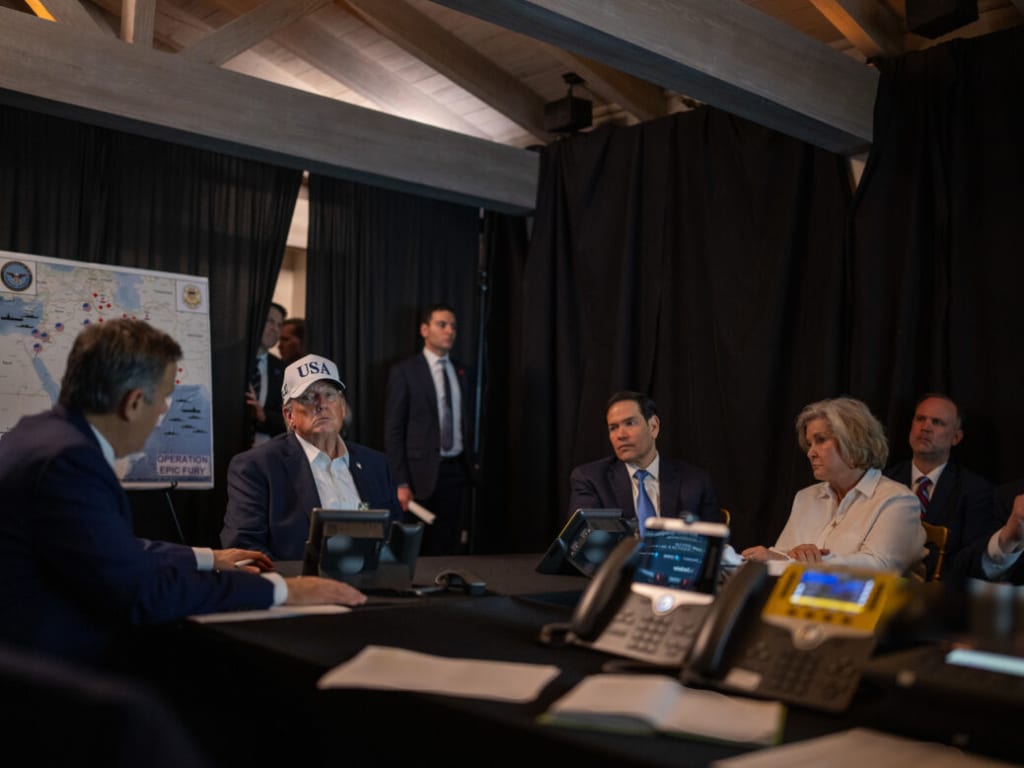
The latest war with Iran may come to define more than Middle Eastern geopolitics. It may mark the moment when the transatlantic alliance—one of the central pillars of global order since 1945—began to fracture openly and irreversibly. While Washington launched military strikes alongside Israel, European leaders responded with caution, calls for restraint, and diplomatic language. The divergence was stark, visible, and symbolic.
Europe urged de-escalation and adherence to international law, warning of the dangers of a broader regional conflict and economic instability. Meanwhile, the United States framed the strikes as decisive action against an existential threat. This gap in tone was not merely rhetorical. It revealed a deeper philosophical divide in how each side understands power, risk, and responsibility.
From the perspective of the rising nationalist and populist currents in American politics—especially within the MAGA movement—Europe’s response reinforces a long-held suspicion: that Europeans are fundamentally unserious about hard power.
A Clash of Strategic Cultures
The United States has long seen itself as the guarantor of global stability, willing to use military force to shape events. Europe, in contrast, has evolved into something different: a post-military civilization built around diplomacy, economic leverage, and legal frameworks.
This transformation did not happen by accident. After the devastation of two world wars, European nations consciously rejected militarism. They invested instead in institutions, integration, and economic prosperity. The European Union itself is the product of this mindset—a peace project designed to make war not only undesirable, but structurally impossible.
But what Europe gained in stability, it arguably lost in strategic autonomy.
When crises erupt, Europe often prefers negotiation over confrontation. Even now, European leaders emphasize diplomacy and restraint, despite recognizing Iran’s nuclear ambitions and regional destabilization. This approach reflects a belief that long-term stability cannot be imposed through force alone.
In Washington, however, patience has worn thin.
MAGA’s Worldview: Strength Above Consensus
The MAGA movement represents a rejection of post-Cold War assumptions. It rejects the idea that America should subordinate its interests to multilateral consensus or European sensibilities. Instead, it promotes a worldview rooted in sovereignty, realism, and strength.
From this perspective, Europe’s caution looks less like wisdom and more like weakness.
To MAGA supporters, Europe benefits from American military protection while avoiding the costs and moral burdens of decisive action. European calls for restraint, in this view, amount to criticism without responsibility. The United States takes the risks; Europe offers lectures.
This perception is reinforced by Europe’s limited military capabilities. Despite its economic size, Europe relies heavily on American power for defense. NATO remains dependent on U.S. logistics, intelligence, and nuclear deterrence. Without American leadership, Europe’s ability to project force beyond its borders would be severely constrained.
This imbalance has bred resentment on both sides.
Americans increasingly question why they should bear the burden of defending wealthy allies. Europeans increasingly fear American unpredictability and unilateralism.
The Iran war has amplified both sentiments.
Europe’s Fear: Chaos and Consequences
European hesitation is not simply cowardice. It reflects geography and vulnerability.
Europe sits closer to the Middle East. Instability there produces immediate consequences: refugee flows, terrorism, and energy disruptions. Already, the conflict has triggered economic anxiety in Europe, with energy prices rising and shipping routes threatened.
Europe has learned, painfully, that military interventions can produce unintended disasters. Iraq, Libya, and Syria all serve as cautionary tales. Regime change can destroy governments, but it cannot easily build new ones.
Europe fears that America underestimates these consequences.
To Europeans, restraint is not weakness—it is prudence.
To many Americans, however, restraint looks like denial.
The End of Automatic Alignment
For decades, the transatlantic alliance functioned on the assumption of shared strategic values. Even when disagreements arose, alignment remained the default.
That assumption is now breaking down.
Europe did not participate in the strikes on Iran. Some European governments openly distanced themselves. Others remained silent, reluctant to endorse or oppose Washington outright.
This ambiguity would have been unthinkable during the Cold War.
Today, it reflects a new reality: Europe and America no longer see the world in the same way.
America increasingly sees a dangerous world requiring decisive action against adversaries like Iran, China, and Russia.
Europe increasingly sees a fragile world requiring careful management to avoid catastrophic escalation.
These are not tactical disagreements. They are civilizational differences.
The Emerging Strategic Divorce
The Iran war may accelerate trends already underway.
America is becoming more nationalist, less willing to subsidize allies, and more comfortable acting alone. Europe is becoming more autonomous, more skeptical of military solutions, and more determined to avoid entanglement in American-led conflicts.
Neither side fully trusts the other.
To American nationalists, Europe is decadent, risk-averse, and dependent.
To Europeans, America is volatile, aggressive, and increasingly unpredictable.
These perceptions reinforce themselves.
Each crisis widens the gap.
What Comes Next
The transatlantic alliance will not collapse overnight. NATO remains intact. Economic ties remain deep. Cultural connections remain strong.
But the psychological foundation of the alliance—the assumption of shared destiny—is eroding.
The Iran war did not create this divide. It exposed it.
America and Europe are no longer moving in the same direction. They are responding to the same threats in fundamentally different ways.
One believes peace is preserved through strength.
The other believes strength must be restrained to preserve peace.
This difference cannot easily be reconciled.
For the MAGA movement, the lesson is clear: America must act alone when necessary, without waiting for Europe’s approval.
For Europe, the lesson may be equally clear: it must prepare for a world where American leadership is no longer predictable—or guaranteed.
The transatlantic era is not over.
But its unquestioned unity is.
And after Iran, the break is no longer theoretical.
It is real.
About the Creator
Keep reading
More stories from Jameel Jamali and writers in The Swamp and other communities.
Here is a unique, 800-word Vocal Media–style article based on your keyword and the verified news context:
A Screen Grab, A Statement, and a Signal to the World: Trump’s Truth Social Video Marks a Defining Moment On February 28, a screen grab from a video released on Donald Trump’s Truth Social account captured more than just a presidential address—it froze a moment of profound global consequence. In the still image, Trump appears composed, deliberate, and direct, delivering remarks that would quickly echo across political institutions, media channels, and international borders. The message accompanying the video was unmistakable: the United States had entered what Trump described as “major combat operations in Iran.”
By Jameel Jamali3 days ago in The Swamp
The Saddest Thing - The Billionaires Who Rule America Aren't Even Enjoying Themselves
This single post says more about our ruling class than a thousand policy papers. The saddest thing about today's system is that the men robbing the rest of us - sabotaging our economic prospects, our pensions, our access to affordable healthcare - are not even happy.
By Scott Christenson🌴25 days ago in The Swamp
When the Shelter Closes
Across the street from my house, a man slept under a tree, his dog by his side. My first, naive thought: he must be traveling through. But he kept coming back, often sleeping there during the day. Then it hit me—that person might not have a home.
By Bride of Sound6 days ago in Humans


Comments
There are no comments for this story
Be the first to respond and start the conversation.