
An Emboldened Israel Is Seizing Opportunities to Remake the Region
From Defense to Dominance: How Strategic Alliances, Military Precision, and Innovation Are Reshaping the Middle East
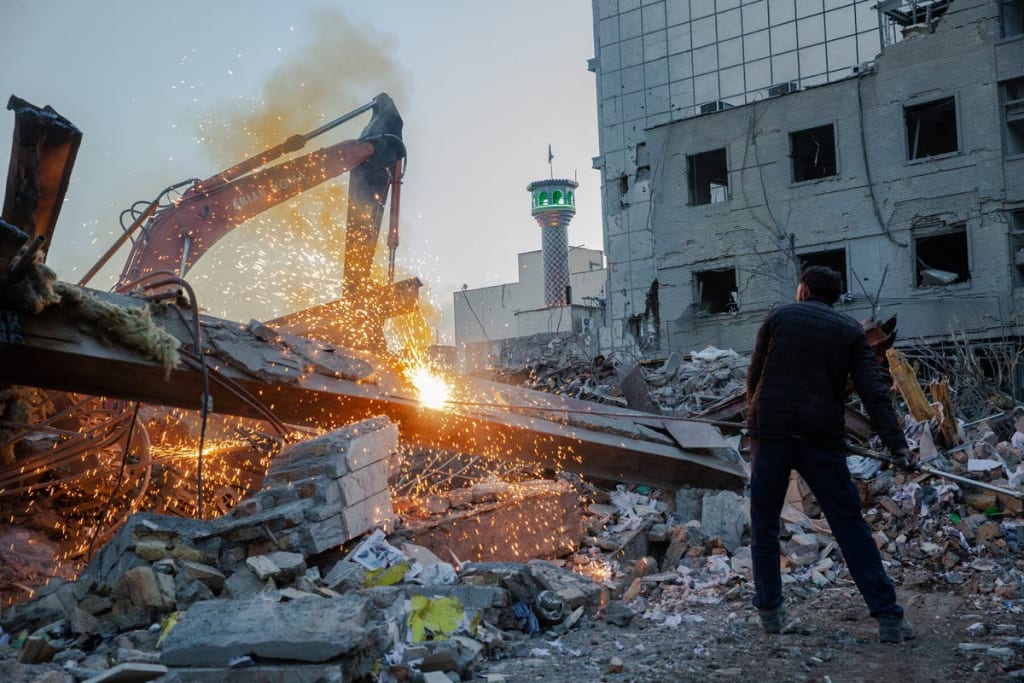
In recent years, Israel’s posture in the Middle East has shifted from defensive caution to assertive geopolitical strategy. What was once a state primarily focused on survival amid hostile neighbors has transformed into a power projecting influence across borders and reshaping regional dynamics. Motivated by security concerns, shifting alliances, and historic grievances, Israel is seizing opportunities to remake the Middle East in ways once thought improbable — forging unexpected partnerships, targeting adversaries directly, and redefining its role on the global stage.
From Isolation to Strategic Partnerships
For decades, the Middle East was largely divided along clear fault lines: Israel encircled by Arab states that refused to recognize it, and Sunni-Shia tensions carving sectarian divides across capitals. But the past decade has seen profound realignments. The Abraham Accords — a series of normalization agreements with the United Arab Emirates, Bahrain, Morocco, and Sudan — opened doors that generations of diplomats struggled to pry ajar. These agreements rewired the regional architecture, creating a new axis that combines diplomatic recognition with economic cooperation and technological exchange.
The logic driving these partnerships extends beyond diplomatic ceremony. Gulf states, worried about Iran’s expanding influence and nuclear ambitions, saw strategic benefit in aligning with Israel’s advanced defense capabilities. Israel, for its part, gained legitimacy and economic opportunity. Together, these partners began to redraw the lines of cooperation in the Middle East — not around old enmities but around shared concerns and mutual interests.
This shift did not emerge in a vacuum. Decades of conflict and failed negotiations left many Arab states rethinking their priorities. The rise of non-state actors, proxy wars in Yemen and Syria, and the destabilizing influence of extremist groups accelerated a realpolitik approach. The result? A Middle East in which old hostilities are being overshadowed by pragmatic alliances.
A New Focus: Iran as Central Adversary
One of the most defining features of Israel’s recent assertiveness has been its laser-focus on Iran. For Israel’s leaders, Tehran is more than a rival — it is an existential threat. Iran’s ballistic missile programs, its support for proxy militias like Hezbollah and the Houthis, and its pursuit of nuclear capability have all been portrayed by Jerusalem as red lines that cannot be ignored.
This has driven Israel to adopt a more aggressive posture. From covert cyberoperations to targeted airstrikes in Syria, Israeli forces have confronted Iranian influence far beyond their borders. Perhaps the most consequential moment came when Israel, coordinating with the United States, executed a strike that resulted in the death of Iran’s supreme leader — an action that sent shockwaves through global capitals and marked a dramatic departure from conventional Middle Eastern conflict norms.
Whether one views these actions as defensive or provocative, there is no question they reflect a new confidence. Israel is no longer content with merely reacting to threats; it is shaping the strategic environment in real time.
Weaponizing Innovation and Diplomacy
Israel’s rise as a regional power is not limited to military action. Its economy — particularly its technology sector — has become a cornerstone of influence. Startups in cybersecurity, artificial intelligence, water management, and agricultural technology attract global investors and have become tools of soft power.
When technology exports go hand-in-hand with diplomatic ties, influence deepens. Investors and governments in Asia, Africa, and the Middle East are increasingly engaging with Israeli firms, not just for profit but for access to innovation. This economic outreach amplifies Israel’s regional footprint in ways that military might alone cannot achieve.
Moreover, Israel has leveraged its tech leadership to build security partnerships with countries once hostile or indifferent. Intelligence sharing, joint military exercises, and border security collaborations no longer belong to a distant future; they are current policy choices shaping regional interdependence. In essence, Israel is exporting stability — or at least the promise of it — and that has value in an unstable neighborhood.
Challenges and Backlash
However bold Israel’s ambitions may be, they are not without pushback. Iran’s axis of allied militias and security partners remains a potent force. Hezbollah in Lebanon, the Houthis in Yemen, and pro-Tehran militias in Iraq and Syria continue to challenge Israel’s strategy. Attacks on shipping lanes in the Red Sea, rocket barrages from Lebanon, and proxy confrontations along Israel’s northern border have underscored the limits of military dominance.
Additionally, public opinion in many Arab states remains divided. While governments may pursue normalization and cooperation, populations — particularly in countries with significant Palestinian solidarity movements — can be less enthusiastic. Pro-Palestinian protests continue across North Africa and the Levant, reminding leaders that domestic sentiment can complicate diplomatic foresight.
And lurking over every strategic decision is the unresolved Israeli-Palestinian conflict. For many in the Arab and Muslim world, no normalization or tech partnership can fully outweigh the humanitarian and political struggle in Gaza and the West Bank. Attempts by Israel to sidestep this issue have given rise to new forms of regional activism that reject normalization without progress on Palestinian statehood.
The New Middle Eastern Order
Still, the overall trajectory is unmistakable: Israel is no longer a pariah state; it is a central actor in the Middle East with both the capability and willingness to shape outcomes. This shift has not only altered Jerusalem’s role but has reshaped regional perceptions of power and security.
From trilateral security pacts to economic corridors stretching from the Gulf to the Mediterranean, the architecture of the region is changing. Whether this transformation leads to sustained peace or persistent instability remains an open question. The old certainties — of entrenched hostility and rigid blocs — are fading. In their place are dynamic alliances, competitive interests, and an increasingly assertive Israel.
Israel’s strategy, built on military strength, technological innovation, and diplomatic outreach, shows how a nation once defined by siege can become a linchpin of regional geopolitics. In a region long characterized by turmoil, an emboldened Israel is seizing opportunities not just to defend itself, but to redefine the Middle East’s strategic landscape — for better or for worse.
---
If you’d like, I can also craft a sub-headline, SEO optimized version, or social media teaser for this article!
About the Creator
Keep reading
More stories from Jameel Jamali and writers in The Swamp and other communities.
How Trump Assassination Attempts Played Into His Decision to Attack Iran
In early 2026, the United States found itself on the brink of one of the most consequential military confrontations in decades when President Donald Trump ordered a coordinated U.S.-Israeli strike that killed Iran’s supreme leader, Ayatollah Ali Khamenei. For many observers, the timing, justification, and strategic logic behind the attack were striking. Yet, according to Trump himself, one factor loomed especially large in his calculus: personal survival. In recent public remarks, he explicitly linked alleged assassination attempts against him to his decision to authorize strikes on Iran — a claim that has become a central talking point in an intense political and geopolitical debate.� The Washington Post The Catalyst: Claims of Iranian Assassination Threats Former President Trump — now back in office — has repeatedly said that Iran’s hostility toward him, particularly alleged attempts on his life, influenced his aggressive stance toward Tehran. In an interview following the Iranian strike that killed Khamenei, Trump stated bluntly, “I got him before he got me,” directly invoking supposed assassination attempts during his election campaign.� The Washington Post These comments built on earlier claims made by Trump during the 2024 campaign. As he campaigned for a return to the White House, he warned that Iran posed a threat to his life, suggesting that Tehran might be behind violent incidents including a rally shooting in Pennsylvania and an armed confrontation at his Florida golf course. Intelligence briefings shared with his campaign purportedly alerted him to “real and specific threats” from Iran, although officials acknowledged at the time that there was no direct evidence linking Iran to those particular assassination attempts.� The Washington Post +1 Trump’s rhetoric was stark. In 2025, he openly said Iran would be “obliterated” if it tried to assassinate him — a statement that sent shockwaves through international diplomatic circles even before he returned to the presidency.� Fox News From Campaign Claims to Executive Action By the time Trump assumed office again, the national security environment had shifted. Tehran’s relations with Washington were already frayed after years of sanctions, nuclear disputes, and proxy conflicts across the Middle East. Still, the linkage Trump drew between personal threats and national policy was unusual. Most modern presidents endeavor to separate personal grievances from foreign policy decisions, but Trump made that separation blur. When U.S. and Israeli forces struck Iranian leadership targets in February 2026, killing Khamenei and other senior commanders, Trump framed the action in strategic terms — neutralizing a nuclear threat and dismantling Iran’s regional influence. Yet his personal justification — that he was preventing a future strike against himself — reverberated just as loudly.� The Washington Post Critics immediately seized on this linkage, arguing that no credible intelligence publicly confirmed a direct Iranian attempt on Trump’s life and that suggesting otherwise risked inflaming an already volatile situation. Many experts cautioned that conflating campaign violence or isolated individual attacks with state-sponsored plots could distort U.S. threat assessments and mislead the public.� The Washington Post Iran’s Denials and the Public Record From Iran’s perspective, these assertions are flatly denied. Iranian officials have repeatedly rejected claims of plotting against Trump, labeling them politically motivated and unfounded. In interviews, Iranian leaders have described such allegations as attempts to fabricate a pretext for militaristic foreign policy moves.� Al Jazeera Even U.S. intelligence assessments have not publicly confirmed Iran’s direct involvement in the assassination attempts Trump referenced. In the case of the Pennsylvania rally shooting, for example, authorities found no evidence of a foreign connection, despite initial speculation.� The Washington Post This discrepancy between what has been aired publicly and what Trump asserts privately and publicly has fueled debate about how much personal grievance overtook objective analysis in U.S. policy making. The Broader Strategic Implications Beyond personal safety and rhetoric, Trump’s decision to attack Iran cannot be divorced from broader strategic calculations. Regional dynamics were already tense, with Iran’s nuclear ambitions, missile developments, and support for proxy militias in Iraq, Syria, Lebanon, and Yemen contributing to a complex security environment. In many policy circles, hardliners saw an opportunity to weaken Iran’s military infrastructure and curtail its influence. Trump’s public statements framed the operation as a win for U.S. security, echoing long-standing criticisms of the 2015 Iran nuclear deal and previous negotiations that he deemed too lenient.� The Guardian Yet analysts argue that linking personal threats to national military strategy is problematic. When personal animosities or fears drive policy, there’s a danger of overreaction, misinterpretation of intelligence, and escalation that outstrips strategic benefit. Critics say that Trump’s framing contributed to perceptions that the attack was about revenge rather than a carefully calibrated shift in U.S. military doctrine — a characterization both he and his defenders reject.� Le Monde.fr Conclusion: A Personal Narrative in a Global Crisis The narrative emerging from Trump’s own comments is unmistakable: assassination attempts allegedly tied to Iran weighed heavily in his decision-making process. Whether those attempts were directly orchestrated by Tehran remains unresolved in the public record, but Trump’s insistence on the connection has shaped how the world now views one of the most significant presidential decisions in recent memory. In the end, this episode underscores a perennial challenge in democratic leadership: balancing personal experience with national interest. Trump’s choice to foreground alleged threats against himself raises fundamental questions about how leaders interpret intelligence, justify military action, and communicate with the public at moments of profound consequence. As tensions with Iran continue and the world watches closely, history will assess whether this blending of personal narrative and policy was visionary or perilous.
By Jameel Jamaliabout 4 hours ago in The Swamp
The Saddest Thing - The Billionaires Who Rule America Aren't Even Enjoying Themselves
This single post says more about our ruling class than a thousand policy papers. The saddest thing about today's system is that the men robbing the rest of us - sabotaging our economic prospects, our pensions, our access to affordable healthcare - are not even happy.
By Scott Christenson🌴25 days ago in The Swamp
EU Sanctions Russian Officials as Hungary Blocks Funds to Ukraine
In a tense session that underscored the European Union’s internal divisions, EU member states imposed fresh sanctions on Russian officials linked to the ongoing conflict in Ukraine, even as Hungary blocked a portion of funds intended to support Kyiv’s war effort. The move highlights both the bloc’s commitment to pressuring Moscow and the political fractures that complicate collective action. The sanctions target several high-ranking Russian politicians and military figures accused of facilitating or enabling military operations in Ukraine. Measures include travel bans, asset freezes, and restrictions on financial transactions within the EU. The European Council described the action as “a necessary step to hold accountable those responsible for destabilizing the region and perpetuating the war.” EU officials emphasized that the sanctions are part of a broader strategy to maintain economic and political pressure on Russia, following months of escalating conflict. “We are demonstrating unity in condemning aggression and in supporting the sovereignty of Ukraine,” said an EU diplomat familiar with the discussions. Hungary’s Block and Internal Disputes At the same time, Hungary, long criticized for its close ties to Moscow, has blocked disbursement of certain EU funds allocated to Kyiv. Prime Minister Viktor Orbán cited concerns over financial oversight and alleged inefficiencies in the use of the funds, although critics argue that the move is politically motivated. “The decision undermines European solidarity,” said a European Commission spokesperson. “EU funds are designed to support a country under attack, and blocking these resources contradicts the shared principles of the Union.” The standoff exposes persistent challenges in coordinating EU foreign policy. While the bloc often speaks with one voice on paper, differing national interests, political alliances, and domestic pressures can complicate unified responses to crises. Impact on Ukraine and the War Effort For Ukraine, the timing of the partial block is problematic. The funds in question were intended for critical infrastructure repairs, humanitarian support, and military aid. Kyiv’s government expressed disappointment but maintained that international assistance remains vital. “We rely on our partners to help sustain our people and defense capabilities,” said a Ukrainian government official. “Every delay in support weakens our ability to respond to aggression and protect civilians.” The sanctions on Russia, however, were broadly welcomed in Kyiv. Analysts suggest that targeting individual officials and freezing assets could deter further escalation and signal that the international community is watching. “While sanctions alone won’t end the war, they send a strong message that those responsible cannot operate freely or enjoy the benefits of their positions,” said a policy analyst in Brussels. EU’s Strategic Calculus The dual actions — sanctions on Russian figures and the partial freeze of funds to Ukraine — illustrate the EU’s delicate balancing act. Brussels must uphold its commitment to Ukraine, maintain economic stability within the bloc, and navigate member states’ divergent political stances. Some EU officials hope that Hungary’s objections can be resolved through negotiation, emphasizing enhanced monitoring and reporting requirements for fund usage. Others warn that prolonged resistance could embolden Moscow and undermine the EU’s credibility as a unified actor. Looking Ahead Observers expect the coming months to be critical. With sanctions likely to expand and political negotiations ongoing, the EU faces a test of both its internal cohesion and its ability to influence the trajectory of the war in Ukraine. The situation also serves as a reminder that European solidarity is not guaranteed and must be actively maintained amid competing domestic and international interests. As Ukraine continues to face Russian military pressure, the international community watches closely. The EU’s ability to reconcile internal disagreements while sustaining support for Kyiv may prove decisive in shaping the region’s stability and the long-term geopolitical balance in Eastern Europe.
By Fiaz Ahmed 8 days ago in The Swamp
Trickle Them Down, But Not Out
The thing about smart people is that they should know better, but alas, intelligence is not the same as wisdom. Not only do the mistakes of experts too short on vision—when they are not corrected—have the potential to do great and far-reaching damage, but they also undermine public confidence in the very notion of expertise. This is particularly so when expertise is wielded in defence of the rich and powerful as a cudgel against those laid low. As an academic, this lack of faith in “so-called experts” is painful to see as it plays out in the spread of dis-/misinformation, conspiracy theories, and anti-intellectualism writ large. But it is also an understandable impulse given the catastrophic failure of an economic ideology pushed by certain economic experts. Supply-side economics has shaped a broken system for the last half-century and has arguably done more to undermine the fabric of the American Dream than any policy framework of the past century.
By Cory Wright-Maley7 days ago in Humans


Comments
There are no comments for this story
Be the first to respond and start the conversation.