Latest Stories
Most recently published stories in The Swamp.
Saudi Aramco’s Berri Oilfield Targeted by Drone Attack. AI-Generated.
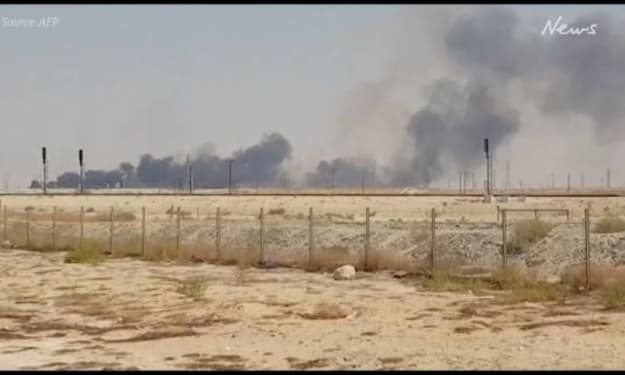
A drone attack targeting a major oil facility operated by Saudi Aramco has heightened fears about the vulnerability of energy infrastructure in the Gulf region. The incident reportedly struck near the Berri Oilfield, one of Saudi Arabia’s significant production sites located along the eastern coastline of the kingdom. According to regional security sources, several unmanned aerial vehicles approached the oilfield during the early hours of the morning, triggering air defense responses. While Saudi authorities have not confirmed the full extent of the damage, initial reports suggest that the attack caused limited disruption to operations. Emergency teams were quickly deployed to assess the site and ensure that production systems remained intact. The Berri oilfield plays a strategic role in Saudi Arabia’s energy sector. Situated in the Eastern Province, the field contributes a substantial portion of crude oil output and is connected to key processing facilities and export terminals. The facility is also close to important shipping routes that move millions of barrels of oil toward global markets each day. Security analysts believe the drone strike represents another example of how energy infrastructure has become a frequent target amid ongoing tensions in the Middle East. Oil facilities across the region have faced periodic threats from armed groups and geopolitical rivalries, particularly during periods of heightened regional conflict. Although no group immediately claimed responsibility for the attack, speculation quickly emerged among regional observers. Previous incidents targeting Saudi energy installations have been linked to the Houthi movement, which has carried out missile and drone operations against Saudi territory during the prolonged conflict in Yemen. However, officials emphasized that investigations are still underway and that attribution has not been confirmed. Saudi Aramco released a brief statement acknowledging the incident while reassuring global markets that oil production remains stable. “The company’s facilities are operating normally, and there has been no significant interruption to supply,” a spokesperson said. The statement also noted that safety procedures were activated immediately after the drones were detected. The attack has once again highlighted the strategic importance of Saudi Arabia’s energy infrastructure to global oil supply. As the world’s largest oil exporter, the kingdom plays a crucial role in balancing international energy markets. Any disruption to its production or export capacity can quickly influence global oil prices. Energy markets reacted cautiously to the reports. Traders monitored developments closely, with oil prices showing slight volatility as investors weighed the potential impact on supply chains. Analysts noted that even minor incidents near major oilfields can generate uncertainty, particularly during periods of geopolitical instability. The Gulf region has experienced several high-profile attacks on oil infrastructure in recent years. Perhaps the most dramatic occurred in 2019 when drones and missiles struck major processing facilities, temporarily disrupting a significant portion of Saudi oil output. That event demonstrated how relatively small unmanned systems could threaten critical energy assets. Since then, Saudi Arabia has invested heavily in advanced defense systems designed to detect and intercept drones and missiles before they reach strategic installations. These measures include enhanced radar coverage, improved air defense coordination, and additional physical protection around vital facilities. Despite these precautions, security experts say the evolving nature of drone technology continues to pose challenges. Smaller, low-flying drones can sometimes evade traditional defense systems, making them an increasingly attractive tool for groups seeking to disrupt energy infrastructure. For Saudi Arabia, protecting facilities like the Berri oilfield is essential not only for national revenue but also for maintaining stability in global energy markets. The country remains a central player within OPEC, where production decisions influence oil prices worldwide. Investigations into the latest attack are ongoing, with Saudi authorities working alongside regional security partners to determine how the drones reached the area and whether additional threats remain. Officials have promised to strengthen defensive measures around strategic oil infrastructure if necessary. While the immediate damage appears limited, the incident underscores the fragile security environment surrounding some of the world’s most critical energy resources. For global markets and policymakers alike, the attack serves as a reminder that geopolitical tensions in the Middle East can quickly ripple across international energy supply chains.
By Fiaz Ahmed 3 days ago in The Swamp
Global Trade’s Lifelines: 6 Shipping Lanes That Keep the World Economy Moving. AI-Generated.
Maritime shipping lanes are the unsung lifelines of global trade. Roughly 90% of the world’s goods—from electronics and oil to food and raw materials—travel by sea, navigating a network of strategic shipping corridors that connect producers to consumers across continents. Disruptions along these routes can ripple across the global economy, impacting supply chains, energy prices, and trade flows. Here are six critical shipping lanes that underpin international commerce: 1. The Strait of Hormuz Located between Oman and Iran, the Strait of Hormuz is a narrow passage through which roughly 20% of the world’s oil supply passes. Tankers from Gulf nations rely on this corridor to transport crude to Europe, Asia, and the Americas. Heightened regional tensions can quickly drive up oil prices, as recent conflicts and military posturing have shown. 2. The Suez Canal The Suez Canal connects the Mediterranean Sea to the Red Sea, allowing ships to bypass the lengthy voyage around Africa’s Cape of Good Hope. The canal handles approximately 12% of global trade, making it one of the most strategically important maritime routes. The 2021 blockage by the container ship Ever Given demonstrated how a single incident can stall billions of dollars in goods. 3. The Strait of Malacca Between Malaysia and Indonesia, the Strait of Malacca serves as the main artery for ships traveling between the Indian Ocean and the Pacific. Around 25% of all traded goods pass through this narrow channel, including oil, electronics, and commodities. Its vulnerability to congestion or piracy has prompted constant monitoring and security initiatives. 4. The Panama Canal Connecting the Atlantic and Pacific Oceans, the Panama Canal facilitates the rapid movement of goods between Asia and the Americas. For decades, the canal has shortened transit times and reduced fuel costs for shipping companies. Recent expansions allow larger vessels to pass through, accommodating the growth of global containerized trade. 5. The English Channel One of the busiest shipping lanes in the world, the English Channel links the United Kingdom to continental Europe. Nearly 500 ships pass daily, carrying everything from raw materials to finished products. Its strategic position near Europe’s industrial and financial hubs makes it crucial for European commerce, especially during Brexit-related logistical shifts. 6. The Bab el-Mandeb Strait Connecting the Red Sea to the Gulf of Aden, the Bab el-Mandeb Strait sits between Djibouti and Yemen. About 4.8 million barrels of oil daily flow through this route, alongside other key commodities. Regional instability, piracy, and conflict in nearby areas have raised concerns over potential disruptions. Why These Routes Matter Global shipping lanes are not just pathways for goods—they are economic arteries that sustain industry, employment, and geopolitical influence. Even minor blockages can trigger cascading effects, delaying shipments, inflating prices, and disrupting production cycles. For instance, disruptions in the Suez Canal or Strait of Hormuz often lead to surging oil prices and logistical bottlenecks worldwide. Shipping companies, governments, and international organizations invest heavily in monitoring, securing, and maintaining these corridors. Advances in maritime technology, satellite navigation, and coordinated international patrols help mitigate risks such as piracy, geopolitical tensions, and accidents. Challenges Ahead Despite these safeguards, global shipping remains vulnerable. Rising geopolitical tensions, climate change, and evolving security threats could jeopardize these vital routes. Analysts warn that the reliance on a handful of narrow corridors makes the global economy susceptible to unforeseen shocks. Diversifying routes and improving maritime infrastructure are considered key strategies for resilience. The lifelines of global trade are more than just shipping lanes—they are critical components of the modern economy, linking markets, nations, and people. Protecting them ensures not only the smooth flow of goods but also global economic stability, energy security, and international cooperation. As trade volumes continue to grow and international tensions rise, these six corridors will remain under scrutiny, reminding the world just how interconnected and fragile the modern global supply chain truly is.
By Fiaz Ahmed 3 days ago in The Swamp
China’s PBOC Extends Gold Buying as Middle East Tension Simmers. AI-Generated.
Amid escalating tensions in the Middle East, China’s People’s Bank of China (PBOC) has reportedly increased its gold reserves, signaling a cautious hedging strategy against geopolitical uncertainty and market volatility. Analysts suggest the move reflects Beijing’s effort to protect its financial stability while diversifying its foreign reserves beyond the U.S. dollar. The PBOC has quietly purchased significant amounts of gold over the past quarter, according to domestic and international sources tracking global bullion markets. China, already the world’s largest gold consumer, is taking advantage of recent dips in the yellow metal’s price to bolster its reserves. Some estimates indicate that these purchases could add tens of billions of dollars in value to Beijing’s holdings. The backdrop to this move is a surge in regional tensions, particularly involving Iran and neighboring Gulf states. Military escalation in the Persian Gulf and attacks on shipping lanes have created uncertainty in oil markets, prompting central banks worldwide to seek stability in alternative assets such as gold. “Gold remains a safe haven in times of geopolitical risk,” said Li Wen, a commodities analyst in Shanghai. “By increasing its holdings, China is hedging against currency fluctuations and potential disruptions in energy supplies.” China’s strategy is consistent with its long-term goal of diversifying reserves. While the U.S. dollar dominates global trade and reserve holdings, Beijing has gradually been shifting toward assets less exposed to external shocks. Gold provides a tangible store of value immune to political interference, making it an attractive option amid rising U.S.-Middle East tensions. The current wave of purchases also coincides with increased volatility in global energy markets. Iran, a major oil exporter, has become central to international concern following a series of attacks on commercial vessels and heightened military activity in the Gulf. Crude oil prices have fluctuated sharply in response to these developments, prompting financial institutions to reassess risk exposure. China relies heavily on Middle Eastern oil to fuel its growing economy, with imports from the Gulf making up a substantial portion of national demand. By bolstering gold reserves, the PBOC is indirectly insulating the economy from potential supply shocks or price spikes resulting from regional instability. International observers note that China’s gold buying is part of a broader trend among central banks seeking alternative reserves. In recent months, central banks from India, Russia, and other major economies have also increased gold purchases, citing similar concerns about geopolitical risks and financial market uncertainty. Despite the strategic significance, China has not publicly disclosed the full scale of its bullion acquisitions. PBOC statements emphasize the importance of maintaining diversified reserves while supporting domestic financial stability, avoiding commentary on specific geopolitical considerations. Analysts, however, argue that timing and scale strongly suggest the purchases are linked to the ongoing Middle East situation. The move has implications beyond Beijing’s balance sheet. Increased demand from central banks can influence global gold prices, which are already sensitive to currency fluctuations, interest rate expectations, and geopolitical developments. Markets have responded with slight upward pressure on bullion prices, reflecting investor sentiment regarding safety and liquidity. China’s extended gold accumulation reflects both financial prudence and geopolitical calculation. By hedging against potential shocks in global markets, the PBOC is signaling a cautious approach to international uncertainty, particularly in the oil-rich Middle East region. Observers believe this trend may continue if tensions escalate further, as gold remains a globally recognized hedge against risk. For Beijing, expanding its reserves is not only an economic safeguard but also a strategic tool, ensuring that China remains resilient in a volatile global landscape. With the Middle East crisis showing no immediate signs of de-escalation, China’s PBOC is likely to maintain, if not accelerate, its gold purchases, securing an asset that has historically proven its value in times of uncertainty and geopolitical unrest.
By Fiaz Ahmed 3 days ago in The Swamp
Judge Rules Kari Lake Unlawfully Ran U.S. Media Agency, Voiding Layoffs. AI-Generated.
A federal judge has ruled that former Arizona political candidate Kari Lake unlawfully exercised authority over a U.S. government-funded media agency, a decision that has nullified a series of layoffs and triggered renewed debate about leadership and governance in publicly funded international broadcasting.
By Jameel Jamali3 days ago in The Swamp
Trump Assembles a New Coalition to ‘Eradicate’ Cartels. AI-Generated.
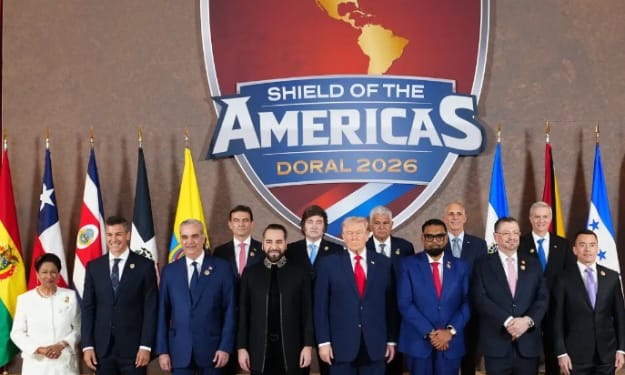
In the evolving landscape of American politics and national security, former U.S. President Donald Trump has once again ignited debate with a bold proposal: forming a new coalition aimed at “eradicating” powerful drug cartels operating across the Americas. The initiative, framed as a comprehensive strategy to combat organized crime and drug trafficking, has stirred support among allies and raised significant questions among critics about its feasibility, legality, and long-term implications.
By Jameel Jamali3 days ago in The Swamp
Dozens Killed as Israeli Commandos Raid Lebanon in Hunt for Missing Airman. AI-Generated.
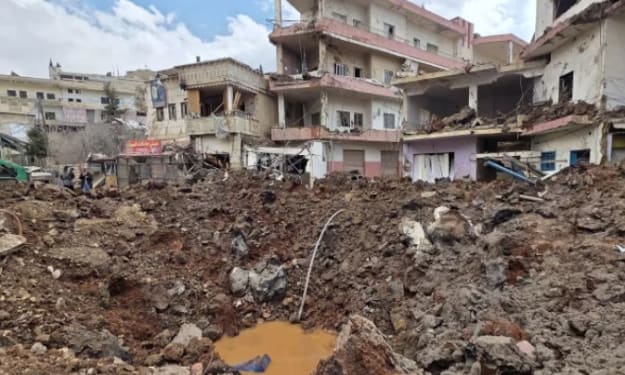
In a dramatic escalation of tensions along the Israel–Lebanon border, Israeli commandos launched a deep raid into Lebanese territory in an attempt to locate a missing Israeli airman. According to regional authorities and security sources, the operation triggered intense clashes that left dozens of people dead and many others injured. The incident has intensified fears of a broader regional conflict and sparked urgent calls for restraint from the international community.
By Jameel Jamali3 days ago in The Swamp
Trump Accuses Starmer of Seeking to “Join Wars After We’ve Already Won” and Dismisses UK Aircraft Carriers. AI-Generated.
U.S.-U.K. relations strain as former President Donald Trump sharply criticises British Prime Minister over military support amid the Iran conflict. In a striking public rebuke, U.S. President Donald Trump accused British Prime Minister Keir Starmer of wanting to “join wars after we’ve already won” and declared that the United States does not need British aircraft carriers in its ongoing conflict with Iran. The comments, delivered via Trump’s Truth Social platform, have deepened friction between two traditional allies over how best to respond to escalating tensions in the Middle East. Trump’s Accusations and Message to Starmer Trump’s remarks targeted what he portrayed as a belated British willingness to support U.S. military efforts in the region — specifically, discussions in London about potentially deploying Royal Navy aircraft carriers to the Middle East theatre. In his post, Trump stated: “The United Kingdom, our once Great Ally, maybe the Greatest of them all, is finally giving serious thought to sending two aircraft carriers to the Middle East… That’s OK, Prime Minister Starmer, we don’t need them any longer — But we will remember. We don’t need people that join Wars after we’ve already won!” Trump’s message was framed as both a rejection of British military aid and a personal critique of Starmer’s leadership — suggesting the UK had been too slow in offering tangible support for U.S. and allied operations against Iran. The former U.S. president went further in interviews aboard Air Force One, emphasizing that British assistance “wasn’t needed now” and arguing it would have been more welcome earlier in the campaign. Trump’s comments reflect a broader frustration with what he views as inconsistent support from London. Aircraft Carriers and Strategic Disagreement The comments build on recent reports that the HMS Prince of Wales — the United Kingdom’s flagship carrier — had been placed on advanced readiness for a possible Middle East deployment, part of London’s effort to bolster regional security amid the expanding conflict. The British Ministry of Defence clarified that while the carrier’s readiness status was increased, no formal decision to send it to the Middle East had been taken. Trump’s dismissal of the carriers’ utility stands in contrast to British officials who argue that the presence of UK naval assets would support regional deterrence and strengthen allied capabilities. The debate occurs against the backdrop of broader allied coordination, where American forces have also begun using UK military bases for “defensive operations” related to strikes against Iranian missile capabilities. Starmer’s Position and UK Response In response to Trump’s criticism, Downing Street has stressed that decisions about military involvement must be made in Britain’s national interest. Starmer has defended his initial reluctance to permit the use of British bases for offensive action, citing the need to ensure any military engagement is legal, planned and necessary. Later, Starmer authorized limited U.S. use of UK bases for defensive missions, indicating a nuanced approach rather than full military alignment. British officials have underscored that the placement of HMS Prince of Wales on high readiness does not equate to a deployment order. Rather, it is part of contingency planning to ensure that whatever course of action the UK takes, it can act swiftly if needed. Rift in the “Special Relationship”? The exchange highlights growing tensions between Washington and London at a time when Western alliances are under strain. Trump’s critique not only questioned the timing of British support but also implied that hesitation weakened the historic “special relationship” between the United States and the United Kingdom — a bond long seen as a cornerstone of transatlantic cooperation. While some British commentators frame Trump’s remarks as political posturing, others see them as emblematic of broader disagreements over military strategy, national sovereignty, and the role of European powers in global conflicts. The dispute over support for U.S. and Israeli strikes on Iran reflects deeper debates within NATO and allied circles about how best to balance defensive commitments with diplomatic caution. Impact on International Relations Trump’s public criticism has reverberated beyond bilateral U.S.-UK relations. European and Middle Eastern governments are closely watching how Western allies coordinate their responses to regional instability. Diplomats stress that unity among democracies is crucial amid rising tensions, but divergent national priorities can complicate joint action. The sharp exchange between Trump and Starmer also comes at a moment when the United States is pressing forward with its campaign against Iran while insisting that many key objectives have already been achieved — a claim not universally shared by external observers or even within American strategic circles. Conclusion President Trump’s accusation that the United Kingdom is attempting to “join wars after we’ve already won” encapsulates a rare public rebuke of a close ally during a period of active conflict. Amid disagreements over the deployment of aircraft carriers and the pace of military support, both Washington and London face the challenge of balancing national interests with long-standing strategic partnerships. As the Iran conflict continues to unfold, how the two nations navigate their differences may have lasting implications for the future of Western military cooperation and diplomatic coordination in one of the world’s most volatile regions.
By Fiaz Ahmed 3 days ago in The Swamp
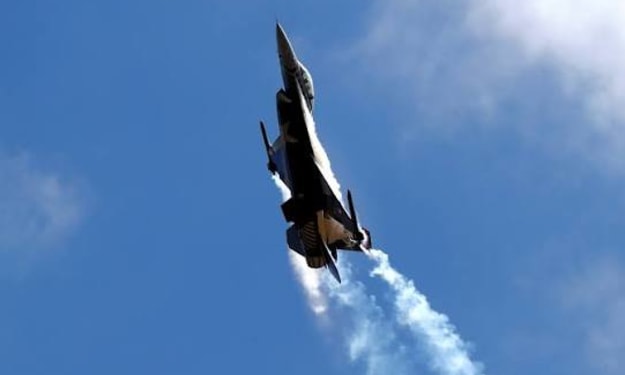
Turkey Considering Deployment of F-16s to Cyprus, Ministry Source Says. AI-Generated.
Ankara signals potential military escalation as tensions rise in the Eastern Mediterranean. Turkey is reportedly considering the deployment of F-16 fighter jets to Cyprus, according to a source within the Turkish Ministry of Defence. The potential move comes amid heightened regional tensions and ongoing disputes over airspace and territorial waters in the Eastern Mediterranean. The source, who requested anonymity due to the sensitivity of the issue, stated that Ankara is evaluating options to strengthen its military presence on the island in response to what it perceives as growing threats and provocative actions by neighboring states. While no final decision has been made, Turkish defence officials are reportedly assessing the logistics, operational readiness, and strategic implications of such a deployment. Strategic Context in the Eastern Mediterranean Cyprus has long been at the center of geopolitical disputes, particularly involving Turkey, Greece, and other regional powers. Turkey maintains a military presence in the northern part of the island, which it recognizes as the self-declared Turkish Republic of Northern Cyprus. Greece and the internationally recognized Republic of Cyprus consider such actions a violation of sovereignty. The consideration of deploying F-16s reflects Ankara’s intent to assert air superiority in contested areas and strengthen deterrence against perceived encroachments by neighboring forces. Turkish military analysts suggest that stationing fighter jets on the island could provide rapid response capabilities and enhanced surveillance of maritime zones in the Eastern Mediterranean, where energy exploration and military activity have created ongoing disputes. Potential Regional Reactions The announcement has already sparked concern among Greece, Cyprus, and other European states with interests in regional stability. Analysts warn that any increase in Turkish military assets on the island could exacerbate tensions and risk accidental clashes in congested airspace. Greek officials have historically expressed strong opposition to military expansions by Turkey in Cyprus, emphasizing that such deployments could violate international agreements and heighten the risk of confrontation. Similarly, the Republic of Cyprus has warned that any escalation could undermine ongoing diplomatic efforts to manage territorial disputes. European Union diplomats have also noted the importance of de-escalating military posturing in the region. In recent months, Brussels has called on all parties to exercise restraint, warning that heightened tensions in the Eastern Mediterranean could disrupt regional trade, energy exploration, and broader security cooperation. F-16 Capabilities and Operational Impact The Turkish Air Force operates a fleet of F-16 fighter jets capable of air defense, ground attack, and surveillance operations. Deploying these jets to Cyprus would enhance Turkey’s ability to respond rapidly to regional incidents, including aerial incursions, maritime disputes, or potential conflicts over energy exploration zones. Military analysts highlight that F-16s, when combined with advanced radar and command systems, provide significant operational reach and flexibility. They can conduct patrols, intercept aircraft, and support naval operations in contested areas. Such capabilities would reinforce Turkey’s position and demonstrate its readiness to protect strategic interests. Diplomatic Considerations While Turkey’s defence ministry has not officially confirmed the deployment, international observers are closely monitoring the situation. Analysts emphasize that a unilateral military build-up could provoke a response from neighboring states, potentially triggering a cycle of escalation. Diplomats from Greece, Cyprus, and the EU have reportedly begun consultations to coordinate messaging and assess contingency plans. Regional security experts note that ongoing military exercises, coupled with potential deployments, require careful management to avoid accidental clashes or miscalculations. Broader Implications The Eastern Mediterranean has emerged as a flashpoint for regional power competition, with multiple countries asserting claims over territorial waters and airspace. Energy exploration, maritime boundaries, and longstanding historical disputes contribute to the complexity of the situation. Turkey’s consideration of deploying F-16s to Cyprus underscores the delicate balance between deterrence and provocation. While Ankara frames the move as defensive, neighboring states view it as a potential escalation that could destabilize the region further. The international community is urging all parties to pursue diplomatic channels and confidence-building measures to prevent unintended incidents. Observers warn that missteps in the coming weeks could have far-reaching consequences, not only for Cyprus and Turkey but for broader regional security in the Eastern Mediterranean.
By Fiaz Ahmed 3 days ago in The Swamp