Latest Stories
Most recently published stories in The Swamp.
Doing the Wash
Congress. An entity of our government that is supposed to be working for us, is just a money laundering criminal endeavor. If you aren't paying attention to what our government does, then you are part of the problem.Money laundering is a crime, and we are funding it.
By Alexandra Grant2 days ago in The Swamp
Three killed, 112 injured in UAE since start of missile and drone attacks. AI-Generated.
Intense aerial assault tests Gulf nation’s defences amid regional escalation Abu Dhabi — The United Arab Emirates has reported three civilian deaths and 112 injuries since a sustained wave of missile and drone attacks began, according to official statements from the country’s Ministry of Defence and emergency authorities. The attacks — attributed by Emirati authorities to retaliation linked to the broader US–Israel conflict with Iran — have seen hundreds of aerial threats launched toward UAE territory over recent days. Despite the overwhelming majority being intercepted by state air defences, debris and falling projectiles have caused casualties and disrupted life in major cities including Abu Dhabi and Dubai. Nature of the Attacks In the most recent reported assault on March 7, UAE air defence systems tracked and intercepted 15 ballistic missiles and 119 unmanned aerial vehicles (UAVs) as part of a fresh wave of attacks. One missile reportedly fell into the sea outside national territory. Since the onset of the hostilities, the Ministry of Defence said it has detected 221 ballistic missiles and 1,305 drones, with the vast majority successfully destroyed or neutralised by air defence systems. Only a small number of projectiles — including drones — have struck within UAE territory. In addition, eight cruise missiles were detected and destroyed during the same period, part of what officials have described as an “unprecedented” volume of aerial threats aimed at the Gulf state. Casualties and Impact Official figures confirm three fatalities, involving nationals of Pakistan, Nepal, and Bangladesh. The 112 injuries reported thus far are described as minor and encompass residents of diverse nationalities including Emirati, Egyptian, Ethiopian, Filipino, Pakistani, Iranian, Indian, Bangladeshi, Sri Lankan, Azerbaijani, Yemeni, Ugandan, Eritrean, Lebanese, Afghan, Bahraini, Comorian, and Turkish communities. These figures have been updated as attacks continued over subsequent days. Some earlier reports indicated a lower number of injuries as the situation evolved. Beyond human harm, fragments from intercepted projectiles have caused scattered property damage. In previous episodes of the escalation, debris has ignited fires and damaged infrastructure in urban areas. Government Response and Civil Defence The UAE’s Ministry of Defence has repeatedly reiterated its readiness to respond decisively to any threats that endanger the country’s security and sovereignty. Authorities continue to underscore the effectiveness of air defence systems, noting interception success rates above 90 percent for both missiles and drones in many recent engagements. Meanwhile, the National Emergency Crisis and Disaster Management Authority (Ncema) has issued safety alerts for residents in Emirates such as Abu Dhabi and Dubai during periods of heightened threat. These advisories have urged the public to follow official guidance and remain indoors when alerts are active. To reduce panic and misinformation, UAE authorities have also cautioned against filming or sharing unverified footage of the attacks on social media, warning that it could lead to legal repercussions if it misrepresents the security situation. Leadership and Public Solidarity Amid ongoing operations, President His Highness Sheikh Mohamed bin Zayed Al Nahyan visited survivors of the strikes receiving treatment in hospitals. In remarks reported by state media, the president praised the solidarity and cooperation shown by the community, emphasizing that such unity has been crucial in managing public safety during the crisis. Several of the injured have been treated and discharged, local reports indicate, reflecting both the quality of medical response and the relatively minor nature of most injuries sustained. The UAE’s confrontation with missile and drone attacks occurs within the wider milieu of escalating tensions in the Middle East. A broader conflict involving US and Israeli strikes on Iran has drawn retaliatory actions across multiple fronts, affecting several Gulf states. International diplomatic efforts continue alongside these military developments. As of March 7, the UAE continues to operate its civil and economic functions while maintaining heightened military readiness and coordinating with allied partners to monitor and deter further threats.
By Fiaz Ahmed 2 days ago in The Swamp
US jet fighter downed over Kuwait 'was UK-based. AI-Generated.
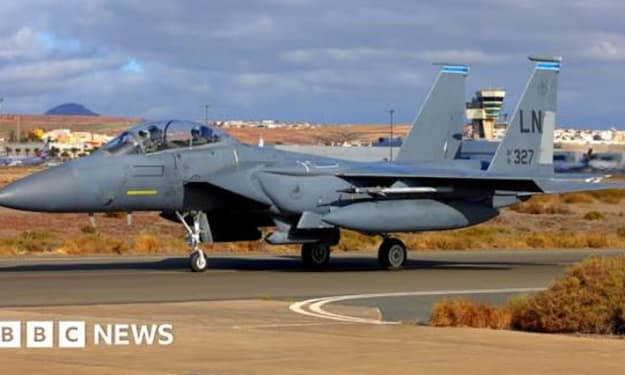
At least one of the United States Air Force fighter jets that was downed over Kuwaiti airspace in early March appears to have been based in the United Kingdom, according to emerging evidence from open‑source imagery and reconstruction by independent analysts. The revelation adds a new layer to an already sensitive and complex episode in the ongoing regional conflict involving the U.S., Iran, and allied forces. The fighter jet in question was one of three U.S. F‑15E Strike Eagle aircraft that were mistakenly shot down over Kuwait on March 1, 2026, during what U.S. Central Command (CENTCOM) has characterized as an “apparent friendly fire incident” amid intense aerial operations. All six aircrew members ejected safely and were recovered in stable condition. Initial statements from CENTCOM confirmed that the three F‑15Es — advanced multi‑role fighter bombers — were engaged in defensive and offensive missions against Iranian aircraft, ballistic missiles, and unmanned aerial systems when Kuwaiti air defenses mistakenly engaged them. New Confirmation of UK Base Origin A report published on March 7 cites analysis of video footage showing wreckage with a visible serial number. That serial number, 91‑0327 LN, corresponds to an F‑15E assigned to the 492nd Squadron of the 48th Fighter Wing, which is stationed at RAF Lakenheath in Suffolk, United Kingdom. Aviation analysts compared imagery from a recent training exercise with the wreckage, and identified matching markings on the jet’s wheel housing and distinctive colour patterns on the inner wheel hubs. RAF Lakenheath did not directly confirm the identity of the aircraft, instead directing questions to U.S. Central Command. The United States Air Force has not publicly disclosed the complete list of F‑15E units deployed to the Middle East as part of Operation Epic Fury, the official name for the broader U.S. operational campaign in the region. Open‑source aviation trackers and observers say that jets from multiple U.S. Air Force wings — including those based in North Carolina and Idaho — were also part of the deployment, which complicates the task of fully cataloguing the origins of every aircraft involved. Sequence of Events Leading to Shootdowns According to Reuters and U.S. military sources, the incident unfolded late on March 1 when three F‑15E jets were operating over Kuwait as part of coalition efforts against Iranian aerial threats. Kuwait’s air defense units, in a highly stressed and cluttered airspace environment, misidentified the American jets as hostile and engaged them with defensive weapons. The chaos in the skies was attributed to a complex overlap of radar contacts, missiles, drones, and aircraft from multiple military forces involved in the conflict. Separately, Iranian strikes involving ballistic missiles and drones were targeting allied positions and infrastructure in the region, further heightening alert levels among Gulf air defenses. All six U.S. aircrew members — typically a pilot and a weapon system officer aboard each F‑15E — successfully ejected and made controlled descents by parachute. News footage and witness accounts included images of parachutes descending over Kuwait’s Al Jahra area, followed by ground rescue efforts. Diplomatic and Military Responses Kuwait officially acknowledged the incident as a tragic mistake and expressed its cooperation with U.S. military authorities in the ensuing investigation. CENTCOM has emphasized that coalition forces are grateful for the support of Kuwaiti defense forces, even as both sides work to determine why airspace identification and de‑confliction protocols failed on this occasion. There have been no reported fatalities from the shootdowns themselves, though separate Iranian strikes in Kuwait are believed to have caused U.S. military casualties in other incidents around the same time. Operational and Strategic Impact The loss of three F‑15E aircraft — each valued at tens of millions of dollars — represents a significant material setback for the U.S. Air Force, even if it did not result in loss of life. Analysts have noted that friendly fire incidents of this scale are rare, particularly when involving high‑performance air forces operating in coalition with integrated command systems. Investigators are expected to examine a host of technical and procedural factors including radar identification systems, communication protocols between allied forces, and standard operating procedures for allied airspace coordination during high‑intensity combat. As the broader regional conflict continues to unfold, the downing of U.S. jets — including at least one aircraft linked to a UK airbase — highlights the risks of miscommunication and misidentification in modern aerial warfare.
By Fiaz Ahmed 2 days ago in The Swamp
China’s PBOC Extends Gold Buying as Middle East Tension Simmers. AI-Generated.
Amid escalating tensions in the Middle East, China’s People’s Bank of China (PBOC) has reportedly increased its gold reserves, signaling a cautious hedging strategy against geopolitical uncertainty and market volatility. Analysts suggest the move reflects Beijing’s effort to protect its financial stability while diversifying its foreign reserves beyond the U.S. dollar. The PBOC has quietly purchased significant amounts of gold over the past quarter, according to domestic and international sources tracking global bullion markets. China, already the world’s largest gold consumer, is taking advantage of recent dips in the yellow metal’s price to bolster its reserves. Some estimates indicate that these purchases could add tens of billions of dollars in value to Beijing’s holdings. The backdrop to this move is a surge in regional tensions, particularly involving Iran and neighboring Gulf states. Military escalation in the Persian Gulf and attacks on shipping lanes have created uncertainty in oil markets, prompting central banks worldwide to seek stability in alternative assets such as gold. “Gold remains a safe haven in times of geopolitical risk,” said Li Wen, a commodities analyst in Shanghai. “By increasing its holdings, China is hedging against currency fluctuations and potential disruptions in energy supplies.” China’s strategy is consistent with its long-term goal of diversifying reserves. While the U.S. dollar dominates global trade and reserve holdings, Beijing has gradually been shifting toward assets less exposed to external shocks. Gold provides a tangible store of value immune to political interference, making it an attractive option amid rising U.S.-Middle East tensions. The current wave of purchases also coincides with increased volatility in global energy markets. Iran, a major oil exporter, has become central to international concern following a series of attacks on commercial vessels and heightened military activity in the Gulf. Crude oil prices have fluctuated sharply in response to these developments, prompting financial institutions to reassess risk exposure. China relies heavily on Middle Eastern oil to fuel its growing economy, with imports from the Gulf making up a substantial portion of national demand. By bolstering gold reserves, the PBOC is indirectly insulating the economy from potential supply shocks or price spikes resulting from regional instability. International observers note that China’s gold buying is part of a broader trend among central banks seeking alternative reserves. In recent months, central banks from India, Russia, and other major economies have also increased gold purchases, citing similar concerns about geopolitical risks and financial market uncertainty. Despite the strategic significance, China has not publicly disclosed the full scale of its bullion acquisitions. PBOC statements emphasize the importance of maintaining diversified reserves while supporting domestic financial stability, avoiding commentary on specific geopolitical considerations. Analysts, however, argue that timing and scale strongly suggest the purchases are linked to the ongoing Middle East situation. The move has implications beyond Beijing’s balance sheet. Increased demand from central banks can influence global gold prices, which are already sensitive to currency fluctuations, interest rate expectations, and geopolitical developments. Markets have responded with slight upward pressure on bullion prices, reflecting investor sentiment regarding safety and liquidity. China’s extended gold accumulation reflects both financial prudence and geopolitical calculation. By hedging against potential shocks in global markets, the PBOC is signaling a cautious approach to international uncertainty, particularly in the oil-rich Middle East region. Observers believe this trend may continue if tensions escalate further, as gold remains a globally recognized hedge against risk. For Beijing, expanding its reserves is not only an economic safeguard but also a strategic tool, ensuring that China remains resilient in a volatile global landscape. With the Middle East crisis showing no immediate signs of de-escalation, China’s PBOC is likely to maintain, if not accelerate, its gold purchases, securing an asset that has historically proven its value in times of uncertainty and geopolitical unrest.
By Fiaz Ahmed 2 days ago in The Swamp
Reports suggest discussions inside Washington about limited troop deployment as tensions with Tehran escalate.. AI-Generated.
As tensions between the United States and Iran intensify, reports from officials familiar with internal discussions suggest that Donald Trump has privately shown serious interest in deploying U.S. ground troops inside Iran. While no final decision has been made, the conversations highlight a potentially significant escalation in a conflict that has so far been dominated by air strikes and naval operations. According to multiple sources cited in recent reports, Trump has discussed the possibility of sending a limited contingent of American troops into Iran for specific strategic missions rather than launching a full-scale ground invasion. The discussions reportedly took place in conversations with advisers, Republican allies, and military officials. Those familiar with the talks emphasized that the concept centers on deploying a relatively small force designed to achieve targeted objectives such as securing sensitive nuclear facilities, protecting strategic sites, or assisting allied operations. The potential move comes amid a rapidly evolving military confrontation in the region. U.S. forces have conducted extensive air operations aimed at Iranian military infrastructure, while Iran has responded with missile and drone strikes targeting American and allied assets in the Middle East. The growing cycle of attack and retaliation has raised fears of a broader regional war. Despite the private discussions, the White House has pushed back against reports suggesting that a ground deployment is imminent. Officials insist that the president has not issued any orders and that all military options remain under review. A spokesperson emphasized that any speculation about specific plans should be treated cautiously, noting that the administration often evaluates multiple scenarios during a crisis. Military analysts say even a small ground presence inside Iran would mark a dramatic escalation in the conflict. Iran is a large country with significant military capabilities, and any deployment of foreign troops could provoke a strong response from Iranian forces and allied militias across the region. The United States has previously avoided placing “boots on the ground” in Iran, relying instead on air power, naval deployments, and regional partnerships to contain tensions. However, some policymakers argue that certain strategic goals—such as securing nuclear materials or stabilizing key locations—could be difficult to achieve without limited ground operations. Trump himself has publicly suggested that he is not ruling out any options. In recent remarks, he stated that while ground troops may not be necessary, they could become a possibility if circumstances require stronger action. Supporters of a tougher approach toward Iran argue that decisive military pressure could weaken Tehran’s leadership and force negotiations over nuclear development and regional influence. They also believe that demonstrating U.S. willingness to escalate may deter further Iranian attacks. Critics, however, warn that even a limited deployment could quickly spiral into a larger war. Memories of prolonged conflicts in Iraq and Afghanistan remain fresh in the minds of many policymakers and voters, raising concerns about the risks of becoming entangled in another long and costly military engagement in the Middle East. Another factor influencing the debate is the potential geopolitical impact. Any U.S. ground operation inside Iran would likely draw reactions from major global powers and could disrupt energy markets, particularly given Iran’s position near key oil shipping routes in the Persian Gulf. Within Washington, lawmakers from both parties have called for greater transparency regarding military planning. Some members of Congress argue that any decision to deploy troops should involve legislative approval, while others insist the president must retain flexibility to respond quickly to emerging threats. Meanwhile, international leaders are urging restraint and diplomatic engagement to prevent further escalation. Several governments have called for renewed negotiations aimed at reducing tensions and avoiding a broader regional conflict that could destabilize global security. For now, the idea of U.S. ground troops in Iran remains a possibility under discussion rather than an approved policy. But the mere consideration of such a move underscores the seriousness of the current crisis and the complex choices facing American leaders. As the conflict continues to evolve, the decisions made in Washington could shape the future of Middle Eastern geopolitics—and determine whether the confrontation remains limited or expands into a much larger war.
By Fiaz Ahmed 2 days ago in The Swamp
Washington Moves to Break Hormuz Shipping Paralysis With $20B Maritime Insurance Plan. AI-Generated.
The United States is taking decisive steps to safeguard commercial shipping through the Strait of Hormuz, unveiling a $20 billion maritime insurance initiative designed to reduce risk for international vessels navigating one of the world’s most strategically sensitive waterways. The plan, announced by the U.S. Department of Defense and Treasury, comes amid escalating regional tensions and recent Iranian attacks on shipping vessels, which have disrupted global oil supplies and triggered volatility in international energy markets. The Strait of Hormuz, a narrow maritime chokepoint connecting the Persian Gulf to the Arabian Sea, is vital for global energy trade. Nearly 20% of the world’s oil supply passes through the strait, making its security a high priority for energy-importing nations and multinational shipping companies. Recent incidents—including attacks on tankers and drone strikes in nearby waters—have prompted insurers to hike premiums, with some firms refusing to cover vessels at all. The U.S. plan seeks to fill that gap by offering a government-backed insurance mechanism for commercial vessels operating in high-risk areas. Officials emphasize that the initiative is designed to restore confidence in maritime trade, ensuring that oil, liquefied natural gas, and other essential commodities continue flowing despite geopolitical tensions. “Energy and trade security are national security imperatives,” said Lloyd Austin. “This initiative will provide predictable coverage for commercial operators and help prevent disruptions that could ripple through global markets.” The $20 billion fund will cover both direct damages to ships and cargo as well as liability claims arising from hostile actions. U.S. officials indicated that the plan is available to vessels from all nations, emphasizing multilateral cooperation in maintaining safe maritime operations. Analysts say the approach mirrors historical precedents, such as wartime convoy insurance programs, but on a modern scale adapted to current geopolitical risks and the complex web of international shipping interests. Iran has frequently threatened to close the Strait of Hormuz in response to sanctions, naval operations, and perceived foreign interference. These threats have previously caused spikes in oil prices and disrupted supply chains. Shipping companies have grown increasingly wary of sending vessels through the region without adequate protection, creating what some analysts describe as a “shipping paralysis.” “This insurance initiative is a strong signal to Tehran and other actors that the international community is prepared to maintain maritime trade regardless of threats,” said Michael Singh. “By reducing financial risk, it removes a key leverage point that could be used to intimidate shipping firms.” Critics, however, caution that the plan is not a substitute for diplomacy or conflict resolution. While insurance may mitigate economic risk for private companies, it does not address the underlying political tensions that fuel instability in the Gulf. Analysts stress the need for parallel diplomatic engagement with Gulf states, Iran, and international partners to prevent escalation that could threaten both commercial and military vessels. The initiative is also expected to influence global energy markets. By ensuring that tankers and LNG carriers can transit the strait without prohibitive insurance costs, the U.S. hopes to stabilize supply and contain price spikes that have affected both European and Asian economies in recent months. Energy traders have reacted positively, with futures markets showing modest declines in volatility following the announcement. In addition to insurance coverage, the U.S. plans to coordinate closely with allied navies operating in the region, providing escort services, intelligence sharing, and rapid response to threats. These combined measures reflect a comprehensive approach to maritime security, emphasizing both financial and operational protections for international shipping. Shipping industry representatives have welcomed the plan, noting that it could restore confidence in one of the world’s most vital energy corridors. “Having a reliable insurance framework backed by a major government makes the difference between sending a ship through and rerouting it hundreds of miles,” said one shipping executive speaking on condition of anonymity. Washington’s $20 billion maritime insurance initiative represents a significant step in ensuring uninterrupted commerce in the Strait of Hormuz. While not a solution to the broader geopolitical challenges in the Middle East, it aims to mitigate immediate economic risks and reassure international stakeholders that trade and energy flows can continue despite regional tensions.
By Fiaz Ahmed 2 days ago in The Swamp
As Trump takes out world leaders, democracy takes a back seat. AI-Generated.
In a series of unprecedented moves, former U.S. President Donald Trump has increasingly bypassed traditional diplomatic channels, sidelining allies and taking direct action against foreign leaders. Observers warn that such unilateral strategies risk undermining democratic principles both domestically and abroad while leaving the U.S. isolated on the global stage. Trump’s approach contrasts sharply with the multilateralism that has characterized American foreign policy for decades. Rather than coordinating closely with allies through established diplomatic and legislative frameworks, the former president has increasingly relied on executive authority, public statements, and high-profile sanctions to advance U.S. interests. Critics argue this not only destabilizes international norms but also diminishes the role of Congress and other democratic institutions in shaping foreign policy. Recent actions targeting leaders in Latin America, the Middle East, and parts of Europe illustrate the trend. Analysts point out that decisions previously subject to intense debate among diplomats, lawmakers, and regional partners are now being executed rapidly, often with minimal consultation. These measures have generated both immediate geopolitical effects and long-term uncertainties for alliances. “Democracy thrives on checks and balances,” said Dr. Emily Harrison, a political science professor at Georgetown University. “When a single figure can dictate international relations with little oversight, it erodes the mechanisms designed to ensure accountability, transparency, and thoughtful deliberation.” While supporters argue that Trump’s direct style allows for quicker responses and projects strength, detractors say it risks alienating traditional allies and emboldening adversaries. European and Latin American governments have reportedly expressed concern over sudden policy shifts and unexpected sanctions, which often bypass traditional diplomatic channels. Such unilateralism can weaken long-term strategic partnerships, leaving countries hesitant to rely on U.S. commitments. Domestically, the trend also highlights tensions between executive power and legislative oversight. Congress has historically held authority over declarations of war, foreign aid allocations, and treaty ratifications. By circumventing these processes, Trump not only challenges the balance of power but also sets a precedent for future leaders to act independently of democratic checks. In addition to structural concerns, experts warn that public messaging—especially on social media—has become a tool for influencing global politics directly. Announcements about policy shifts, sanctions, or leadership removal often reach international audiences instantly, sometimes causing confusion among diplomats and foreign populations. The speed and informality of this communication style can exacerbate crises rather than resolve them, according to analysts. International relations scholars emphasize that while decisive action is sometimes necessary, sustained engagement, negotiation, and consensus-building remain critical. By prioritizing personal decision-making over established diplomatic processes, Trump risks undermining U.S. credibility and soft power. Allies may view U.S. commitments as unpredictable, and adversaries could exploit perceived gaps in policy coordination. Observers also point to the potential domestic consequences. By concentrating power in the executive branch, Trump diminishes the influence of Congress, independent agencies, and the judiciary in foreign policy decisions. Critics argue this trend could erode public trust in democratic institutions and create long-term structural weaknesses. Despite controversy, Trump’s approach resonates with a segment of voters who view traditional diplomacy as slow, ineffective, or overly cautious. Supporters applaud the directness, seeing it as a way to protect U.S. interests and project strength internationally. However, experts caution that short-term gains in visibility or leverage may come at the expense of sustainable, institutionally anchored foreign policy. As the global order navigates heightened tensions and emerging crises, Trump’s unilateral strategy raises fundamental questions about the role of democracy in international decision-making. Maintaining balance between executive authority and democratic oversight is increasingly crucial, not only for the U.S. but also for the stability of international alliances that rely on predictable, accountable governance.
By Fiaz Ahmed 2 days ago in The Swamp
The First Casualty Of War Is The Truth
It is often said that in times of war, the first casualty is the truth. When Donald Trump launched Operation Epic Fury, he said that the goal was to stop Iran from developing nuclear weapons. At the same time, when the head of the International Atomic Energy Agency (IAEA), Rafael Grossi, was asked about it, he said that they do not even have access to the sites. Therefore, they have no clear idea about what is happening there, and he appeared somewhat confused.
By Ibrahim Shah 2 days ago in The Swamp
CDF Munir discusses Iranian attacks in meeting with Saudi defence minister. AI-Generated.
Chief of the Defence Staff (CDF) Asim Munir visited Saudi Arabia on Thursday for high-level talks with Saudi Defence Minister Prince Khalid bin Salman, focusing on recent Iranian missile and drone attacks and their potential impact on regional security. The meeting, held at the Ministry of Defence headquarters in Riyadh, comes amid heightened tensions across the Gulf, as attacks on civilian and strategic infrastructure have intensified over the past months. During the discussion, both officials examined intelligence reports detailing cross-border strikes linked to Iran, including drone operations targeting critical energy and transport installations. These attacks have raised alarms for Gulf countries, prompting renewed assessments of their defensive capabilities and emergency response mechanisms. CDF Munir emphasized the importance of preparedness, warning that even minor miscalculations in such a volatile environment could escalate into broader conflicts. “Regional security is a shared responsibility. Collaboration and coordination among like-minded nations are essential to prevent further escalation,” Munir said, underscoring Pakistan’s commitment to peace and stability while maintaining a neutral diplomatic stance. Prince Khalid reaffirmed Saudi Arabia’s dedication to strengthening defence cooperation, particularly in air defence, intelligence sharing, and rapid response operations. The officials discussed joint measures to enhance early warning systems along key borders, improve surveillance technologies, and coordinate air and naval patrols. They also explored the possibility of conducting joint military exercises, personnel exchanges, and training programs to ensure both countries are fully prepared to respond to emerging threats. According to sources familiar with the meeting, discussions included sharing advanced radar and drone detection systems, as well as cyber-defence initiatives to protect critical infrastructure from digital attacks. Security analysts have noted that this meeting reflects an increasing trend of closer alignment between Gulf states and neighbouring countries like Pakistan in addressing Iranian-backed proxy attacks. By engaging in strategic dialogue, both nations aim to mitigate risks posed by regional instability while safeguarding energy routes, shipping lanes, and civilian populations. Historically, Pakistan has maintained a careful balance in Middle Eastern conflicts, striving to preserve neutrality and maintain strong ties with multiple actors. However, meetings such as this suggest a pragmatic shift, with Islamabad demonstrating a willingness to cooperate more closely with Gulf nations on security matters while continuing to advocate for peaceful resolution of conflicts. During the meeting, both sides acknowledged that regional stability cannot be achieved through military preparedness alone. They emphasized the importance of ongoing diplomacy, conflict de-escalation, and intelligence cooperation to anticipate potential threats. Experts say that this dual approach—combining defensive readiness with active diplomatic engagement—is essential in preventing incidents from spiraling into larger confrontations. The dialogue also touched on protecting maritime routes in the Gulf, which are vital to the global oil supply. Attacks on tankers and shipping lanes in recent months have underscored the fragility of commercial traffic in the region. By coordinating patrols and sharing real-time intelligence, both countries hope to deter hostile actors and maintain uninterrupted trade. CDF Munir and Prince Khalid concluded the meeting with a joint commitment to continue strategic consultations, strengthen bilateral defence ties, and enhance intelligence-sharing protocols. Officials highlighted that sustained collaboration will not only safeguard national interests but also contribute to wider regional stability. Observers say this engagement signals a proactive stance by both Pakistan and Saudi Arabia, demonstrating that military dialogue, combined with strong diplomatic channels, can play a crucial role in deterring aggression and ensuring security in the Gulf. As tensions persist, such high-level meetings underscore the importance of multinational cooperation, with Pakistan positioning itself as a responsible partner in maintaining peace and stability across a region increasingly vulnerable to conflict escalation.As tensions persist, such high-level engagement underscores the importance of proactive diplomacy alongside military preparedness. Officials from both Pakistan and Saudi Arabia stressed that continued dialogue, joint exercises, and intelligence sharing are essential to prevent miscalculations that could escalate into wider conflicts. Regional analysts say that by working together, the countries aim not only to protect their own populations and assets but also to stabilize key maritime routes, energy supply lines, and trade networks critical to the global economy. The meeting ultimately reflects a strategic effort to combine defence readiness with multilateral cooperation in an increasingly volatile Gulf region.
By Fiaz Ahmed 2 days ago in The Swamp
In the Gulf, a Cruise Line Steps Up to Get Stranded Passengers Home. AI-Generated.
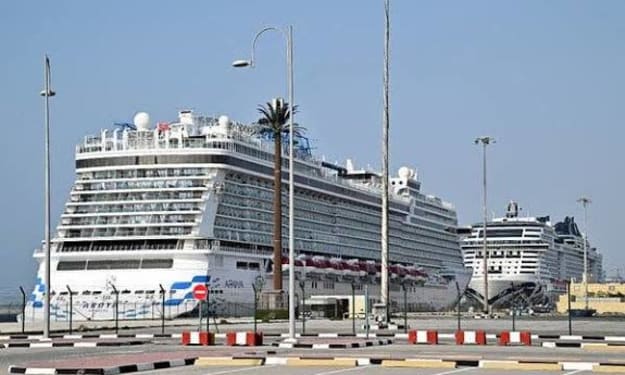
As conflict and airspace closures disrupt commercial flights across parts of the Middle East, a major cruise company has stepped in to help hundreds of stranded travelers find a way home. With airports overwhelmed and airlines canceling routes, the unusual rescue effort has transformed a leisure cruise ship into an emergency transport vessel for passengers unable to leave the region. The situation escalated after rising tensions between Iran and Israel led several governments to issue security warnings and restrict flights over parts of the Gulf. Major airlines quickly began rerouting aircraft or suspending services entirely, leaving thousands of international travelers stranded in cities across the region. Among those affected were tourists, business travelers and families who had been visiting countries such as the United Arab Emirates and Qatar. Many suddenly found themselves unable to return home as flight schedules collapsed with little notice. In response, Royal Caribbean Group announced that one of its vessels operating in the region would offer additional sailings designed specifically to transport stranded passengers to ports where flights remain operational. The ship, already scheduled for leisure voyages in the Gulf, quickly became part of an improvised evacuation network. Cruise officials coordinated with port authorities and foreign embassies to identify travelers in urgent need of transportation. Extra cabins were opened and departure schedules were adjusted to accommodate the unexpected demand. Passengers boarding the emergency voyage described scenes of relief and exhaustion. Many had spent days trying unsuccessfully to rebook flights or secure land transport to neighboring countries. For some families traveling with children, the uncertainty had become increasingly stressful. “Once we heard there was a ship leaving the Gulf that could take us somewhere flights were still running, we booked immediately,” said one passenger who had been stranded in Dubai for several days. The cruise route was adjusted to sail toward safer ports such as Muscat and Doha, where international airports remain open and functioning. From there, passengers could continue their journeys home on commercial flights. Government officials praised the cruise operator’s decision to assist. Diplomats said private-sector support can play an important role during regional crises, particularly when traditional transportation networks are disrupted. Cruise companies typically focus on leisure travel, but maritime vessels can sometimes provide alternative evacuation routes during emergencies. Ships are not constrained by the same airspace restrictions that affect aviation, allowing them to operate even when flight corridors are closed. Security analysts say the incident highlights how geopolitical tensions in the Gulf can rapidly affect global travel. Several airlines had already begun avoiding parts of Middle Eastern airspace due to safety concerns. For the passengers boarding the cruise ship, however, the journey was less about geopolitics and more about getting home. Crew members welcomed the unexpected travelers aboard, offering meals, temporary accommodations and assistance arranging onward travel plans. For many, the ship represented a rare moment of stability during a chaotic travel situation. As the vessel departed the Gulf waters carrying hundreds of relieved passengers, it symbolized an unusual but effective response to a modern travel crisis—where a cruise liner became a lifeline for those stranded far from home.Crew members onboard worked around the clock to accommodate the unexpected surge of passengers, providing meals, temporary lodging, and assistance with travel documentation. The ship sailed toward ports such as Muscat, where airports continued operating and travelers could reconnect with international flights. Diplomats from several countries praised the effort, noting that private companies can play a crucial role during travel emergencies. Analysts say the incident demonstrates how maritime transport can provide an alternative when aviation networks break down. For many stranded travelers, the cruise ship offered more than transportation—it provided reassurance and a safe path home during a deeply uncertain moment.
By Fiaz Ahmed 2 days ago in The Swamp
New England Patriots’ Plane Brought Americans Back From the Middle East. AI-Generated.
An aircraft belonging to the New England Patriots was used in an unexpected humanitarian mission after helping transport American citizens out of the Middle East during a period of escalating regional tensions. The unusual operation highlighted how private organizations and sports franchises sometimes step in to assist during international crises when traditional travel routes are disrupted.
By Fiaz Ahmed 2 days ago in The Swamp
U.S. strategic competition with China.
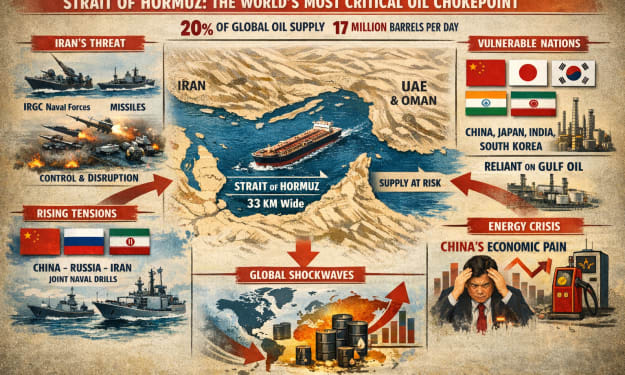
This war Stop being a medley story the moment the first oil tanker changed course in the Persian Gulf. What I mean is, Strait of Hormuz is the most important energy bottleneck on earth. Everybody knows it is the most important energy bottleneck on earth. And if it was the threat from Iran last time, this time Iran has partially done it. It is so narrow, IRGC has a lot of control over it. Just like in the Strait of Malacca, army/navy has control over it. Similarly, here the Iranians have control over it. And recently, China, Russia, and Iran have already conducted war games. So it is this narrow, 33 kilometers wide, you are hearing about it everywhere, everybody is talking about it. It is the width of a large city. So in this narrow passage, which holds 20% of the world's oil, one fifth of the world's oil and gas goes through, it is around 17 million barrels per day. There is no realistic alternative route except the Strait of Hormuz. If we close this passage, its consequences will not stop at any one border. Europe will pay, Japan will pay, India, South Korea, China, everybody pays the price. So a theory is floating around, which backs my argument that China is the target. It is that in Washington circles, there is a discussion going on, let's be honest, if this happens, what do we have to do? The hawkish people there say that this disruption should be allowed because it does not impact them as much as it impacts those countries, which I have just mentioned. So let's take this opportunity that the slowdown of China's energy supply can be slowed down. Trap Beijing in such an expensive moment as long as this congestion remains in the Strait of Hormuz, it remains closed, partially or completely. Iran keeps Beijing hit very badly from an energy security point of view. So the containment policy of China that is already going on is an added bonus. So imagine, on one hand, you are doing everything with technology and trade, imposing tariffs, treating them in the South China Sea, imagine all this. And from the other side, almost 90% of the oil and gas supplies go to China. If it is blocked for a few days, how badly it will hit China. So imagine, while the world is suffering, they are only having strategic designs in their minds.
By Ibrahim Shah 2 days ago in The Swamp