Latest Stories
Most recently published stories in Families.
A Grandparent Who Couldn’t See Their Grandchildren After Divorce
I still set the table for five every Christmas Eve. Force of habit, I suppose. My husband Malcolm tells me I do it without thinking, and he's probably right. Two years of quiet Christmases and my hands still reach for the small plates, the ones with the holly border that Lily and Sam used to eat their turkey from. Lily would separate everything on her plate so nothing touched. Sam would pile it all up like a mountain and eat from the top down. I could tell you what they'd say when they walked through the door. I could tell you exactly how the afternoon would go.
By Family Law Serviceabout 2 hours ago in Families
A Dad Who Didn’t Know How to Handle the Grief of Divorce
The first morning I woke up alone in the flat, I made two cups of tea. Force of habit. I stood there in the kitchen holding both mugs, one in each hand, and just stared at them like an idiot. Then I poured one down the sink and watched it swirl away.
By Jess Knaufabout 3 hours ago in Families
The reason we move more quickly when we're excited could be explained by dopamine.
People frequently walk a little faster without realising it when they are enthusiastic or eager. According to a recent study, the brain's reward system could be the source of this extra "pep." It seems that this mechanism modifies our level of activity based on whether positive events occur as anticipated or come as a pleasant surprise.
By Francis Damiabout 14 hours ago in Families
Rewriting unpleasant childhood experiences can help people feel less afraid of failing.
Have you ever been reluctant to start something new because you thought you wouldn't succeed? That fear begins in childhood for a lot of people. A critical remark made by a parent or instructor might linger for years. Those recollections may eventually develop into a profound fear of failing.
By Francis Damiabout 14 hours ago in Families
WHEN SILENCE SPEAKS.
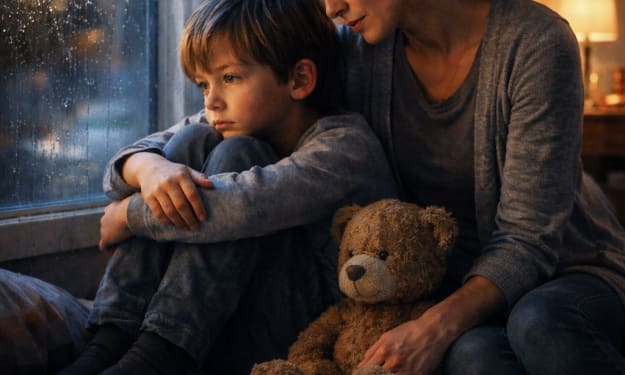
There is a kind of silence in children that does not feel peaceful. It feels heavy, almost charged, as if something unspoken is filling the space between their small bodies and the world around them. As adults, we are trained to listen for words, to expect explanations, to believe that if something is wrong, it will be said aloud. But children do not always work that way. Many of them do not have the vocabulary for what they are feeling, and some of them, especially when something truly painful has happened, do not feel safe enough to try.
By Yolanda Cristobal a day ago in Families
My Mother Learned to Text at 63
My mother got her first smartphone at sixty-three because the flip phone finally betrayed her. “It swallowed my message,” she said, holding it up like evidence in a courtroom drama. “I wrote to your aunt Shazia that the biryani needed more salt and now it says ‘Message Failed.’ How can a message fail? It had all the ingredients.”
By Fawad Ahmad2 days ago in Families