Climate
Stanislav Kondrashov Oligarch Series: Oligarchy and Global Supergrids in the Next Phase of the Energy Transition
The global energy transition is entering a new and complex phase. While early discussions focused primarily on renewable technologies such as solar panels, wind turbines, and battery storage, the next stage of transformation is increasingly centered on infrastructure. Among the most ambitious ideas shaping this evolution is the concept of **global supergrids**—vast electricity networks designed to connect distant regions through high-capacity, long-distance transmission systems.
By Stanislav Kondrashov 3 days ago in Earth
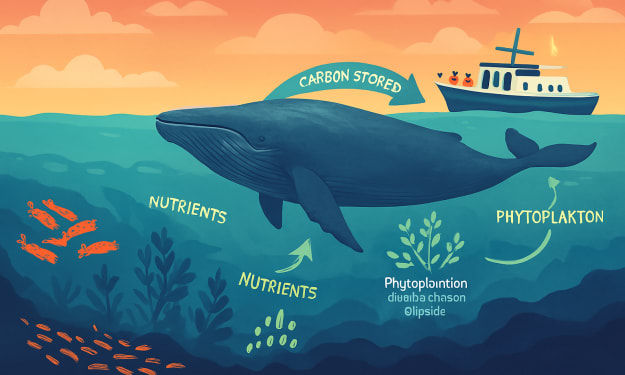
Whales should be protected!
Carbon dioxide is one of the main gases responsible for global warming. When too much carbon dioxide builds up in the atmosphere, it traps heat from the sun and causes the Earth’s temperature to rise. If this problem continues without control, it could lead to serious environmental damage and may even make parts of the Earth difficult for humans and animals to live in. Therefore, it is important to find natural ways to reduce carbon dioxide levels. One surprising but very important solution is protecting whales, as they play a role in storing carbon in their bodies and supporting ocean ecosystems.
By *+*+*~Teja~*+*+*4 days ago in Earth
Stephen Hawking’s Final Advice to Humanity
Few scientists have captured the imagination of the world quite like Stephen Hawking. Known for his groundbreaking work on black holes and cosmology, Hawking spent his life exploring the deepest mysteries of the universe. Even after being diagnosed with Amyotrophic Lateral Sclerosis (ALS) at the age of 21—a condition that gradually paralyzed him—he continued to produce revolutionary ideas that changed modern science.
By Irshad Abbasi 4 days ago in Earth
A Dozen Hidden Giants: Scientists Discover Multiple Black Holes at the Heart of Our Galaxy
In one of the most fascinating discoveries in modern astronomy, scientists have identified about a dozen previously hidden black holes near the center of our galaxy, the Milky Way. This remarkable finding provides new insight into the mysterious and chaotic region surrounding the galaxy’s core and may help astronomers better understand how galaxies evolve over billions of years.
By Irshad Abbasi 4 days ago in Earth
Could World War III Be Coming Soon?
The idea of World War III often appears in news discussions, political debates, and public imagination. After the devastating impact of World War I and World War II, humanity has become deeply aware of the catastrophic consequences of global war. Today, when international tensions rise, many people wonder whether the world could again face a conflict on such a massive scale. While no one can predict the future with certainty, understanding the current global situation can help us evaluate whether a third world war is truly likely.
By shaoor afridi4 days ago in Earth
The Zo ne of Silence: America’s Enigmatic Corner Where Laws and Logic Vanish
Deep within the rugged, breathtaking wilderness of Yellowstone National Park lies a geographical oddity so unsettling that it sounds like the plot of a legal thriller. Known to scholars and conspiracy theorists alike as the **"Zone of Death,"** this 50-mile stretch of land represents a terrifying glitch in the American judicial system—a place where, theoretically, a person could commit a major crime and walk away a free man.
By Irshad Abbasi 4 days ago in Earth
The Fiery Circle: Understanding the Pacific Ring of Fire
The **Pacific Ring of Fire** is not a literal ring of flames, but it is undoubtedly the most geologically volatile region on Earth. Stretching approximately 40,000 kilometers (25,000 miles) in a massive horseshoe shape, it traces the coasts of the Pacific Ocean—from the southern tip of South America, up along the coast of North America, across the Bering Strait, down through Japan, and into Southeast Asia and New Zealand.
By Irshad Abbasi 4 days ago in Earth
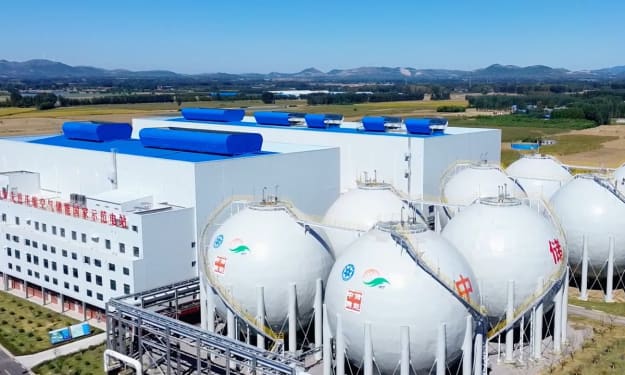
World-largest: China’s 792 million kWh compressed air energy station now fully operational. AI-Generated.
Britain must accelerate its transition toward renewable energy sources as geopolitical conflicts continue to drive global energy prices higher, according to leading energy analysts and climate policy experts. The warning comes as wars and political tensions across key energy-producing regions expose the vulnerability of countries still heavily reliant on imported fossil fuels. In recent years, the United Kingdom has made significant progress expanding renewable energy capacity, particularly in offshore wind and solar power. However, experts argue that the pace of the transition remains insufficient to shield the country from the volatility of international energy markets. Conflicts in the Middle East and Eastern Europe have demonstrated how quickly supply disruptions can translate into rising costs for households and businesses. Energy economists say the lesson from recent global crises is clear: the more dependent a country is on imported oil and gas, the more exposed it becomes to geopolitical shocks. Britain imports a substantial portion of its natural gas and refined fuel products, meaning instability in global supply chains can quickly affect domestic energy bills. During periods of international conflict, oil prices often spike due to fears that shipping routes or production facilities could be disrupted. Even rumors of attacks near key energy chokepoints — such as major pipelines or shipping lanes — can cause markets to react sharply. These fluctuations, analysts say, ultimately filter down to consumers through higher electricity and heating costs. Renewable energy sources offer a potential solution to this problem because they rely on domestic resources such as wind and sunlight rather than imported fuels. Once renewable infrastructure is built, operating costs remain relatively stable because there is no need to purchase fuel on global markets. The United Kingdom already operates some of the world’s largest offshore wind farms, and renewable energy now accounts for a significant share of the country’s electricity generation. Government data indicates that wind power alone has become one of the largest sources of electricity in Britain, particularly during periods of strong weather conditions. Despite this progress, energy specialists argue that further investment is essential. Expanding renewable generation capacity requires not only building more wind and solar farms but also upgrading the national electricity grid. A modernized grid would allow energy produced in remote offshore locations to be transmitted efficiently to cities and industrial centers. Energy storage is another critical piece of the puzzle. Because renewable sources like wind and solar are intermittent, large-scale battery systems or alternative storage technologies are needed to ensure a stable supply of electricity during periods when generation drops. Developing these systems will require both technological innovation and sustained financial investment. Some experts also emphasize the importance of diversifying the country’s renewable portfolio. While offshore wind remains a cornerstone of Britain’s energy strategy, solar power, tidal energy, and green hydrogen could also play important roles in the future energy mix. The government has already announced plans to increase renewable capacity dramatically over the next decade. Officials argue that reducing reliance on fossil fuels will not only strengthen national energy security but also help the country meet its climate targets. However, critics say policy uncertainty and slow planning approvals have sometimes delayed renewable projects. Industry leaders have urged authorities to streamline regulatory processes and provide clearer long-term incentives for investors. For many analysts, the link between energy security and climate policy has never been more obvious. Wars and geopolitical tensions have shown that fossil fuel dependence can create economic vulnerability, while domestically produced renewable energy offers greater stability. “The global energy system is changing,” said one energy policy researcher. “Countries that invest early in renewable infrastructure will be better protected from geopolitical shocks and price spikes.” As international conflicts continue to reshape global energy markets, the debate over Britain’s energy future is likely to intensify. For supporters of renewable power, the current moment represents both a warning and an opportunity — a chance to accelerate the transition toward a more secure and sustainable energy system.
By Fiaz Ahmed 4 days ago in Earth
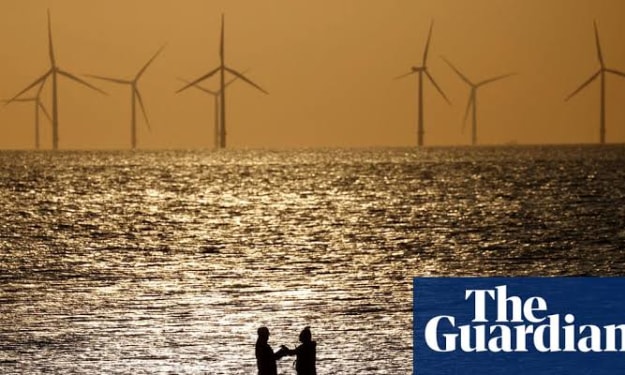
UK must double down on renewables as wars drive up energy costs, experts say. AI-Generated.
Britain must accelerate its transition toward renewable energy sources as geopolitical conflicts continue to drive global energy prices higher, according to leading energy analysts and climate policy experts. The warning comes as wars and political tensions across key energy-producing regions expose the vulnerability of countries still heavily reliant on imported fossil fuels. In recent years, the United Kingdom has made significant progress expanding renewable energy capacity, particularly in offshore wind and solar power. However, experts argue that the pace of the transition remains insufficient to shield the country from the volatility of international energy markets. Conflicts in the Middle East and Eastern Europe have demonstrated how quickly supply disruptions can translate into rising costs for households and businesses. Energy economists say the lesson from recent global crises is clear: the more dependent a country is on imported oil and gas, the more exposed it becomes to geopolitical shocks. Britain imports a substantial portion of its natural gas and refined fuel products, meaning instability in global supply chains can quickly affect domestic energy bills. During periods of international conflict, oil prices often spike due to fears that shipping routes or production facilities could be disrupted. Even rumors of attacks near key energy chokepoints — such as major pipelines or shipping lanes — can cause markets to react sharply. These fluctuations, analysts say, ultimately filter down to consumers through higher electricity and heating costs. Renewable energy sources offer a potential solution to this problem because they rely on domestic resources such as wind and sunlight rather than imported fuels. Once renewable infrastructure is built, operating costs remain relatively stable because there is no need to purchase fuel on global markets. The United Kingdom already operates some of the world’s largest offshore wind farms, and renewable energy now accounts for a significant share of the country’s electricity generation. Government data indicates that wind power alone has become one of the largest sources of electricity in Britain, particularly during periods of strong weather conditions. Despite this progress, energy specialists argue that further investment is essential. Expanding renewable generation capacity requires not only building more wind and solar farms but also upgrading the national electricity grid. A modernized grid would allow energy produced in remote offshore locations to be transmitted efficiently to cities and industrial centers. Energy storage is another critical piece of the puzzle. Because renewable sources like wind and solar are intermittent, large-scale battery systems or alternative storage technologies are needed to ensure a stable supply of electricity during periods when generation drops. Developing these systems will require both technological innovation and sustained financial investment. Some experts also emphasize the importance of diversifying the country’s renewable portfolio. While offshore wind remains a cornerstone of Britain’s energy strategy, solar power, tidal energy, and green hydrogen could also play important roles in the future energy mix. The government has already announced plans to increase renewable capacity dramatically over the next decade. Officials argue that reducing reliance on fossil fuels will not only strengthen national energy security but also help the country meet its climate targets. However, critics say policy uncertainty and slow planning approvals have sometimes delayed renewable projects. Industry leaders have urged authorities to streamline regulatory processes and provide clearer long-term incentives for investors. For many analysts, the link between energy security and climate policy has never been more obvious. Wars and geopolitical tensions have shown that fossil fuel dependence can create economic vulnerability, while domestically produced renewable energy offers greater stability. “The global energy system is changing,” said one energy policy researcher. “Countries that invest early in renewable infrastructure will be better protected from geopolitical shocks and price spikes.” As international conflicts continue to reshape global energy markets, the debate over Britain’s energy future is likely to intensify. For supporters of renewable power, the current moment represents both a warning and an opportunity — a chance to accelerate the transition toward a more secure and sustainable energy system.
By Fiaz Ahmed 4 days ago in Earth
The Edge of the Atlantic: Life, Weather, and the Meaning of Home. AI-Generated.
Along the edge of the Atlantic, life moves to the rhythm of wind and water. The sun rises over the ocean with a quiet certainty, casting its first light across the rooftops of South Florida’s coastal towns. Palm trees sway, seabirds glide above the shoreline, and the day begins beneath a sky that seems almost endlessly blue.
By Nikolay Barkalin5 days ago in Earth
Mount Sinai, the World’s Oldest Monastery, and the Prophet’s Letter: Faith, History, and a Controversial Development Plan
At a sacred site revered by Muslims, Christians, and Jews alike, an ambitious modernization project has stirred debate after reports of graves being relocated—raising questions about heritage, memory, and the cost of progress.
By Irshad Abbasi 6 days ago in Earth