Climate
President Trump Calls Putin to Discuss Ending the Wars in Iran and Ukraine
Introduction In a significant diplomatic move, U.S. President Donald Trump recently held a phone conversation with Russian President Vladimir Putin to discuss ongoing conflicts in the Middle East and Eastern Europe. The call focused on the war involving Iran and the prolonged Russia-Ukraine conflict, both of which have raised global concerns about stability, security, and economic consequences. The conversation highlights growing international pressure to find peaceful solutions to these major conflicts.
By shaoor afridiabout 6 hours ago in Earth
A Changing Environmental Landscape Impacts the Insurance Industry
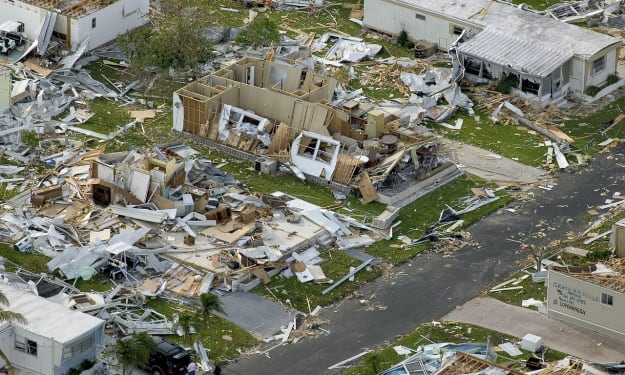
The phrase climate change simply refers to the changes in climate factors such as temperature and precipitation but over the last decade, the phrase has become much more polarizing, politicized and divisive. Non-scientific arguments aside, extreme weather events and natural disasters are increasing in number and severity and the effects of these events are causing more property damage in both commercial and residential spheres. Rising global temperatures can be attributed to the increase in damage causing storms and destructive wildfires. Insurance companies are seeing rising payout costs as an effect of climate change as more claims are submitted to cover losses from these events. As controversial as the phrase climate change is, insurance businesses and carriers are experiencing climate change first hand with increasing claims and losses as a direct result of weather and environmental events.
By doron levya day ago in Earth
Human Revenge: A Hidden Cause Behind the Decline of Snow Leopards
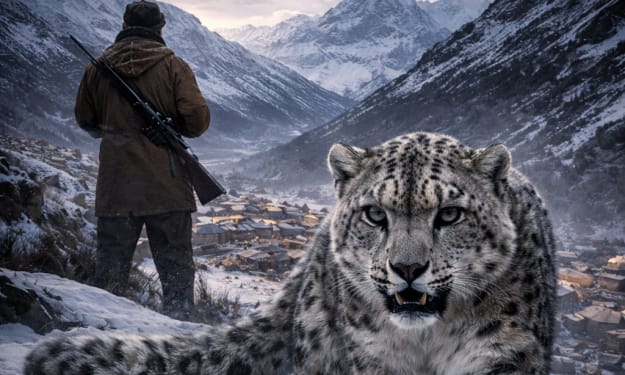
High in the rugged mountains of Central and South Asia lives one of the world’s most mysterious and beautiful big cats—the snow leopard. Known for its thick grey-white fur, long tail, and incredible ability to blend into rocky landscapes, this elusive predator has fascinated scientists and wildlife lovers for decades. Yet despite its beauty and ecological importance, the snow leopard faces a growing threat: human revenge.
By Irshad Abbasi a day ago in Earth
Life at the Top of the World: Glimpses of the North Pole
The North Pole is one of the most remote and mysterious places on Earth. Located at the northernmost point of the planet, it lies in the middle of the Arctic Ocean, surrounded by thick sheets of drifting sea ice. Temperatures here can fall far below freezing for most of the year, and for months at a time the region is plunged into darkness during the long polar night. Despite these harsh conditions, the North Pole and the surrounding Arctic region are home to a surprising variety of life. These glimpses of life in one of the world’s most extreme environments reveal the resilience of nature and the delicate balance of Arctic ecosystems.
By Irshad Abbasi a day ago in Earth
Chemical Recycling Debate Surrounding Plastic Pyrolysis
Plastic waste management has become one of the most contentious environmental challenges of the twenty-first century. Mechanical recycling has long been the dominant strategy for reprocessing polymer waste, yet its limitations—particularly contamination, polymer degradation, and sorting inefficiencies—have driven the emergence of alternative technologies. Among these, plastic pyrolysis has been widely promoted as a chemical recycling pathway capable of transforming heterogeneous plastic waste into hydrocarbon products.
By Wayne Shena day ago in Earth
Global Agreement to Limit Greenhouse Gases Enters into Force
A major step in the global fight against climate change has begun as countries around the world start implementing a landmark agreement designed to limit greenhouse gas emissions. The agreement represents years of negotiations, scientific warnings, and increasing public concern about the growing impacts of global warming on ecosystems, economies, and human life.
By Irshad Abbasi a day ago in Earth
Death Valley sees its most spectacular superbloom in a decade. AI-Generated.
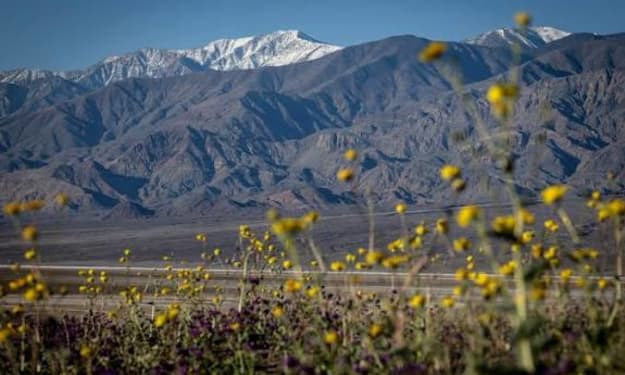
One of the most extreme landscapes on the planet—Death Valley National Park—is currently experiencing an extraordinary natural event: its most spectacular wildflower superbloom in a decade. What is usually a stark expanse of sun‑baked desert has transformed into sweeping carpets of vibrant color, drawing visitors, scientists, and photographers to witness a rare and fleeting burst of life. This year’s bloom, described by the U.S. National Park Service as the most dramatic since 2016, is the result of unusually wet weather during the fall and winter months. Typically known as the hottest and driest place in North America, Death Valley averages only about two inches of rain annually. But from late autumn through early January, the region received more than its yearly average in a short span, creating ideal conditions for dormant wildflower seeds to sprout and burst into bloom. A Desert Transformed Normally a landscape of sand and jagged rock, this spring the valley floor has come alive with a riot of pinks, purples, yellows, and whites. Species such as Desert Gold, Phacelia, Sand Verbena, and Mojave Desertstar blanket the ground, creating scenes that defy Death Valley’s harsh reputation. Park officials and wildlife enthusiasts alike have expressed amazement at the scale of the bloom and the speed with which it has taken over the valley. “This area that’s known basically for hot weather, sand and dirt has just become this amazing landscape of colors,” said David Blacker, executive director of the Death Valley Natural History Association. “The smell is just amazing.” At lower elevations, the wildflower display is already widespread and expected to last through mid to late March, weather permitting. As temperatures gradually shift, blooms at higher elevations may continue into April and even through June, though the full extent of later displays will depend on ambient heat and moisture levels. Rain: The Key to the Bloom Superblooms in desert environments are extremely rare and hinge upon a delicate balance of weather conditions. In Death Valley, a confluence of well‑timed rainfall events and moderate winter temperatures created just the right environment for seeds that often lie dormant for years to germinate, grow, and flower. Abby Wines, acting deputy superintendent at the park, noted that the exceptionally wet period provided more moisture than the valley would typically receive in an entire year. This unusual rainfall allowed plants to take root and flourish, even in areas that ordinarily remain barren. Although the term “superbloom” doesn’t have a strict scientific definition, it is widely used by park officials and visitors to describe years when wildflower blooms exceed normal patterns in scale and intensity. These events usually happen only once every decade or so in Death Valley, adding to their scarcity and appeal. A Magnet for Visitors and Scientists The rare spectacle has drawn crowds of visitors who typically think of Death Valley as nothing more than a harsh landscape of sand dunes and heat. In recent days, photographers and nature lovers have flocked to well‑known viewing areas such as Badwater Basin, Jubilee Pass Road, and surrounding alluvial fans where blooms are especially dense. Park officials are encouraging visitors to follow “Leave No Trace” principles: staying on designated paths, avoiding picking flowers, and being mindful of fragile ecosystems. Because these blooms are so dependent on specific conditions, conservation‑minded behavior plays a key role in protecting future displays. For scientists and ecologists, the superbloom offers a unique opportunity to observe how desert ecosystems respond to atypical weather events. Flowering cycles in these environments are closely tied to climatic patterns, and scientists can gather valuable data that may inform understanding of ecological resilience in the face of climate variability A Fleeting Celebration of Life Despite the stunning display, the superbloom is temporary. Once the rains stop and the desert heats up, the flowers will quickly fade and set seed, leaving behind a memory of colors before the valley reverts to its usual starkness. Still, for those who have made the journey this spring, the sight of Death Valley awash in hues of gold, purple, and pink is a reminder of nature’s capacity to surprise—and a testament to the fragile beauty that can spring from even the harshest environments.
By Fiaz Ahmed 2 days ago in Earth
Climate Change: The Defining Challenge of Our Time
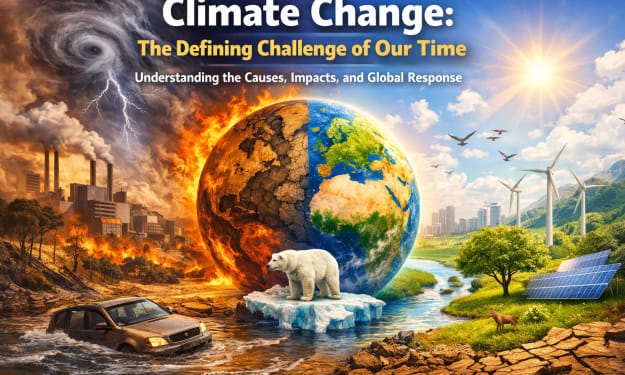
Climate change is one of the most pressing issues facing humanity in the 21st century. It refers to long-term changes in Earth’s temperature, weather patterns, and climate systems. While the planet’s climate has naturally changed throughout history, the changes observed today are occurring much faster and are largely caused by human activities. Scientists around the world warn that if these changes continue unchecked, they could have severe consequences for ecosystems, economies, and societies.
By Irshad Abbasi 2 days ago in Earth
The Sky Adorned with Stars: Nature’s Most Beautiful Crown
On a clear night, when the lights of cities fade and the air grows still, the sky reveals one of nature’s most breathtaking sights — a vast canvas filled with shining stars. The phrase “the sky adorned with stars” perfectly captures the beauty of this moment, as if the heavens themselves are wearing a glittering crown. For thousands of years, humans have gazed upward in awe, wondering about the countless lights scattered across the darkness.
By Irshad Abbasi 2 days ago in Earth
When Two Young Stars Collided: A Cosmic Catastrophe from 500 Years Ago
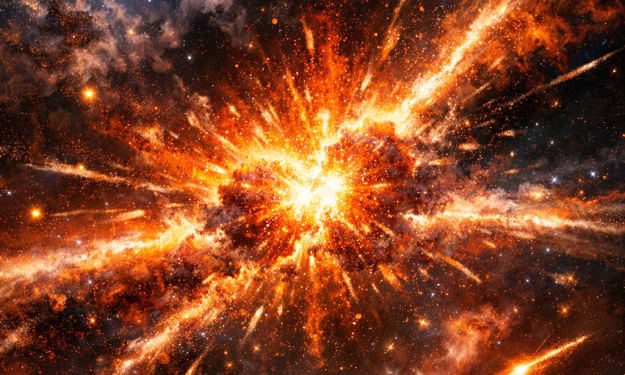
About 500 years ago, a dramatic event unfolded in our galaxy when two young stars violently collided and destroyed each other. Although it happened centuries ago, astronomers have only recently been able to piece together the evidence of this cosmic catastrophe. The discovery has provided scientists with rare insights into how stars interact, evolve, and sometimes meet explosive ends.
By Irshad Abbasi 2 days ago in Earth
One of the World’s Ten Largest Ice Shelves on the Brink of Breaking Away
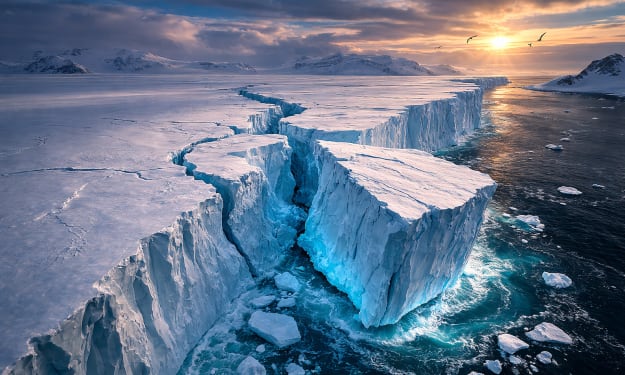
A massive ice formation in Antarctica—one of the ten largest ice shelves in the world—is reportedly close to breaking away from the continent, according to recent observations by climate scientists and satellite monitoring agencies. The development has drawn global attention, as experts warn that the detachment of such a huge ice mass could have significant implications for sea levels, ocean currents, and the stability of surrounding glaciers.
By Irshad Abbasi 2 days ago in Earth