guilty
Don’t do the crime if you can’t do the time; a look into all aspects of a guilty verdict from the burden of proof to conviction to the judge’s sentence and more.
Cop Hires Escort, Kills Her After She Called Him a "Weirdo"
Sheri Carter of Boynton Beach, Florida, had a bright future. She attended Florida Atlantic University (FAU), hoping she’d work as a lawyer one day. She came from a loving family, had a great boyfriend, and loved life. Sadly, a cop with a violent history would end her story well before she had time to write all the chapters.
By Criminal Mattersabout a month ago in Criminal
The Last Confession: A Crime That Slept for Twenty Years
M Mehran The police station clock struck midnight when Inspector Arjun Malhotra finally opened the dusty case file. The label read “Rohit Verma Murder — Unsolved.” It had been untouched for nearly twenty years. Most people had forgotten the crime, but Arjun hadn’t. Some cases don’t fade with time—they wait. Rohit Verma was twenty-six when he was found dead in his apartment, stabbed once in the chest. No signs of forced entry. No stolen valuables. No fingerprints except his own. It was the kind of murder that mocked investigators—clean, quiet, and cruel. Back then, Arjun was a junior officer, watching helplessly as leads dried up and witnesses contradicted themselves. The case was eventually closed due to “lack of evidence.” But closure on paper never meant justice in reality. That night, a letter had arrived at the station—no return address, no stamp. Just a single line written in shaky handwriting: “I am ready to confess.” A Voice from the Shadows The next morning, an elderly man walked into the station. His name was Suresh Kapoor, a retired schoolteacher with trembling hands and tired eyes. He asked to speak only to Inspector Malhotra. “I killed Rohit Verma,” he said calmly. Arjun stared at him, searching for madness, attention, or regret. What he saw instead was exhaustion. Suresh explained that Rohit wasn’t a stranger. He was his former student—and later, his son-in-law. Twenty years ago, Rohit married Suresh’s daughter, Naina. On the surface, their marriage looked perfect. In reality, it was a prison. Rohit was controlling, violent, and manipulative. He isolated Naina from her family, monitored her calls, and turned his anger into bruises she hid beneath long sleeves. Every visit home ended with forced smiles and rehearsed lies. “She begged me not to interfere,” Suresh whispered. “She said it would only make things worse.” The Night Everything Changed On the night of the murder, Suresh received a phone call from Naina. She was crying, barely able to speak. “He’s going to kill me, Papa.” Suresh drove through the rain like a man possessed. When he reached the apartment, the door was unlocked. Inside, he heard shouting—Rohit’s voice, sharp and drunk. What happened next unfolded in seconds. Rohit lunged at Suresh with a kitchen knife, screaming accusations and threats. In the struggle, the knife slipped from Rohit’s hand. Suresh picked it up. “I didn’t plan it,” he said, tears running down his face. “I only wanted to protect my daughter.” The blade struck once. Rohit fell. Silence followed. A Crime Covered by Love Panicking, Suresh cleaned the knife and wiped every surface he had touched. Naina stood frozen, unable to process what had happened. Before leaving, Suresh looked at his daughter and made a decision that would haunt him for decades. “Forget this night,” he told her. “Live your life.” The investigation never suspected a respected schoolteacher. Naina moved abroad a year later, rebuilding her life piece by piece. She never spoke of her past again. Suresh carried the weight alone. “I thought I could live with it,” he told Arjun. “But guilt doesn’t age well. It grows.” The Truth Finally Surfaces Inspector Malhotra reopened the case. Old evidence, once meaningless, now fit perfectly with Suresh’s confession. The lack of forced entry. The wiped fingerprints. The single stab wound—defensive, not brutal. For the first time in twenty years, the case made sense. Suresh was arrested, but the public reaction was divided. Some called him a murderer. Others called him a father who did what the law failed to do. During the trial, Naina returned to testify. She spoke calmly, confidently, and without fear. “I am alive because of my father,” she said. The courtroom fell silent. Justice or Mercy? The judge sentenced Suresh to a reduced term, citing self-defense and emotional distress. He would spend the remainder of his life in custody, but not behind harsh bars—under medical supervision. As Suresh was led away, he looked at Arjun and nodded—not in relief, but in acceptance. That night, Inspector Malhotra closed the case file again. This time, for real. Some crimes are born from greed. Others from rage. And some—from love twisted by desperation. Justice, Arjun realized, isn’t always clean. But truth, no matter how late, always finds its way into the light. And some confessions wait twenty years—not because they are forgotten, but because they need the right moment to be heard.
By Muhammad Mehranabout a month ago in Criminal
Florida Police Chief Sentenced to Three Years
Federal records show that one victim, identified only as “C.D.”, was wrongfully arrested in January 2013 by Officer Guillermo Ravelo under Atesiano’s direction. Ravelo falsely charged C.D. with burglary, despite having no probable cause, as part of the chief’s plan to artificially inflate the department’s success rate.
By Organic Products about a month ago in Criminal
The Girl Who Refused to Die
In the grim annals of true crime, there are stories that chill the bone, and then there are stories that redefine the very essence of human resilience. The story of Mary Vincent is both. It is a harrowing descent into the darkest depths of human cruelty, followed by an ascent fueled by a will to live that defied every law of medicine, logic, and fate.
By Mayar Younesabout a month ago in Criminal
The Last Confession: A Crime That Spoke After Death
M Mehran The call came in at 3:17 a.m., the kind that makes even seasoned detectives sit up straighter. A body had been found in an abandoned textile warehouse on the outskirts of the city. No signs of forced entry. No witnesses. And no obvious cause of death. Detective Arjun Malhotra arrived at the scene under flickering streetlights, the cold air biting through his coat. The victim lay in the center of the warehouse floor, dressed neatly, hands folded as if in sleep. No blood. No wounds. Just a man who looked like he had decided to stop breathing. The victim was identified as Raghav Mehra, a well-known real estate tycoon with a spotless public image and a long list of silent enemies. At first glance, it looked like a natural death. It wasn’t. A Perfect Life with Cracks Beneath Raghav Mehra was the kind of man newspapers loved. Philanthropist. Family man. Investor. His smiling face appeared on billboards promoting charity drives and housing projects. But Arjun had learned long ago that the cleanest suits often hid the dirtiest secrets. The autopsy confirmed it—Raghav had been poisoned. A rare compound. Colorless. Odorless. Nearly undetectable unless you knew exactly what to look for. Someone had planned this carefully. What puzzled investigators most was what was missing. Raghav’s phone, wallet, and expensive watch were still on him. Nothing stolen. No struggle. No rush. This wasn’t robbery. This was intent. The Voice Note That Changed Everything Two days later, a small package arrived at the police station. No return address. Inside was a cheap USB drive and a handwritten note: “He didn’t deserve to die in silence.” The USB contained a single audio file titled: “Final Statement.” Arjun listened. Raghav Mehra’s voice filled the room—shaky, broken, nothing like the confident man the world knew. “I’ve lived on lies,” the recording began. “If you’re hearing this, I’m probably dead. And maybe that’s justice.” Over the next eleven minutes, Raghav confessed to crimes that spanned nearly two decades—illegal land seizures, bribing officials, destroying families who stood in his way. He named names. Dates. Locations. And then came the most disturbing part. “In 2009,” Raghav said, voice cracking, “a man named Sameer Khan died because of me. I took his land. He took his life. And I watched.” The recording ended with one chilling line: “I don’t expect forgiveness. I expect consequences.” A Ghost from the Past Sameer Khan’s case was buried history. Officially ruled a suicide caused by financial stress. But Arjun dug deeper. Sameer was a schoolteacher. Honest. Respected. And he had refused to sell his land to Raghav’s company. Weeks later, his house was demolished. His job vanished. His reputation destroyed. And then—he was found dead. Sameer had a daughter. Her name was Ayesha Khan. She had disappeared from public records five years ago. The Woman No One Saw Coming Arjun finally found her working as a nurse in a private clinic under a different surname. She didn’t resist arrest. She didn’t cry. She didn’t deny anything. “Yes,” she said calmly. “I poisoned him.” She explained everything with unsettling clarity. “I didn’t want him to suffer physically,” Ayesha said. “I wanted him to suffer knowing.” She had spent years studying toxicology, working double shifts, building a quiet, invisible life. She volunteered at Raghav’s charity events. Earned his trust. Served him tea during a private meeting. “He talked about success,” she said. “About destiny. He didn’t recognize me. But I recognized him every single day.” Justice or Revenge? The case exploded across media platforms. Headlines screamed “Billionaire Murdered by Teacher’s Daughter” and “Confession from the Grave.” Public opinion split sharply. Some called Ayesha a cold-blooded criminal. Others called her a hero who delivered justice where the system failed. In court, the audio confession was played in full. Raghav’s own words condemned him more effectively than any prosecutor could. Ayesha was sentenced to prison. The courtroom was silent when the verdict was read. She didn’t smile. She didn’t regret it. The Crime That Refused to Be Forgotten Months later, new investigations reopened several old cases linked to Raghav Mehra. Properties were seized. Officials arrested. Families compensated. One crime had exposed a hundred more. Detective Arjun stood outside the prison one evening, listening to the city hum. He had solved the case, but peace didn’t follow. Because the question lingered—was this justice, or just another crime born from injustice? Ayesha’s final words to him echoed in his mind: “I didn’t kill him because I hated him. I killed him because the law forgot us.” Final Thoughts Crime stories often end with handcuffs and headlines. But some crimes live on, reshaping the world long after the last confession. Raghav Mehra’s voice spoke after death. Sameer Khan’s silence was finally heard. And Ayesha Khan became both criminal and consequence. In the end, the most terrifying truth wasn’t the murder. It was how easily evil had worn the mask of respectability—and how long it took for justice to wake up.
By Muhammad Mehranabout a month ago in Criminal
Trump, Obama, and the “Apes” Controversy: A Political Storm That Shook American Discourse
**Trump, Obama, and the “Apes” Controversy: A Political Storm That Shook American Discourse** A new wave of controversy has swept through American politics after a video circulated online showing former President Barack Obama and former First Lady Michelle Obama depicted as apes. The clip, which was briefly shared from an account associated with former President Donald Trump, immediately ignited outrage, debate, and intense media attention. Even though the video was quickly removed, the incident reopened deep conversations about race, political rhetoric, and the power of imagery in modern politics.
By America today about a month ago in Criminal
Cease to Exist. Content Warning.
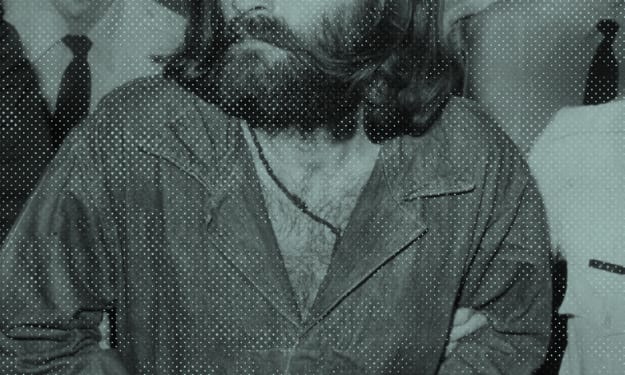
Charles Manson was born in Cincinnati Ohio to a sixteen-year-old woman named Kathleen Maddox who was originally from a Conservative family in Kentucky. His biological father was believed to be a man named Colonel Hendersen Scott, Jr. from of Catlettsburg Kentucky whom Manson had no memory of. His birth certificate only listed his name as "Manson" after his mother married a man named William Eugene Manson who worked as a dry cleaner. Young Charles was mostly left with babysitters while his mother spent most of her time on alcohol binges. Maddox and Manson would divorce on April 30th 1937. Two years later Maddox was arrested for assault and robbery with Kathleen earning a five year jail sentence. Young Carlie's care was placed with relatives of Maddox in West Virginia. He would discover a love for music while living with them thanks to the piano in their house.
By Sean Callaghanabout a month ago in Criminal
The Epstein Files
The Epstein Files The Jeffrey Epstein case is not just the story of one criminal. It is a mirror showing how power, money, and silence can protect wrongdoing at the highest levels of society. While Epstein was officially charged and convicted for serious crimes, many questions remain unanswered about how his network operated for decades without being stopped.
By Wings of Time about a month ago in Criminal
The Sole Survivor: A Silent Scream in the Face of Death. Content Warning.
The most heart-wrenching stories often begin in places where safety should be guaranteed: at home. In 1987, the lives of Saye Rivazfar, her younger sister Sara, and their brother Arash took a dark turn following the divorce of their parents, Patricia and Ahmad. While their father, of Iranian descent, settled in New York, the three children remained with their mother in Pensacola, Florida.
By Mayar Younesabout a month ago in Criminal
Why the Epstein Network Was Never Fully Exposed
Why the Epstein Network Was Never Fully Exposed The most haunting question after the Jeffrey Epstein case is not what he did, but why so much remains hidden. Despite arrests, court documents, and years of investigation, the full network surrounding Epstein has never been completely exposed. This failure is not accidental. It reveals how modern power systems are designed to protect themselves, even when serious crimes are involved.
By Wings of Time about a month ago in Criminal
The Epstein Files: Power, Secrets, and the Questions That Remain
The Epstein Files: Power, Secrets, and the Questions That Remain The name Jeffrey Epstein has become one of the most disturbing symbols of power, secrecy, and unanswered questions in modern history. What began as a criminal case involving sexual abuse and trafficking soon turned into a global scandal that touched politics, finance, intelligence agencies, and elite social circles. Even years after Epstein’s death, the so-called “Epstein files” continue to raise serious concerns about justice, accountability, and how powerful people are protected.
By Wings of Time about a month ago in Criminal