capital punishment
Weigh the pros, cons and controversies surrounding the grave issue of capital punishment; should the death penalty be allowed?
The Man Who Erased His Own Name
M Mehran The town of Blackridge had only one rule: trust your neighbors. That rule died the night Daniel Harlow disappeared. Daniel wasn’t the kind of man people suspected. He volunteered at local fundraisers, donated to school events, and never missed Sunday service. His smile was calm, calculated — the kind that made you believe in goodness again. But behind that smile lived a secret darker than the abandoned train tunnels beneath Blackridge. When Daniel vanished, he left no note. No packed suitcase. No digital footprint. It was as if he had erased himself from existence. But criminals rarely disappear without leaving shadows. The Perfect Life — A Perfect Lie Daniel worked as a financial consultant, helping small businesses manage their books. People trusted him with their savings, their dreams, their futures. What they didn’t know was that Daniel had been quietly building a different future — one funded by deception. For nearly five years, Daniel operated a slow-burn embezzlement scheme. Instead of stealing large amounts that could trigger suspicion, he siphoned small, nearly invisible transactions from client accounts. A few hundred here. A few thousand there. Spread across dozens of businesses. Individually, the numbers were harmless. Together, they were devastating. By the time anyone noticed irregularities, Daniel had stolen over $2.4 million. And he had no intention of being caught. The Crime That Sparked Suspicion It began when Olivia Grant, owner of a local bakery, couldn’t make payroll. Her profits were steady. Sales were up. Yet her account showed a critical shortage. Panicked, she contacted Daniel. He reassured her. “Bank error,” he said smoothly. “It happens more than you think.” But Olivia didn’t believe him. She requested independent auditing — a decision that would unravel the biggest white-collar crime Blackridge had ever seen. The audit exposed discrepancies across multiple accounts. Patterns emerged. All transactions led back to Daniel. The police were notified immediately. But Daniel had already vanished. A Criminal Mind at Work Detective Marcus Hale had seen many criminals in his twenty-year career. Impulsive thieves. Violent offenders. Amateur fraudsters. Daniel was different. “He didn’t steal because he needed money,” Marcus later said. “He stole because he believed he deserved more than everyone else.” Daniel had spent years preparing his escape. He created fake identities online, purchased cryptocurrency under aliases, and secured offshore accounts. He even rented a small storage unit under a false name — filled with emergency passports and cash. The level of planning was chilling. This wasn’t a desperate act. It was a masterpiece of manipulation. The Disappearance Security footage revealed Daniel leaving his office at 8:17 PM on a Thursday evening. Calm. Unhurried. He drove home, entered his house, and turned off the lights at 10:42 PM. The next morning, he was gone. His car remained in the driveway. His phone sat on the kitchen counter. But investigators found something telling: his laptop hard drive had been wiped clean. Daniel had erased not just files — but pieces of his identity. And then, like smoke in the wind, he disappeared. The Digital Trail What Daniel underestimated was technology. Though he wiped his devices, financial investigators traced micro-transactions routed through encrypted wallets. One mistake — a login from an IP address at a motel three states away — gave them their first lead. The motel clerk remembered him. “He looked normal,” she said. “Too normal.” Daniel had checked in under the name “Michael Harper.” He paid in cash. Stayed one night. Left before sunrise. But criminals who think they are invisible often grow careless. Surveillance footage captured him withdrawing cryptocurrency from a Bitcoin ATM nearby. He believed digital money left no fingerprints. He was wrong. The Arrest Three months after his disappearance, Daniel was arrested at a marina in Clearwater, Florida. He was preparing to board a private boat bound for international waters. He didn’t resist. In fact, he smiled. “You took your time,” he told Detective Hale. Even in handcuffs, Daniel carried himself like a man who believed he was smarter than everyone in the room. But intelligence without morality is just another form of crime. The Courtroom Revelation During trial, prosecutors revealed the emotional damage behind the financial crime. Olivia’s bakery had closed. A construction company laid off twelve workers. A retired couple lost their life savings. White-collar crime doesn’t leave bloodstains — but it leaves scars just as deep. Daniel showed little emotion as victims testified. When asked why he did it, his answer stunned the courtroom: “Because I could.” That single sentence defined him. Not greed. Not desperation. Power. The Sentence Daniel Harlow was sentenced to 32 years in federal prison for fraud, identity theft, and financial crimes. As he was escorted away, he didn’t look defeated. He looked thoughtful. As if calculating something new. The Lesson Behind the Crime The story of Daniel Harlow is a chilling reminder that criminals don’t always wear masks or carry weapons. Sometimes they wear suits. Sometimes they sit across from you at meetings. Sometimes they smile and shake your hand. White-collar crime is often overlooked because it lacks violence. But its consequences ripple through communities — destroying businesses, families, and trust. Daniel didn’t just steal money. He stole security. He stole livelihoods. He stole faith in honesty. And in the end, he erased his own name. Why Criminal Minds Fascinate Us Stories like Daniel’s captivate readers because they reveal something uncomfortable: evil doesn’t always announce itself. It blends in. It adapts. It waits. The psychology of criminals like Daniel shows how intelligence, charm, and patience can become weapons when detached from empathy. That’s what makes such crimes terrifying — not chaos, but calculation. Blackridge eventually rebuilt. Businesses reopened. Trust slowly returned. But no one ever forgot the man who erased himself. Because sometimes, the most dangerous criminals aren’t the loudest. They’re the quietest.
By Muhammad Mehran7 days ago in Criminal
One of The Most Painful Executions in Modern America. Content Warning.
Wesley Ira Purkey died by lethal injection, but his autopsy report revealed his death was likely extremely painful. Did karma catch up to a man who callously took two lives, or is it just the way life goes?
By Criminal Matters8 days ago in Criminal
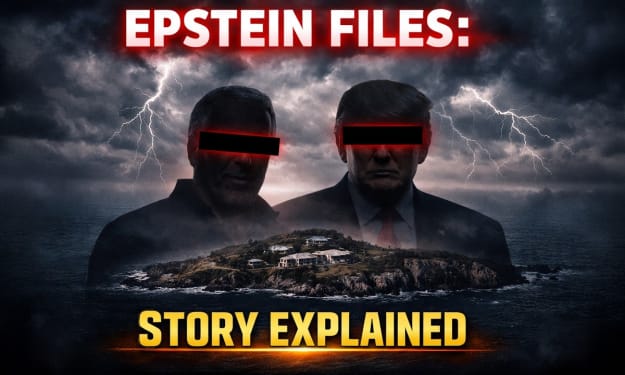
Epstein Files: Story Explained
This is the infamous private island known as Little Saint James, often called “Epstein Island.” Spread across 72 acres, the island had nearly every luxury imaginable — from lavish resorts and private docks to a library and even a cinema. Some of the world’s most powerful figures frequently visited.
By Imran Ali Shah8 days ago in Criminal
The Last Train Witness
M Mehran The final train left the underground platform at 11:48 p.m. By 11:49, the platform was empty. By 11:52, a man was dead. And by morning, the city would learn that dozens of commuters had been present — yet not a single witness had seen the crime. The Silence Beneath the City The underground transit system ran like veins beneath the metropolis, carrying thousands through tunnels of concrete and fluorescent light. People avoided eye contact, protected their personal space, and guarded their routines. It was an unspoken rule of urban survival: See nothing. Say nothing. Keep moving. On Platform 6, that rule became deadly. The victim, later identified as Markus Engel, lay near the yellow safety line, his briefcase resting inches from his hand. No signs of struggle. No weapon. No obvious motive. Just a body and unanswered questions. Detective Assigned to the Impossible Lena Vogel stood at the platform edge as early trains roared past, wind whipping through her coat. She studied the scene with narrowed focus. “No witnesses?” she asked. Her partner shook his head. “Forty-two passengers used the platform during the window. Every one of them claims they saw nothing.” Lena looked up at the security camera mounted above the stairs. Disabled. Not broken — disabled. “That’s not coincidence,” she murmured. The Man No One Knew Markus Engel was not famous, wealthy, or politically connected. He lived alone, worked as a logistics analyst, and paid his taxes on time. His neighbors described him as polite and forgettable. Which made the contents of his briefcase harder to explain. Inside were documents detailing shipping manifests, customs declarations, and flagged cargo routes. Several entries were circled in red. Lena flipped through the pages. “These aren’t random shipments,” she said. “They’re patterns.” “Of what?” She tapped the paper. “Smuggling routes disguised as legitimate trade.” Forty-Two Shadows Detectives interviewed every commuter identified through transit card scans. A nurse finishing a double shift. A university student listening to music. A restaurant worker heading home. A businessman checking emails. Each described the same scene: Train arriving. Doors opening. People exiting. People boarding. Nothing unusual. Nothing memorable. Nothing seen. Lena replayed their statements in her mind. Not lies — rehearsed absence. Urban invisibility had become a shield. The Camera That Didn’t See Transit technicians confirmed the camera feed had looped exactly three minutes of footage — a deliberate override requiring system access. “This wasn’t a random assault,” Lena said. “Someone planned invisibility.” “Over a logistics analyst?” She held up the documents. “Over what he discovered.” The Reporter Underground Tobias Richter had built his reputation exposing black-market networks operating beneath legitimate commerce. When he heard about Engel’s death, he recognized the shipping codes immediately. “These routes connect three ports and two inland depots,” Tobias explained. “On paper, they move electronics and textiles. In reality, they’re suspected of transporting counterfeit pharmaceuticals and restricted chemical compounds.” “Dangerous?” Lena asked. “Potentially lethal,” he replied. She looked back at the evidence. Markus Engel hadn’t been a victim of random violence. He had been silenced. A Witness Who Didn’t Know He Saw Three days into the investigation, a breakthrough arrived unexpectedly. A ten-year-old boy named Emil had been traveling with his mother that night. While she scrolled through her phone, he had been watching reflections in the dark tunnel window as the train arrived. “I saw a man standing very still,” he told Lena. “Like he was waiting but not getting on.” “Did you see his face?” Emil shook his head. “But he wore gloves. Inside.” Lena’s pulse quickened. Gloves suggested preparation. Control. Intent. “What happened next?” “He stepped forward when the doors opened,” Emil said. “Then people walked in front of him.” “And then?” “He was gone.” The Pattern of Disappearance Transit entry logs revealed a transit card used minutes before the murder — then never again. Fake identity. Disposable access. Professional execution. Tobias traced Engel’s flagged shipments to a shell company operating through layered subsidiaries. The company’s board members existed only on paper. But one name appeared repeatedly in customs overrides: a mid-level compliance officer with authority to clear inspections. Lena stared at the file. “Someone inside the system,” she said. Beneath the Surface A coordinated raid two weeks later uncovered a storage facility filled with mislabeled cargo: counterfeit antibiotics, restricted solvents, and toxic compounds disguised as industrial cleaners. Authorities estimated the illegal trade could have endangered thousands. The compliance officer disappeared the night before his arrest. So did the man who killed Markus Engel. The Weight of Looking Away The transit authority restored the disabled camera footage using backup server fragments. The recovered frames showed only partial images: commuters boarding, blurred movement, a gloved hand briefly visible near Engel’s shoulder. Then nothing. The moment of death hidden behind ordinary motion. Forty-two people present. Forty-two people unaware. Or unwilling to notice. A City Reflects News coverage ignited public debate: How could a murder happen in a crowded space without witnesses? Had technology made people less observant? Had fear replaced responsibility? Sociologists called it diffusion of responsibility. Psychologists described urban desensitization. Commuters insisted they were simply surviving crowded routines. Lena stood again on Platform 6 weeks later, watching passengers move with practiced detachment. She wondered how many stories passed unseen each day. How many warnings went unnoticed. How many lives intersected briefly before vanishing into anonymity. Remembering the Invisible Markus Engel’s name faded quickly from headlines. The smuggling network remained under investigation. Policy reforms were proposed, debated, delayed. But a small plaque appeared near the platform stairs: In memory of Markus Engel Who saw what others missed Commuters walked past it daily. Some paused. Most didn’t. The Last Train Arrives Late one evening, Lena waited as the final train approached. Wind rushed through the tunnel, carrying echoes of steel and distant movement. Passengers stepped off. Others boarded. Reflections shimmered in the dark glass. For a moment, she thought about how easily a person could disappear in plain sight — swallowed by routine, distraction, and silence. Then the doors closed. The train departed. And the platform returned to stillness. But Lena kept watching. Because crime does not always hide in darkness. Sometimes it happens in full view — concealed not by shadows, but by the human instinct to look away. And somewhere beneath the noise of the city, truth still waits for someone willing to see it. SEO Keywords naturally included: urban crime story, underground murder mystery, criminal investigation thriller, smuggling crime network, public safety crime, investigative crime fiction, dark transit mystery, modern crime narrative, city crime thriller.
By Muhammad Mehran10 days ago in Criminal
The Midnight Confession
M Mehran At exactly 12:03 a.m., the confession arrived. No envelope. No fingerprints. No return address. Just a plain white sheet slid under the glass doors of the central police station in the heart of the city. By morning, three detectives, one journalist, and an entire criminal investigation unit would be consumed by its contents. Because the letter did not confess to a crime. It confessed to seven. A City Awake in Darkness The city never truly slept. Neon reflections shimmered in puddles, and distant sirens blended with late-night traffic. In the shadows between high-rise apartments and aging brick buildings, deals were made, secrets were buried, and truth was negotiated. Crime here wasn’t loud. It was quiet. Organized. Invisible. And for years, someone had been watching. Detective Hanna Weiss Hanna Weiss arrived at the station before sunrise, her boots echoing across the tiled floor. She was known for solving cases others abandoned — not because she followed rules, but because she understood people. The night officer handed her the letter with a nervous expression. “No prints. No cameras caught anything,” he said. She unfolded the page. The handwriting was precise. Unemotional. Deliberate. I confess to the following crimes: • Arson – Dock Warehouse 12 • Armed robbery – Nordbank transport van • Kidnapping – case #44721 (victim recovered) • Data theft – municipal records breach • Extortion – three corporate entities • Evidence tampering – ongoing corruption trial • Murder – December 14, Riverside District I am ready to be judged. But first, you must understand why. — A Citizen Hanna read it twice. Then a third time. Confessions were rarely neat. Criminals lied, deflected, justified. They did not itemize. And they did not invite understanding. The Reporter Who Wouldn’t Let Go By 8:00 a.m., news of the confession had leaked. Jonas Keller stared at the photocopy on his desk, his coffee growing cold. He specialized in corruption stories — the kind that earned threats instead of awards. The murder listed in the confession caught his attention. December 14. Riverside District. Official ruling: unsolved. Unofficial whispers: silenced whistleblower. Jonas grabbed his coat. If the confession was real, the city was about to fracture. Crime Scene Reopened Riverside District smelled of damp concrete and river mist. The alley where the body had been found remained unchanged — forgotten by the city, remembered only by rumor. Hanna crouched near the spot marked months earlier. “Victim was Lukas Brandt,” she said to Jonas, who had appeared without invitation. “Financial auditor. Found with blunt force trauma.” Jonas nodded. “He was preparing testimony against infrastructure contracts.” Hanna glanced at him. “You knew?” “I tried to interview him,” Jonas replied. “He canceled the night he died.” They exchanged a look. The confession had turned coincidence into pattern. A Criminal with a Purpose By midday, detectives confirmed details from the letter. The warehouse fire exposed illegal chemical storage. The bank transport robbery stole untraceable cash later linked to bribery funds. The kidnapping victim was a corporate accountant who later testified against embezzlement. Each crime had targeted wrongdoing. Each victim was connected to corruption. This was not random criminal activity. This was surgical. The Message Hidden in Crime Back at the station, Hanna spread case files across the table. “This person isn’t committing crimes for profit,” she said. Jonas leaned forward. “They’re correcting something.” “Or punishing it.” They studied the final line again: You must understand why. Hanna tapped the paper. “This isn’t a confession.” “It’s a summons,” Jonas said. The Second Letter At 11:57 p.m. the following night, the second letter arrived. This time addressed directly to Detective Weiss. Inside was a USB drive. One video file. Hanna hesitated before pressing play. A hooded figure sat in shadow, voice distorted but calm. “I did these things,” the figure said. “Every charge is true. But the law failed before I did.” Images flashed across the screen: Bribed inspectors. Altered safety reports. Destroyed evidence. Threatened witnesses. Then the face of Lukas Brandt appeared — alive, speaking urgently. “If anything happens to me,” he said in the recording, “the contracts must be exposed.” The video ended. Silence filled the room. Jonas exhaled slowly. “He was killed to stop testimony.” Hanna nodded. “And someone decided the system wouldn’t deliver justice.” Criminal or Catalyst? The city divided overnight. Some called the confessor a terrorist. Others called them a hero. Talk shows debated morality versus legality. Social feeds flooded with arguments. Victims of corporate negligence spoke publicly for the first time. And still, no suspect emerged. Until the third message. Midnight, Riverside Bridge Come alone. Bring the truth. Hanna arrived just before midnight, fog rolling over the river like drifting smoke. A figure stepped from the shadows. Not armed. Not threatening. Just tired. “I never wanted to hurt anyone,” the voice said. “Except you did,” Hanna replied. The figure removed the hood. A woman in her early thirties. Pale. Determined. “My father died in Dock Warehouse 12,” she said. “Toxic exposure. Reports were falsified. No one charged.” She swallowed. “Lukas Brandt tried to fix it. He was killed. Evidence vanished. Witnesses disappeared. So I made sure the truth couldn’t.” “By committing crimes,” Hanna said. “By forcing truth into daylight.” Sirens sounded faintly in the distance. The woman extended her wrists. “I’m ready to be judged,” she said. Hanna hesitated. Law demanded arrest. Justice demanded reflection. She placed cuffs gently on the woman’s wrists. The Confession Heard Worldwide By morning, the full story dominated headlines: WHISTLEBLOWER MURDER LINKED TO INFRASTRUCTURE CORRUPTION CONFESSION EXPOSES SYSTEMIC COVER-UP PUBLIC INQUIRY LAUNCHED The woman’s crimes remained real. But so did the corruption she exposed. Families demanded reform. Officials promised transparency. Investigations reopened. And for the first time in years, accountability seemed possible. The Weight of Truth Jonas published his story three days later. Not about a criminal mastermind. But about a system that forced ordinary citizens into extraordinary actions. Hanna visited the detention center that evening. “Was it worth it?” she asked through the glass. The woman considered. “The truth is finally visible,” she said. “You decide.” A City Forced to Look Crime had shaken the city. But truth had awakened it. Streetlights flickered on as night returned, illuminating bridges, rooftops, and alleys where secrets once thrived unchallenged. Justice would take years. Reform would face resistance. Memory would fade. But something had shifted. Because one confession had forced an entire city to confront a question more unsettling than crime itself: What happens when justice fails — and citizens take its place? And long after the headlines faded, the echo of that midnight confession continued to haunt the corridors of power. SEO Keywords naturally included: crime story, criminal confession, corruption crime, justice system failure, urban crime thriller, investigative crime narrative, dark city mystery, true crime style fiction, criminal investigation story.
By Muhammad Mehran10 days ago in Criminal
The Shadow Ledger
M Mehran The rain began just before midnight — the kind that turns city lights into blurred streaks and washes footprints from the pavement. In the old industrial quarter, where abandoned warehouses leaned like tired giants, a lone figure stepped out of the darkness. No one noticed him. That was always the point. His name, once printed on a birth certificate, had long been erased from records. On police radios he was known only as “Ledger.” Not because he stole money — but because he kept accounts. Every crime balanced. Every debt paid. Every sin returned. And tonight, another entry would close. The City That Forgot Years ago, the city had forgotten its edges. Luxury towers rose over neighborhoods where children slept hungry. Officials promised reform while shaking hands in shadowed rooms. Crime didn’t grow here — it evolved. Ledger had watched it all. Once, he had been a forensic accountant working with federal investigators. He traced financial trails for corruption cases, uncovering shell companies, offshore accounts, and millions siphoned from public funds. He believed numbers told the truth. Until his own case vanished. Evidence disappeared. Witnesses withdrew. His supervisor was promoted. The politician he had exposed was re-elected. Ledger learned something that day: Justice was negotiable. And numbers could be rewritten. Birth of a Criminal Mind They called him a criminal after the first fire. The office building burned at 2:14 AM. No casualties. Only one floor destroyed — the records archive of a construction firm under investigation for fatal safety violations. Inside the ashes, investigators found a single intact page: DEBT: 14 WORKERS BALANCE: PAID From that night onward, the city whispered about a phantom vigilante who punished those the courts could not touch. Authorities labeled him a domestic terrorist. Media called him a myth. Victims’ families called him something else: Justice. Tonight’s Target Ledger studied the building from across the flooded street. The glass tower gleamed like a monument to power. Inside worked Magnus Hale, a real estate magnate whose developments had displaced thousands. Fires, structural collapses, bribed inspections — every scandal buried under settlements and legal shields. Officially, Hale was untouchable. Unofficially, Hale’s wealth was built on graves. Ledger opened his weatherproof notebook — the Shadow Ledger — its pages filled with neat handwriting and red marks beside settled accounts. HALE, MAGNUS Evictions resulting in 63 deaths Bribery & fraud Unpaid restitution Balance due. He closed the book. The rain intensified. Entry Security cameras looped the same five seconds of footage — a gift from an anonymous signal override. The back entrance lock clicked open after a magnetic pulse disrupted the circuitry. Ledger moved silently through marble corridors. He didn’t rush. Criminals panic. Professionals proceed. On the 27th floor, the elevator opened into a private lobby. Soft classical music drifted from behind a steel door. Magnus Hale believed in thick walls and distance from the world below. Ledger believed in inevitability. He knocked. Silence. Then footsteps. The door opened a fraction, held by a security chain. “Yes?” Hale’s voice carried annoyance, not fear. “Financial audit,” Ledger said calmly. Hale scoffed. “At midnight?” Ledger held up a waterproof envelope. “Final notice.” Something in his tone made Hale hesitate. The chain slid free. That was the last decision Hale would ever make. The Confrontation Hale’s penthouse was vast — glass walls overlooking the storm, expensive art curated to suggest culture rather than taste. “Who sent you?” Hale demanded. Ledger removed his hood. “No one,” he replied. “I keep my own accounts.” Recognition flickered — not of the man, but of the stories. “You’re insane,” Hale said, reaching toward his phone. Ledger placed a small device on the marble table. The phone screen went black. “Sixty-three people,” Ledger said quietly. “Your developments displaced them. Winter exposure. Unsafe relocation zones. Fires.” “I settled those cases legally.” “You settled liability,” Ledger corrected. “Not responsibility.” Hale’s confidence returned. “You think breaking into my home gives you power? Do you know who I am?” “Yes,” Ledger said. “A balance overdue.” Justice Without Courtrooms Ledger never carried a gun. Violence was simple. Consequence required precision. He placed a tablet on the table and pressed play. Video testimonies filled the room: a mother describing eviction during a snowstorm; a former engineer revealing falsified safety reports; internal emails ordering cost cuts despite structural risks. Hale’s face drained of color. “You can’t use stolen evidence.” “It isn’t for court,” Ledger said. The storm thundered outside, lightning illuminating the city Hale had reshaped. Ledger slid a document forward. “Transfer of assets,” he said. “Emergency housing fund. Compensation trust. Full restitution. Signed tonight.” Hale stared. “You break into my home and expect me to give away my fortune?” “No,” Ledger replied calmly. “I expect you to balance your debt.” “And if I refuse?” Ledger stepped aside and gestured toward the glass wall. Far below, emergency lights flickered as city inspectors, journalists, and federal agents converged on Hale’s corporate headquarters — tipped anonymously hours earlier. Hale’s empire was already collapsing. “This document,” Ledger said, “determines whether families are compensated immediately… or after decades of litigation.” Hale’s hand trembled. For the first time in his life, money could not buy escape. Signature The pen hovered. Rain hammered the glass. Hale signed. Ledger watched without satisfaction. Justice was not pleasure. It was arithmetic. He collected the document, scanning the signature. Balance pending. Outside, sirens echoed through the wet streets. “Who are you?” Hale whispered. Ledger pulled up his hood. “An auditor,” he said. Then he was gone. The Ledger Grows By dawn, headlines erupted across the city: MAGNUS HALE ASSETS FROZEN WHISTLEBLOWER EVIDENCE RELEASED EMERGENCY HOUSING FUND CREATED Authorities denied involvement with the vigilante known as Ledger. Officials condemned illegal interference. Citizens debated morality versus law. Families moved into temporary housing funded overnight. And in the margins of public discourse, hope resurfaced. Criminal or Correction? On a rooftop overlooking the waking city, Ledger opened his notebook. He drew a red line through Magnus Hale’s entry. BALANCE: IN PROCESS He paused. The city pulsed with noise below — sirens, traffic, construction, ambition. Crime would never end. Power would always seek shadows. But so would he. Ledger closed the book and vanished into the thinning rain. Because in a world where justice could be delayed, buried, or bought… someone had to keep the accounts. And the Shadow Ledger was far from full. SEO Keywords naturally included: crime story, criminal justice, vigilante justice, corruption, urban crime, crime fiction, thriller story, justice system failure, dark city crime, crime narrative.
By Muhammad Mehran10 days ago in Criminal
The Story of Tameka Drummer
At 34 years old, Tameka Drummer was a mother of four simply trying to make her way home when a routine traffic stop in Alcorn County, Mississippi, altered the trajectory of her life forever. It was 2006 when police pulled her over for an expired license plate — a tag that was later found sitting in plain sight in the backseat. What happened next set off a chain of events that would leave her serving life in prison without the possibility of parole for less than two ounces of marijuana.
By Organic Products 12 days ago in Criminal
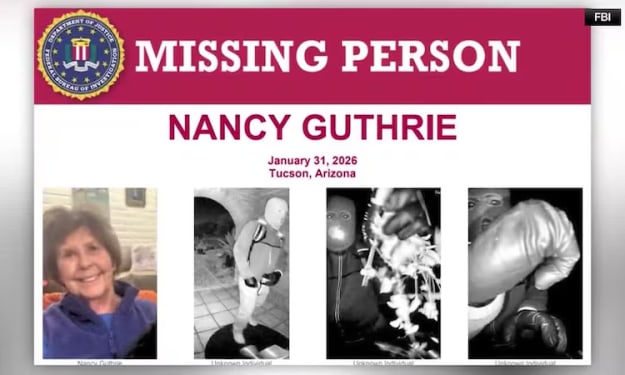
From DNA to Cell Phone Pings to Witnesses - ALL the Unknowns in the Nancy Guthrie Kidnapping Case
When investigators confront a disappearance like Nancy Guthrie’s, the truth rarely reveals itself through dramatic breakthroughs. Instead, it emerges slowly, pieced together through patterns—tiny, often invisible clues that form a digital and physical trail. Two of the most powerful tools in that process are neighborhood surveillance footage and cellular data. Together, they can reconstruct movements, identify anomalies, and ultimately expose the presence of someone who didn’t belong.
By Lawrence Lease12 days ago in Criminal