Biography
The Life and Leadership of Ayatollah Ali Khamenei
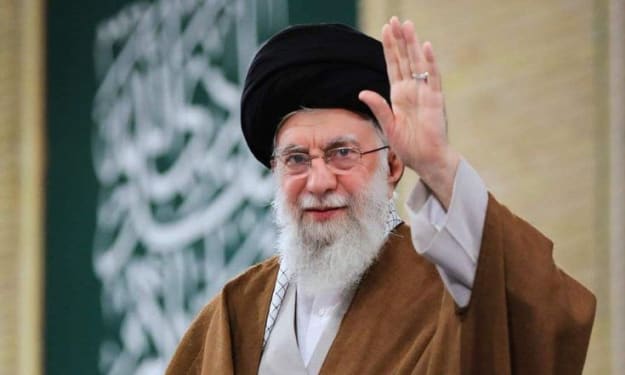
Ayatollah Seyyed Ali Hosseini Khamenei’s story begins in Mashhad, one of Iran’s holiest cities, where he was born on July 17, 1939 into a deeply religious family. His father, Ayatollah Seyyed Javad Khamenei, was a respected cleric of Azerbaijani origin, known for his strict scholarship and modest lifestyle. His mother, a devout woman from a clerical family, raised her children in an environment where faith, discipline, and humility were woven into daily life. Growing up in a small home with limited means, young Ali spent his childhood surrounded by religious texts, sermons, and the rhythms of Islamic scholarship. His father insisted on a traditional religious education, and by his teenage years, Ali was already immersed in the study of Quranic interpretation, jurisprudence, and philosophy. Early Education and the Seeds of Rebellion In the 1950s, Khamenei continued his studies in the seminaries of Mashhad and later Najaf, one of the most important centers of Shia learning. But his education was not limited to theology. He was drawn to political writings, anti-imperialist ideas, and the growing movement against the Shah of Iran. By the early 1960s, he had become a follower of Ayatollah Ruhollah Khomeini, whose fiery opposition to the Shah inspired a generation of young clerics. Khamenei began giving speeches, distributing pamphlets, and organizing underground networks. His activism led to multiple arrests, interrogations, and periods of exile under the Shah’s regime. These years hardened him. They shaped his belief that political power and religious authority were inseparable—and that Iran needed a system where clerics guided the nation. The 1979 Revolution and the Rise of a New Leader When the Iranian Revolution erupted in 1979, Khamenei was no longer a young student—he was a seasoned activist. After the Shah fell and the Islamic Republic was established, he quickly rose through the ranks: - Member of the Assembly of Experts - Tehran’s Friday Prayer Leader - Deputy Minister of Defense - A key figure in the Islamic Revolutionary Guard Corps (IRGC) In 1981, after the assassination of President Mohammad-Ali Rajai, Khamenei became the President of Iran, serving two terms until 1989. He was known for his calm demeanor, loyalty to Khomeini, and ability to navigate political factions during the turbulent years of the Iran–Iraq War. Supreme Leader: An Unexpected Successor When Ayatollah Khomeini died in 1989, Iran needed a new Supreme Leader. Many clerics doubted Khamenei—he was younger, less senior in religious rank, and not considered a grand ayatollah. But he was trusted, politically experienced, and deeply loyal to the revolution. The Assembly of Experts elected him as the Second Supreme Leader of Iran, a position he would hold for 36 years, making him one of the longest-ruling leaders in the modern Middle East. A Rule Defined by Power, Conflict, and Control Khamenei’s leadership reshaped Iran’s political landscape. Under his rule: - The IRGC became the most powerful military and economic force in Iran. - Iran expanded its influence across the Middle East through proxy groups. - Domestic dissent was tightly controlled. - The nuclear program became a central pillar of Iran’s strategy. Supporters saw him as a guardian of Iran’s independence and Islamic identity. Critics saw him as an authoritarian figure who consolidated power and suppressed opposition. His leadership style was marked by caution, ideological rigidity, and a belief that Iran must resist Western influence at all costs. The Final Chapter In February 2026, Ayatollah Ali Khamenei was killed at age 86 during U.S.–Israeli airstrikes targeting his compound in Tehran, marking the end of an era that had defined Iran for nearly four decades. His death was confirmed by Iranian state media and global news outlets. His passing left Iran at a crossroads, with an interim leadership council stepping in as the nation faced uncertainty about its future. Legacy of a Controversial Figure Ayatollah Ali Khamenei leaves behind a legacy that is complex and deeply debated: - To some, he was a defender of Iran’s sovereignty and Islamic values. - To others, he was a symbol of repression and authoritarian rule. - To historians, he was one of the most influential—and polarizing—leaders of the 21st century. But beyond politics, his story is also the story of a boy from Mashhad, raised by a humble cleric father, shaped by faith, revolution, and the belief that he was destined to guide his nation.
By Haroon Pasha9 minutes ago in Chapters
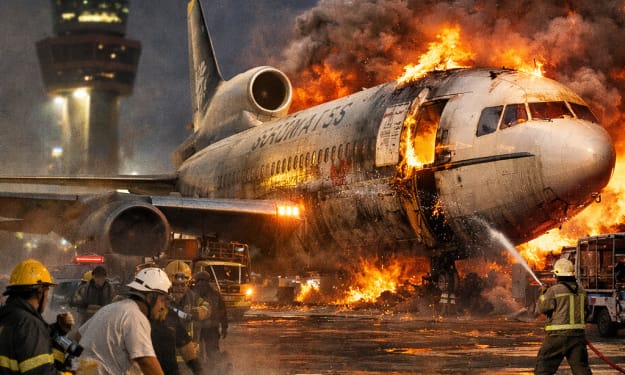
Flight 163: The Tragic Karachi–Jeddah Flight Where No One Survived Despite a Safe Landing
On August 19, 1980, what began as a routine commercial flight from Karachi to Jeddah ended in one of the most heartbreaking disasters in aviation history. The aircraft, Saudi Arabian Airlines Flight 163, carried 301 people on board—287 passengers and 14 crew members. Despite successfully making an emergency landing after a fire broke out mid-flight, not a single person survived. The tragedy shocked the world and remains a painful lesson in aviation safety.
By Irshad Abbasi about 4 hours ago in Chapters
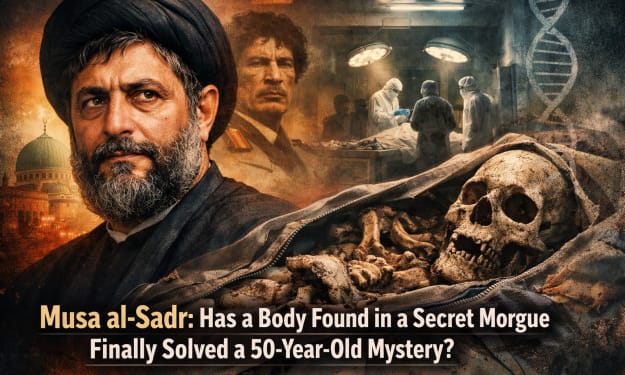
Musa al-Sadr: Has a Body Found in a Secret Morgue Finally Solved a 50-Year-Old Mystery?
In the turbulent politics of the Middle East, few disappearances have generated as much intrigue, grief, and speculation as that of Musa al-Sadr. The charismatic Lebanese Shia cleric vanished in 1978 during an official visit to Libya, and for nearly five decades his fate has remained one of the region’s most haunting mysteries. Now, new claims about human remains discovered in a secret morgue have reignited debate: could this finally be the evidence that confirms what happened to him?
By Irshad Abbasi about 5 hours ago in Chapters
The $55 Billion B-29: The Engineering Marvel That Became a Terrifying Weapon of Mass Destruction
When the **B-29 Superfortress** rolled off American assembly lines during World War II, it represented one of the most ambitious and expensive military engineering projects in history. Costing nearly $3 billion in the 1940s—equivalent to roughly $55 billion today—the aircraft was more expensive to develop than the Manhattan Project that produced the atomic bomb it would eventually carry. Built by the United States to secure air superiority in the Pacific, the B-29 became both an engineering masterpiece and a symbol of devastating destructive power.
By Irshad Abbasi about 5 hours ago in Chapters
Story of Earl Shaw
Earl Shaw and his groundbreaking contributions to laser science. Earl Shaw was born in 1937, during a time when the world was teetering on the edge of tremendous technological transformation. From a young age, Shaw displayed an unusual fascination with the unseen forces of nature—light, magnetism, and the mysterious waves that seemed to govern the behavior of the physical world. He did not see science as a cold, rigid discipline. Instead, he viewed it as a living tapestry woven with curiosity, imagination, and endless possibility. This mindset would one day position him at the forefront of laser technology, leading to the invention of the spin-flip Raman tunable laser, a breakthrough that would quietly shape modern photonics.
By TREYTON SCOTTabout 11 hours ago in Chapters
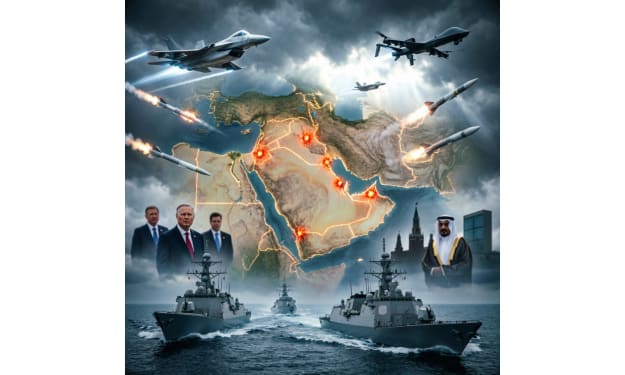
Is the Middle East War Turning Into World War III?
Is the Middle East War Turning Into World War III? The current situation in the Middle East has once again raised a serious question around the world: could this conflict grow into World War III? Tensions in the region have increased due to military strikes, political warnings, and the involvement of several global powers. While no country has officially declared a world war, the combination of regional conflicts and international alliances has made many experts worry about the possibility of a much larger confrontation.
By Wings of Time about 13 hours ago in Chapters
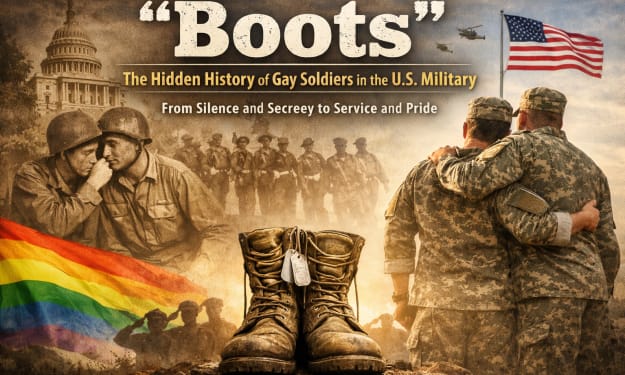
“Boots” — The Hidden History of Gay Soldiers in the U.S. Military
For much of American history, gay men and women have worn the uniform of the United States with courage and distinction — yet in silence. Their stories, often erased or deliberately concealed, form a powerful and complex chapter in the evolution of both the U.S. military and LGBTQ+ civil rights. From criminalization and dishonorable discharges to the controversial “Don’t Ask, Don’t Tell” policy and eventual full inclusion, the hidden history of gay service members reflects a broader struggle for dignity, recognition, and equality.
By Irshad Abbasi 2 days ago in Chapters
AI, Nuclear Escalation, and Pakistan’s Critical Role
AI, Nuclear Escalation, and Pakistan’s Critical Role If World War III begins, it is unlikely to start with marching armies or formal declarations. Instead, it may begin silently—inside algorithms, early-warning systems, and automated decision tools powered by artificial intelligence. Nowhere is this risk more serious than in regions where nuclear weapons exist alongside historical rivalries, limited decision time, and high political tension. South Asia, especially Pakistan, sits at the center of this emerging danger.
By Wings of Time 2 days ago in Chapters
Has World War III Started?
Has World War III Started? The question “Has World War III started?” is no longer limited to academic debate or fictional movies. It is now openly discussed in newsrooms, policy circles, and online platforms around the world. While the simple answer remains no, the conditions shaping today’s global environment are deeply alarming. The world is experiencing an unprecedented convergence of regional wars, technological disruption, and power competition that closely resembles the early stages of past global conflicts.
By Wings of Time 2 days ago in Chapters