Haroon Pasha
Bio
👍 Like | 💬 Comment | 🔔 Follow
🔄 Share my stories to support independent writing
💖 Tip to help this page grow and create more content
💹 Smart steps build strong futures — begin yours with Binance
Stories (22)
Filter by community
Khaby Lame: The Boy Who Spoke to the World Without Saying a Word
Khaby Lame’s story doesn’t begin with fame, luxury, or a spotlight. It begins in a small apartment in Chivasso, Italy, where a young boy from Senegal learned early what it meant to grow up between two worlds. Born in Dakar in 2000 and raised in Italy from the age of one, Khaby spent his childhood in public housing, surrounded by the everyday struggles of immigrant life. His parents worked long hours, and like many families trying to build a future in a new country, they carried more hope than money.
By Haroon Pashaabout 14 hours ago in Geeks
Lionel Messi: The Quiet Boy Who Grew Up to Rule the World
Lionel Andrés Messi’s story doesn’t begin with stadium lights or roaring crowds. It begins quietly, on June 24, 1987, in a modest hospital in Rosario, Argentina. He was a small, soft‑eyed baby born into a hardworking family. His father worked in a steel factory, and his mother cleaned houses to support their children. Nothing about his birth hinted that the world had just welcomed a future legend. No headlines. No predictions. Just a tiny boy who would one day make millions believe in magic.
By Haroon Pashaa day ago in Chapters
The Eiffel Tower: Paris’s Iron Soul and the Story Behind Its Global Magic
The Eiffel Tower is more than a landmark rising above the Paris skyline. It is a symbol of human imagination, engineering courage, and the timeless romance of France. Millions visit it every year, yet few know the deeper story—how a controversial iron structure built for a temporary event became one of the most beloved monuments on Earth. Standing tall since 1889, the Eiffel Tower has witnessed revolutions, world wars, artistic movements, and generations of travelers who came to Paris searching for beauty, inspiration, or simply a moment they would never forget. 🌍 A Monument Born From a Global Celebration The Eiffel Tower was created for the 1889 Exposition Universelle, a world fair celebrating the 100th anniversary of the French Revolution. The French government held a competition for a monument that would represent modern engineering and national pride. Over 100 designs were submitted, but the winning proposal came from Gustave Eiffel, a renowned engineer whose company specialized in metal frameworks. Construction began on January 28, 1887, and was completed on March 31, 1889—an astonishing achievement in just over two years. When it opened, the tower served as the grand entrance to the exposition, welcoming millions of visitors from around the world. 🛠️ Engineering Genius: How the Tower Was Built The Eiffel Tower was a radical idea for its time. Paris was a city of stone, sculptures, and classical architecture. A 300‑meter iron tower seemed outrageous to many. Yet Gustave Eiffel and his team believed in the power of innovation. Key engineering facts - Height at completion: 300 meters (984 ft), making it the tallest structure in the world until 1930. - Current height: 330 meters (1,083 ft) including antennas. - Weight: About 10,100 tons. - Iron pieces: 18,038 individual components. - Stairs: 1,665 steps to the top. - Construction time: 2 years, 2 months, 5 days. The tower’s lattice design wasn’t just artistic—it was functional. The open iron framework allowed wind to pass through, giving the structure remarkable stability. Gustave Eiffel famously said the tower was “not only the art of the engineer, but also the art of the architect.” 🎨 From Controversy to Cultural Icon When the Eiffel Tower was unveiled, not everyone loved it. In fact, many Parisians hated it. Writers, artists, and intellectuals signed petitions calling it an eyesore. They said it looked like a “giant smokestack” and would ruin the beauty of Paris. But as time passed, the tower won hearts. - It became a symbol of modernity. - It became a symbol of Parisian pride. - It became a symbol of France itself. By the early 20th century, the Eiffel Tower had transformed from a temporary exhibition piece into a permanent global icon. 📡 A Tower That Saved Itself The Eiffel Tower was originally meant to stand for only 20 years. After the exposition, it was supposed to be dismantled. What saved it? Science. Gustave Eiffel allowed the tower to be used for radio experiments. Its height made it ideal for broadcasting signals. During World War I, the tower intercepted enemy communications, helping France in critical moments. Its usefulness ensured its survival. 💑 The Human Side: Why the Eiffel Tower Feels Magical People don’t fall in love with the Eiffel Tower because of its measurements or engineering. They fall in love with how it makes them feel. Standing beneath it, you feel small—but in a good way. Climbing it, you feel connected to history. Seeing Paris from the top, you feel like the world is bigger and more beautiful than you realized. The tower has become: - A symbol of love - A backdrop for proposals - A dream destination for travelers - A muse for artists and filmmakers It is the beating heart of Paris. 🌆 Visiting the Eiffel Tower: What to Expect A visit to the Eiffel Tower is a journey through levels of history, architecture, and breathtaking views. The Esplanade The ground level offers a close-up look at the tower’s massive iron legs and the engineering that holds it together. The First Floor - Transparent floors - Exhibits on the tower’s history - Restaurants and shops The Second Floor This level offers one of the best panoramic views of Paris—close enough to see details, high enough to feel the city’s scale. The Summit At 276 meters, the top floor gives a sweeping view of the entire Paris region. Gustave Eiffel’s private office has been recreated here. 🌙 The Eiffel Tower at Night Every evening, the Eiffel Tower lights up with a warm golden glow. And for five minutes at the start of each hour, it sparkles with 20,000 twinkling lights. This nightly ritual has become one of the most magical sights in the world. 📚 Fun and Surprising Facts - The Eiffel Tower was the tallest structure in the world until the Chrysler Building surpassed it in 1930. - It was originally painted red‑brown, then yellow, and now “Eiffel Tower Brown.” - Gustave Eiffel’s company also built the metal framework for the Statue of Liberty. - The tower sways slightly in strong winds—up to 9 cm. - It is the most visited paid monument in the world. 💬 Why the Eiffel Tower Still Matters The Eiffel Tower endures because it represents something universal: the human desire to create, to innovate, and to leave something beautiful behind. It is a reminder that even the most controversial ideas can become beloved. It is proof that art and engineering can coexist. It is a symbol of Paris, of France, and of the world’s shared cultural heritage. If this story brought the Eiffel Tower to life for you, share it with someone who dreams of visiting Paris. Leave a comment with your favorite Eiffel Tower moment—or the moment you hope to experience someday. And if you’d like to support more human‑centered, deeply researched stories like this, feel free to leave a tip. It helps bring more inspiring content to life.
By Haroon Pasha3 days ago in Earth
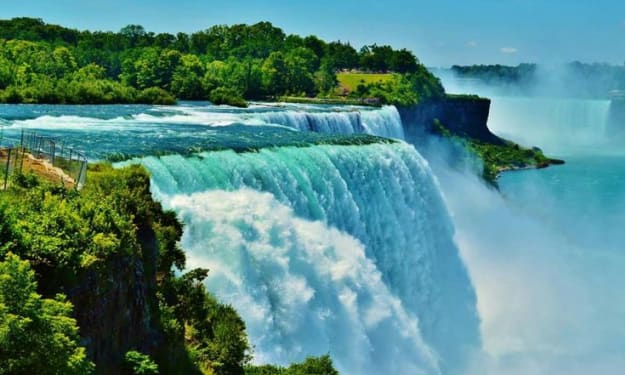
Niagara Falls: A Living Story of Power, History, and Human Wonder
Niagara Falls is one of those rare places where nature doesn’t just impress you—it overwhelms you. It’s a place where the earth’s ancient past meets the dreams of millions who stand at its edge, feeling the mist on their skin and the thunder in their bones. Stretching across the border of Ontario, Canada, and New York State in the United States, Niagara Falls has become one of the most visited natural wonders in North America, drawing more than 14 million people every year.
By Haroon Pasha4 days ago in Earth
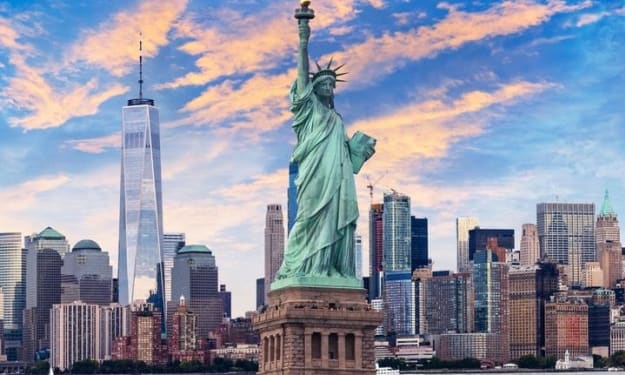
The Statue of Liberty: A Human Story of Hope, Courage, and the Promise of America
The Statue of Liberty is more than a monument rising above New York Harbor. For generations, she has been a silent witness to the dreams, fears, and hopes of millions of people who crossed the ocean searching for a new beginning. Her copper skin may have weathered, but her message has not: freedom is worth striving for, and hope is worth holding onto. 🇫🇷 A Gift Born From Shared Ideals The idea for the statue began not with governments, but with people—French thinkers, artists, and activists who admired America’s struggle for independence. They believed the United States represented something rare: a nation built on the idea that ordinary people could shape their own destiny. French sculptor Frédéric Auguste Bartholdi imagined a woman holding a torch high above the world, lighting the path toward liberty. Gustave Eiffel engineered the internal structure, giving her the strength to withstand storms, winds, and time itself. When the statue finally arrived in New York in 1885—packed in more than 200 crates—it wasn’t just a diplomatic gesture. It was a message of solidarity between two nations that believed in freedom. 📏 A Design Filled With Meaning Every detail of the statue carries intention: - The torch represents enlightenment—the idea that knowledge lights the way forward. - The seven rays on her crown symbolize the seven continents and seas, a reminder that liberty is universal. - The tablet in her left hand bears the date July 4, 1776, anchoring her to the birth of American independence. - The broken chains at her feet, often overlooked, speak to liberation from oppression. She stands 305 feet tall, but her true height comes from what she represents. 🛬 The First American Face Millions Ever Saw For immigrants arriving by ship in the late 1800s and early 1900s, the Statue of Liberty was not a tourist attraction—it was the first sign that their long, uncertain journey was ending. Imagine standing on the deck of a crowded ship after weeks at sea. You’re tired. You’re scared. You’re leaving everything you’ve ever known behind. And then, through the fog, you see her. People cried. People prayed. Some whispered promises to themselves. Others simply stared, unable to speak. Ellis Island processed more than 12 million immigrants, but Liberty Island gave them something just as important: the belief that they belonged somewhere. 🧠 A Cultural Icon Through Every Era The Statue of Liberty has appeared in films, paintings, speeches, and protests. She has been a symbol of resilience after national tragedies and a reminder of unity during divided times. She has stood through wars, economic crises, and cultural shifts. She has watched New York City rise, fall, rebuild, and rise again. Through it all, she has remained steady—an anchor in a world that constantly changes. 🧳 Visiting the Statue Today A visit to Liberty Island is more than a sightseeing trip. It’s a chance to stand where millions once stood and feel the weight of history beneath your feet. Visitors can explore: - The Statue of Liberty Museum, which tells the story of her creation - The pedestal, offering sweeping views of New York Harbor - The crown, accessible with advance reservations and not for the faint of heart The ferry ride itself is a moment of reflection—New York’s skyline on one side, Lady Liberty on the other. 📚 Little Details That Make Her Even More Fascinating - She wasn’t always green; she turned that color naturally as the copper oxidized. - When she was completed, she was the tallest structure in New York. - Her torch has been replaced and redesigned multiple times. - She can sway up to 3 inches in strong winds—graceful even in storms. 💬 Why She Still Matters The Statue of Liberty endures because she represents something deeply human: the desire to be free, to be seen, and to build a life with dignity. She reminds us that America’s story is not perfect, but it is always evolving—and always striving toward something better. She is not just a monument. She is a promise. If this story moved you, share it with someone who loves history or dreams of visiting New York. Leave a comment with your thoughts or your own experience seeing Lady Liberty. And if you’d like to support more human-centered stories like this, feel free to leave a tip—it helps bring more meaningful content to life.
By Haroon Pasha4 days ago in Chapters
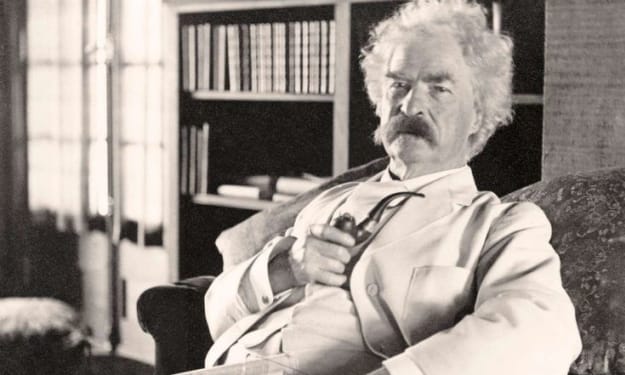
Mark Twain: The Man Who Lived, Laughed, and Witnessed America’s Transformations
Have you ever wondered what it was like to grow up along the Mississippi River during a time when America was transforming faster than anyone could imagine? Meet Samuel Clemens, better known as Mark Twain—a boy from a small Missouri town who rose from modest beginnings to become one of the greatest storytellers the world has ever known. Twain didn’t just write stories; he captured the soul of a nation, observing both its humor and its heartbreak with a sharp, unforgettable voice.
By Haroon Pasha5 days ago in Writers
Andrew Carnegie: From Immigrant to Steel Tycoon
Andrew Carnegie was born on November 25, 1835, in Dunfermline, Scotland, a town that had once been wealthy but was declining by the mid-19th century. His father, William Carnegie, was a handloom weaver, a craft that was rapidly disappearing due to the rise of industrialized steam-powered looms. As a result, the family faced severe poverty, forcing Andrew’s mother, Margaret, to work long hours mending shoes and running a small grocery shop to make ends meet. These early experiences instilled in Carnegie a profound awareness of social inequality and a lifelong determination to rise above hardship. Witnessing the struggles of the working class inspired his later belief that wealth should be used to improve society.
By Haroon Pasha5 days ago in Chapters
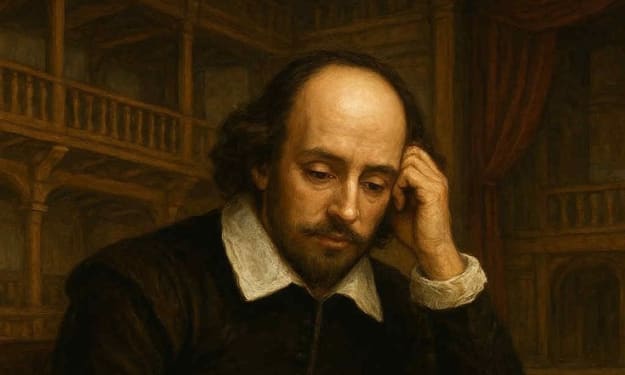
William Shakespeare Biography: Life, Works, and Legacy of the Greatest English Playwright
Imagine a world without Romeo and Juliet, Hamlet, or Macbeth. No famous line “To be, or not to be”, no tragic lovers, no powerful kings falling from pride, and no timeless lessons about life and love. Hard to imagine, right? Yet all these treasures came from one man born in a quiet English town more than 400 years ago. William Shakespeare rose from ordinary beginnings to become the most influential writer in the history of literature. His words crossed borders, centuries, and cultures, speaking equally to kings and common people.
By Haroon Pasha5 days ago in Chapters
Albert Einstein: The Genius Who Changed the Universe
Albert Einstein (14 March 1879 – 18 April 1955) was a German-born theoretical physicist whose ideas transformed our understanding of the universe. Best known for the theory of relativity and his mass–energy equivalence formula E = mc², Einstein’s work laid the foundation for modern physics. He also made groundbreaking contributions to quantum theory, statistical mechanics, and cosmology. In 1921, he received the Nobel Prize in Physics for his explanation of the photoelectric effect, a discovery that would pave the way for quantum mechanics.
By Haroon Pasha5 days ago in Chapters
🏢💥 Unraveling 9/11 Conspiracy Theories: Understanding Claims, Evidence, and Public Debate. Content Warning.
The September 11, 2001 attacks on the United States remain among the most significant and tragic events in modern history. Nearly 3,000 lives were lost, the global economy was shaken, and the world witnessed the rise of a new era of geopolitical tension and security concerns. Alongside these events, a complex web of conspiracy theories has emerged, challenging the official narrative and sparking debate that spans governments, media, academia, and the public.
By Haroon Pasha6 days ago in Chapters
Adolf Hitler: A Historical Biography and the Rise of a Destructive Regime. Content Warning.
Few individuals in modern history have left a mark as catastrophic and far-reaching as Adolf Hitler. His actions reshaped the political landscape of Europe, ignited a global conflict, and resulted in unprecedented crimes against humanity. Studying Hitler is not an exercise in fascination, but rather an effort to understand how fragile democratic systems can collapse and how extremist ideologies gain influence.
By Haroon Pasha6 days ago in Chapters
The Life and Legacy of Jeff Bezos
Jeff Bezos is one of the most influential entrepreneurs of the modern era. Best known as the founder of Amazon, he transformed a small online bookstore into one of the most powerful technology and commerce companies in history. His journey reflects a mix of bold vision, scientific thinking, and long-term ambition—not only on Earth, but beyond it.
By Haroon Pasha7 days ago in Chapters