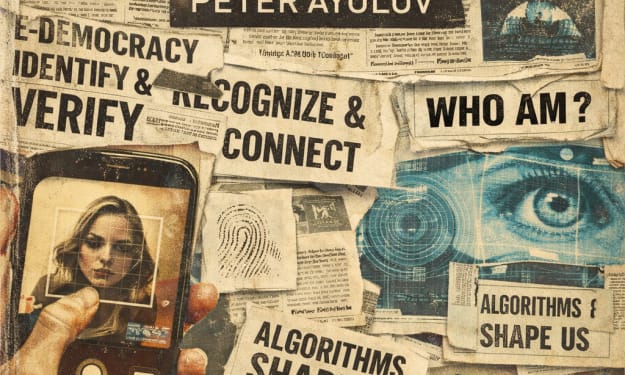
Peter Ayolov
Bio
Peter Ayolov’s key contribution to media theory is the development of the "Propaganda 2.0" or the "manufacture of dissent" model, which he details in his 2024 book, The Economic Policy of Online Media: Manufacture of Dissent.
Stories (60)
Filter by community
"The Shell in the Ghost, I Am Major"
In 2017, Hollywood did something predictable and scandalous at the same time: it remade the Japanese cyberpunk classic Ghost in the Shell and placed a blonde American star at its centre. The actress was Scarlett Johansson. Critics argued about cultural appropriation, about empire, about whether the United States had once again absorbed a foreign myth and refashioned it in its own image. Yet beyond the controversy, the American Ghost in the Shell remains a philosophically provocative film. It forces a simple but radical question: what is a human being made of?
By Peter Ayolovabout 5 hours ago in Critique
The Theory of the New Leisure Class
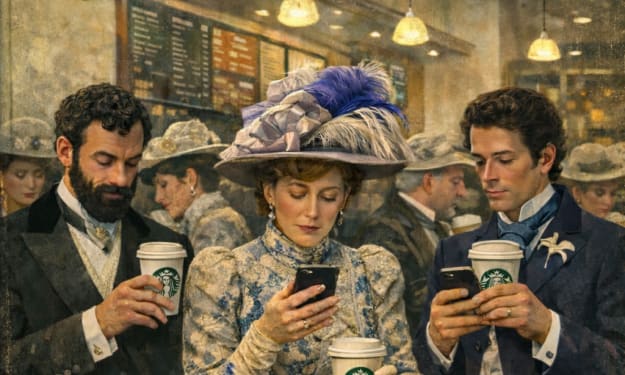
The Theory of the New Leisure Class: Homo Essentialis Thorstein Veblen wrote The Theory of the Leisure Class in 1899 to describe a social order in which status was displayed through visible idleness and conspicuous consumption. More than a century later, idleness has disappeared as a badge of honour, yet Veblen’s central insight has only intensified. The ruling class of the twenty-first century does not sit idle; it performs busyness. It does not withdraw from work; it transforms work into theatre. What we are witnessing is not the disappearance of the leisure class but its mutation. This is Leisure Class 2.1. This is Homo Essentialis.
By Peter Ayolovabout 22 hours ago in Critique
Matter in Revolt
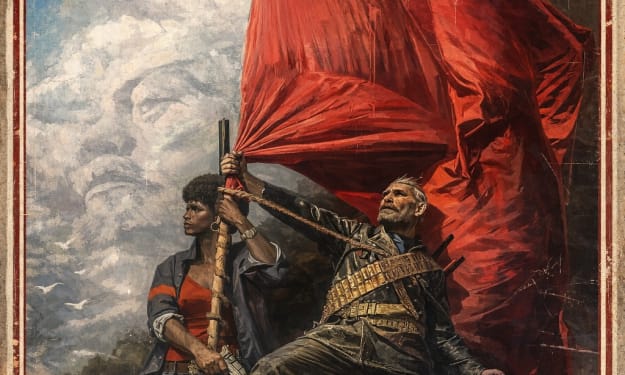
Matter in Revolt: How Diamat Becomes History (The Architecture of Chaos in the 21st Century) The twenty-first century does not suffer from chaos; it suffers from misunderstood structure. Climate breakdown, algorithmic governance, financial volatility, pandemics, digital feudalism—these are not isolated crises. They are converging contradictions. What appears fragmented is in fact systemic. What appears accidental is material. To read this moment properly, one requires a method that does not panic before complexity. That method is Diamat.
By Peter Ayolovabout 22 hours ago in Critique
Reflexivity at the Edge of Exhaustion
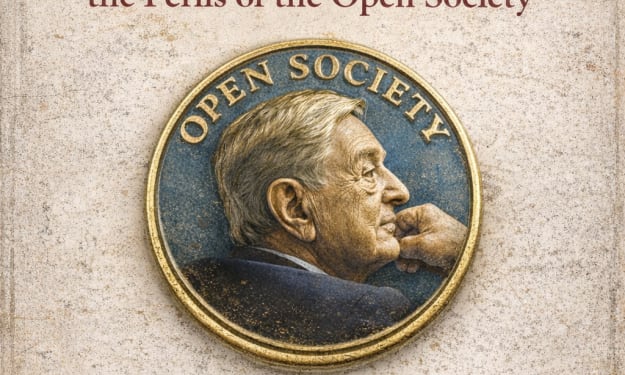
Book Review: Reflexivity at the Edge of Exhaustion There are books that describe a condition, and there are books that diagnose a structure. The Reflexivity Trap: Language, Prophecy, and the Perils of the Open Society belongs to the latter category. It does not merely comment on the political turbulence of the present or the volatility of digital media. It proposes that a single mechanism — reflexivity — has shifted from an explanatory insight into a governing script, and that this shift marks a civilisational threshold. The result is a philosophical intervention into debates on openness, media, prophecy and power that is at once systematic and unsettling.
By Peter Ayolova day ago in BookClub
Just Thinkering
Just Thinkering: Talking about Thinking Philosophy begins with a strange upgrade to ordinary speech. Instead of talking about things, people start talking about the talking itself, then about the thinking behind the talking, then about the words used to name the thinking. This second level of language feels noble, even heroic: reflection, critique, self-awareness, ‘the examined life’. But it also carries a quieter risk. Once speech turns back on itself, it can become a room full of mirrors. The sound continues, yet nothing moves forward. There is talk about words, talk about thinking, talk about talk, and soon the whole performance becomes a kind of verbal tinkling: elegant, repetitive, self-pleasing noise.
By Peter Ayolov4 days ago in Critique
The Beauty of the Word
The Beauty of the Word: When “Beautiful” Becomes Power We rarely say “ugly truth.” We prefer to say “beautiful.” The choice is not innocent. “Truth” sounds like information: a fact, a report, a statement to be verified or dismissed. “Beauty,” by contrast, is an experience. It is not merely known; it is felt. When we call something beautiful, we lift it from the level of data to the level of meaning. We grant it weight, dignity, even sacredness. The word itself performs an elevation.
By Peter Ayolov4 days ago in Critique
Celluloid Comrades
A review of: Nadège Ragaru (2023). ‘Millions for the Movies’ in Late Socialist Bulgaria: : The Political and Moral Economy of the Cinema Industry. Sociétés politiques comparées. Revue européenne d’analyse des sociétés politiques . [online] doi:https://doi.org/10.36253/spc-18718.
By Peter Ayolov4 days ago in Critique
Mirror Selves Trilogy: The Architecture of the Formatted Human
Mirror Selves Trilogy: The Architecture of the Formatted Human The Mirror Selves Trilogy—Identity Industrial Complex, Copyrighting the Self, and The Shapes of the Self—offers one of the most systematic contemporary analyses of how identity has migrated from lived interiority to formatted visibility. Across its three volumes, Peter Ayolov develops a coherent theoretical architecture that traces the transformation of the self from a psychological and philosophical category into a political, economic, and technological construct. What begins as an inquiry into representation unfolds into a diagnosis of civilizational change: the shift from narrative selfhood to infrastructural identity, from subjectivity to profile, from history to circulation. At the core of the trilogy stands a simple but destabilizing claim: identity no longer precedes representation. It is formatted by it. The trilogy does not treat this as metaphor. It is not a cultural lament about social media narcissism or a nostalgic defense of authenticity. It is an ontological and political thesis. The human being, once imagined as a bearer of interior depth, now appears as a visible configuration inside systems of recognition. The mirror no longer reflects; it produces.
By Peter Ayolov4 days ago in BookClub
The Shaped Self: Images Without History
The Shaped Self: Images Without History Peter Ayolov, Sofia University “St. Kliment Ohridski”, 2026 Abstract E-democracy is not a technical upgrade of representative government. It is a transformation of citizenship inside a regime of visual formatting. Drawing on Žarko Paić’s analysis of video-centrism and the world-picture, this article argues that contemporary political life unfolds in an environment where images no longer reflect history but organise reality in advance. In this condition, the citizen does not merely participate; the citizen appears through an interface. Political agency becomes inseparable from visibility, recognisability, and circulation. By placing Paić in dialogue with Marcel Duchamp, Jean Baudrillard, Tom Wolfe, and Jean-Luc Nancy, the article develops the concept of the shaped self as the central figure of e-democracy: an interface-formed subject structured by edges, templates, and repeatable visual patterns that enable identification but risk reducing agency to performance. The struggle for democracy becomes a struggle over representation itself: over ownership of likeness, transparency of distribution systems, and the capacity to distinguish voice from simulation in an environment saturated with images, metrics, and deepfakes. As the concluding work of the Mirror Selves Trilogy, this article presents the book The Shapes of the Self: Identity and Recognition in Visual Space (2026) that investigates how the self emerges not as an inner essence but as a shaped and formatted presence within contemporary visual space.
By Peter Ayolov4 days ago in Critique
Peter Ayolov’s The Shapes of the Self: Identity and Recognition in Visual Space
Peter Ayolov’s The Shapes of the Self: Identity and Recognition in Visual Space (Book review) Peter Ayolov’s The Shapes of the Self: Identity and Recognition in Visual Space arrives not as an isolated philosophical meditation but as the culminating movement of the Mirror Selves Trilogy, following Identity Industrial Complex and Copyrighting the Self. If the first volume mapped the political economy of the human image and the second traced the juridical and proprietary capture of likeness, this final work undertakes the most ontological task of all: to ask what kind of self remains when the world itself has become image.
By Peter Ayolov4 days ago in BookClub