
Ice Cream Market Size & Forecast 2026–2034
Rising Indulgence, Health Innovation, and Cold-Chain Expansion Drive Steady Global Growth

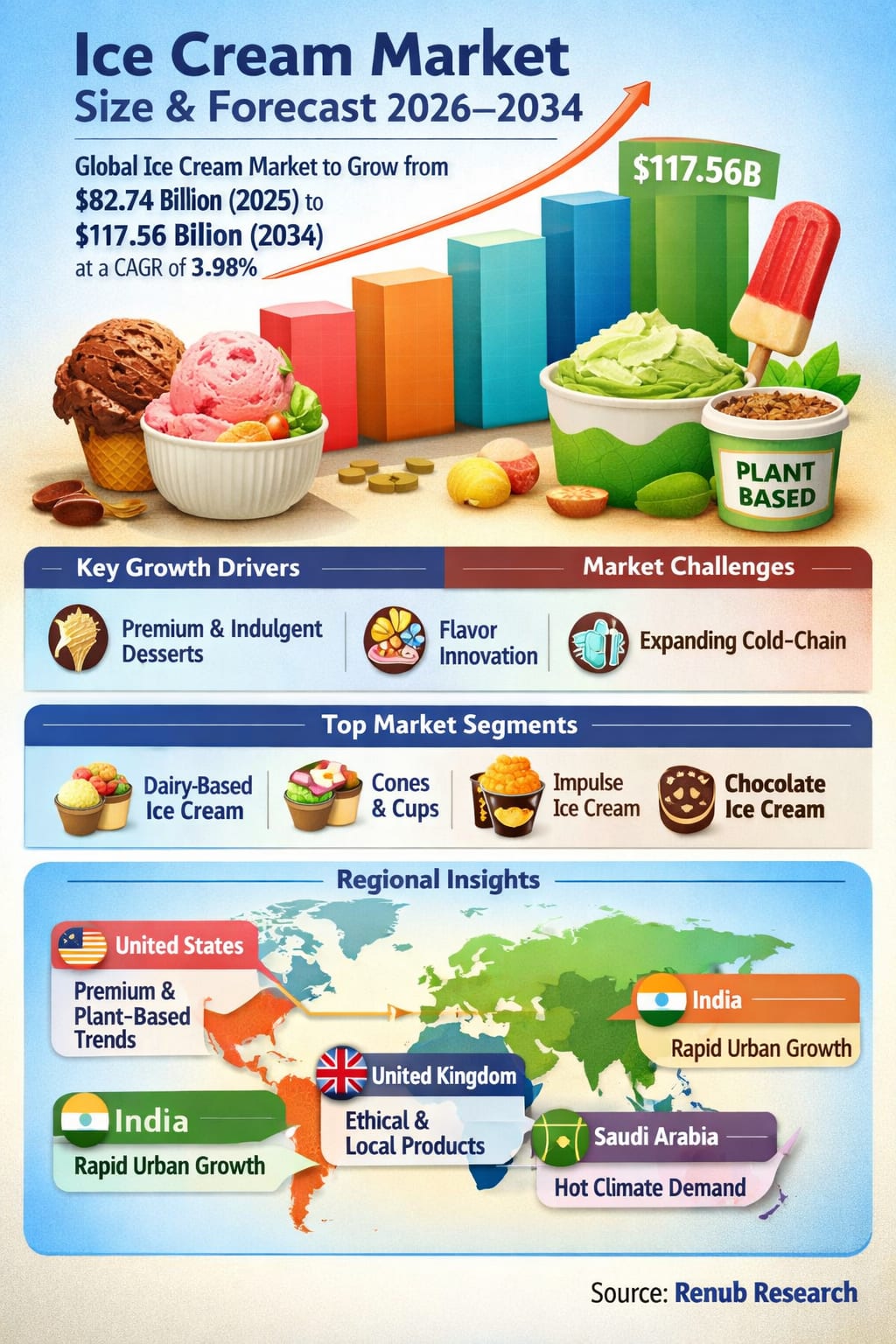
The global ice cream market continues to evolve as one of the most dynamic segments within the broader food and beverage industry. Once considered a purely seasonal indulgence, ice cream has transformed into a year-round comfort product supported by innovation, premiumization, and expanding retail infrastructure. According to Renub Research, the global ice cream market is expected to grow from US$ 82.74 Billion in 2025 to US$ 117.56 Billion by 2034, reflecting a compound annual growth rate (CAGR) of 3.98% from 2026 to 2034.
This steady growth trajectory reflects changing consumer lifestyles, rising disposable incomes, urban expansion, and increasing demand for both indulgent and health-conscious dessert options. From artisanal gelato parlors in Europe to impulse ice cream sticks in Asia and premium organic launches in the United States, the market is expanding in both developed and emerging economies.
Ice Cream Market Outlook
Ice cream, traditionally made from milk or cream blended with sugar and flavoring ingredients such as vanilla, chocolate, fruits, and nuts, has evolved significantly over time. Today’s offerings extend far beyond conventional dairy-based recipes to include gelato, frozen yogurt, sorbet, and plant-based alternatives made from almond, soy, coconut, and oat milk.
Its universal appeal lies in its versatility. Ice cream is consumed as a dessert, snack, celebratory treat, or as a complement to beverages and baked goods. Regional preferences shape product development—classic and premium flavors dominate North America and Europe, while Asia-Pacific markets increasingly demand specialty flavors such as matcha, red bean, and tropical fruits.
Urbanization, improvements in refrigeration infrastructure, and the expansion of modern retail formats are accelerating consumption globally. Meanwhile, emotional associations with celebrations, nostalgia, and comfort continue to reinforce its enduring popularity.
Growth Drivers of the Global Ice Cream Market
1. Rising Demand for Indulgent and Premium Desserts
One of the most significant drivers of growth is the increasing consumer appetite for indulgent experiences. Ice cream is widely viewed as an affordable luxury, and as disposable incomes rise, especially in urban centers, consumers are trading up to super-premium offerings.
Manufacturers are responding by introducing products with richer textures, exotic inclusions, natural ingredients, and visually appealing packaging. Artisanal and craft ice cream brands are gaining traction, particularly among millennials and Gen Z consumers seeking authenticity and uniqueness.
In April 2025, premium ice cream brand Häagen-Dazs secured USD 50 million in funding from a private equity firm to expand its production capacity. Such investments highlight confidence in the premiumization trend, which supports higher profit margins and cushions the industry against seasonal fluctuations.
Premium ice cream in emerging markets also symbolizes aspirational consumption, further driving growth.
2. Product Innovation and Flavor Diversification
Continuous innovation remains central to competitive differentiation. Companies are introducing limited-edition flavors, region-specific variants, and hybrid formats to capture consumer interest.
Beyond flavors, innovation is visible in formats such as:
Ice cream sandwiches
Mini multipacks
Stick and novelty bars
Protein-enriched tubs
Lactose-free and vegan options
Health-focused innovations are particularly notable. With rising awareness of obesity, diabetes, and sugar intake, brands are launching low-sugar, keto-friendly, high-protein, and plant-based products.
Sustainability is also emerging as a powerful differentiator. In October 2025, Unilever announced significant investments in sustainable packaging solutions aimed at reducing plastic waste across its ice cream portfolio. Eco-conscious packaging enhances brand image and appeals to environmentally aware consumers.
3. Expanding Cold-Chain and Retail Infrastructure
Ice cream’s temperature sensitivity makes cold-chain logistics essential. Improvements in refrigeration technology, freezer display systems, and logistics networks are expanding market penetration in developing regions.
Growth in:
Supermarkets and hypermarkets
Convenience stores
Specialty dessert outlets
Quick-commerce platforms
Online grocery delivery services
has dramatically increased accessibility.
In August 2025, Mars formed a partnership with a local dairy cooperative to strengthen supply chain efficiency and ensure ingredient quality. Strategic collaborations like these improve operational reliability and brand trust.
Emerging markets, supported by government and private investments in cold storage infrastructure, are experiencing rapid growth in ice cream consumption due to reduced food spoilage and improved distribution networks.
Challenges Facing the Ice Cream Market
High Temperature Sensitivity and Storage Costs
Cold storage requirements increase operational costs, particularly in regions with hot climates and unstable electricity supply. Rising energy prices directly impact profit margins.
Small and medium enterprises often struggle with the high capital investment required for cold storage facilities. Sustainability concerns also emerge due to the carbon footprint associated with refrigeration systems.
Health Concerns and Regulatory Pressures
Traditional ice cream products are often high in sugar, fat, and calories. Growing concerns over lifestyle-related diseases have prompted stricter regulations regarding sugar limits, labeling transparency, and marketing to children.
Balancing indulgence with health remains a core challenge. While healthier alternatives are expanding, maintaining taste and texture parity with traditional products requires ongoing R&D investment.
Segment Analysis
Cones & Cups Ice Cream Market
Cones and cups represent one of the most popular packaging formats globally. Their convenience and portability make them ideal for impulse purchases. Waffle cones, chocolate-dipped variants, and eco-friendly paper cups enhance consumer appeal.
Urbanization and impulse buying behavior are fueling growth. In developing countries, affordability and small portion sizes drive adoption, while in developed markets, premium cone variants contribute to steady expansion.
Dairy-Based Ice Cream Market
Dairy-based ice cream continues to dominate due to its creamy texture and widespread acceptance. Regions such as North America, Europe, and parts of Asia maintain strong demand for traditional dairy offerings.
Although plant-based products are growing, dairy-based ice cream retains supply chain advantages, broad flavor variety, and consumer familiarity.
Impulse Ice Cream Market
Impulse ice cream includes single-serve sticks, bars, cones, and novelty products sold for immediate consumption. Visibility in convenience stores, kiosks, and vending machines significantly drives sales.
Eye-catching packaging and limited-edition collaborations stimulate demand. Emerging markets are witnessing rapid growth in this segment due to expanding cold infrastructure.
Chocolate Ice Cream Market
Chocolate remains one of the most preferred flavors globally. Variants such as milk chocolate, dark chocolate, fudge swirl, and chocolate chip offer extensive customization possibilities.
Its universal appeal across age groups ensures strong performance in both retail and foodservice channels.
Convenience Stores Distribution Channel
Convenience stores play a crucial role in impulse purchases. Extended operating hours, strategic placement near checkout counters, and increasing freezer efficiency support growth.
Retail partnerships for exclusive launches and promotional campaigns further strengthen this distribution channel.
Regional Insights
United States
The U.S. represents a mature yet innovation-driven market with high per capita consumption. Premiumization, artisanal offerings, and plant-based innovations dominate growth strategies.
In April 2024, Alec’s Ice Cream introduced nine new premium flavors made with regenerative organic ingredients and A2/A2 dairy, reinforcing demand for ethically sourced and high-quality products.
E-commerce and take-home consumption support year-round demand beyond seasonal peaks.
United Kingdom
The UK market is shaped by demand for ethical sourcing, local production, and premium quality. Vegan and dairy-free products are gaining traction, while traditional flavors remain popular.
Supermarket penetration is strong, with increasing demand for private-label premium ranges. Although consumption peaks in summer, innovation in take-home desserts supports off-season sales.
India
India is emerging as a high-growth market due to urbanization, rising disposable income, and expanding cold-chain infrastructure. Impulse formats dominate, particularly in metro and tier-2 cities.
In July 2025, Britannia Industries collaborated with NIC Ice Creams to launch a biscuit-infused variant, reflecting growing innovation in fusion products.
Traditional flavors like vanilla and mango lead the market, while international flavors gain popularity among younger consumers.
Saudi Arabia
Saudi Arabia’s hot climate and young population drive strong demand. Urbanization and tourism initiatives support retail expansion.
In August 2025, SADAFCO launched a new ice cream factory experience in Jeddah to enhance brand engagement and educate children on food production.
Despite high cold-chain costs, the market shows promising growth due to strong consumption patterns.
Competitive Landscape
The global ice cream market is highly competitive, featuring multinational corporations and regional players. Key companies include:
Meiji Co. Ltd
General Mills Inc.
Yili Group
Unilever Group
Mondelez International
Nestlé S.A.
Bright Dairy & Food Co. Ltd
Danone S.A.
These companies compete across multiple viewpoints, including product innovation, revenue growth, SWOT positioning, strategic expansions, and leadership initiatives.
Market Segmentation
By Product:
Sticks/Bars, Cones & Cups, Tubs & Bricks, Others
By Category:
Dairy-Based, Non-Dairy-Based
By Type:
Impulse, Take-Home, Artisanal
By Flavor:
Chocolate, Vanilla, Fruit, Others
By Distribution Channel:
Supermarkets & Hypermarkets, Convenience Stores, Specialty Stores, Online
By Region:
North America, Europe, Asia-Pacific, Latin America, Middle East & Africa
Final Thoughts
The global ice cream market stands at a balanced intersection of indulgence and innovation. While traditional dairy-based flavors continue to dominate, health-conscious formulations and plant-based alternatives are steadily gaining share. Cold-chain expansion in emerging economies, premiumization in developed markets, and evolving consumer preferences ensure sustained growth.
With a projected rise from US$ 82.74 Billion in 2025 to US$ 117.56 Billion by 2034, growing at a CAGR of 3.98%, the industry demonstrates resilience and adaptability. Companies that successfully blend indulgent taste, health-oriented innovation, and sustainable practices will be best positioned to capture long-term growth in this evolving global market.
About the Creator
Taiwan Air Freight Market Size, Share, Trends, Industry Analysis, Report to 2033
Market Overview The Taiwan air freight market plays a crucial role in supporting the island’s export-driven economy. As one of Asia’s major technology manufacturing hubs, Taiwan relies heavily on efficient logistics networks to transport high-value goods such as semiconductors, electronics, and precision components. Air freight offers speed, reliability, and security, making it an essential transportation method for time-sensitive shipments.
By Jackson Watson6 days ago in Trader



Comments
There are no comments for this story
Be the first to respond and start the conversation.