
Psyche
An open conversation about mental health; stories, experiences, advice, real life. Psyche exposes the inner workings of the human soul, mind, and spirit.
Stats
Stories
- 21,250
Creators
- 11,359
Top Creators


Top Stories
Stories in Psyche that you’ll love, handpicked by our team.
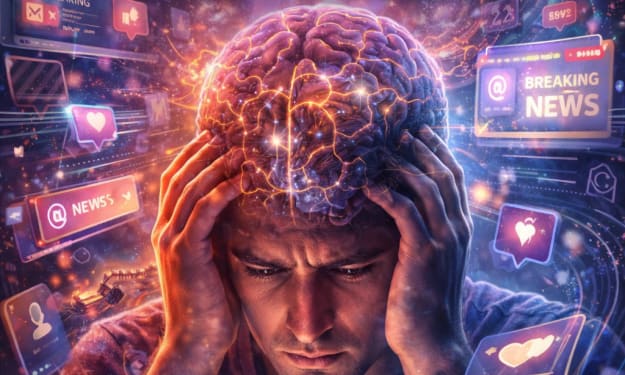
What Happens To Your Brain When You Stop Multitasking
Digital technology is the culprit that is causing us to doom scroll when tired, disengaged and unmotivated with the content that motivated you to log onto your device to consume in the first place. That is only the beginning. In the modern workplace (and even when filing cabinets were around, I confirmed this with my adopted parents to get my facts right); reading files while you are supposed to be present to the caller on the other end of the phone line is another classic example of multitasking that causes your brain (although adaptable and intelligent) to lose focus and concentration.
By Justine Crowley18 days ago in Psyche
Learn to Be Alone...
We often find that people are told to stop making 'X, Y and Z' their personality. Well, this only arose in the social media age as especially women's interests: reading, dramas, art etc. was heavily criticised as being 'useless'. It is historically well-documented that though many men require the work of women, whether it be through unpaid labour or entertainment, they also refuse to acknowledge it is important. This is why since it has been something of recognition, they have been complaining of a 'loneliness epidemic' now that women are withholding access.
By Annie Kapur29 days ago in Psyche














Collections
Themed story collections curated by the Vocal moderators.

Behind the Scenes
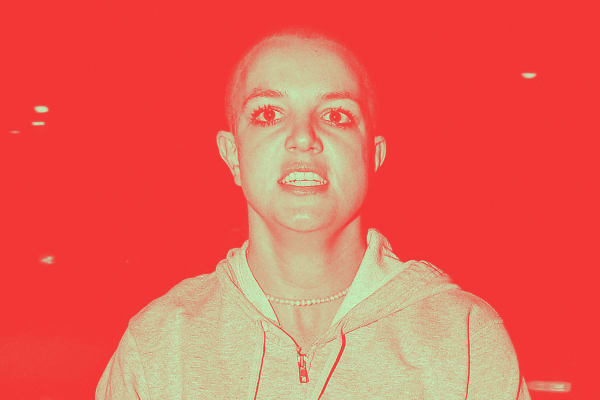
Exploring mental health in the public eye; celebrities and the spotlight that has been placed on their personal lives and their mental health.

In Treatment
Discovering the ins and outs of treatments and therapies. Join the conversation today.

Beyond the Blues
Understanding depression is difficult; hear from Psyche's community of peers on their experiences with this mood disorder.





Latest Stories
Most recently published stories in Psyche.
Unplug
I am one of those people that unplugs items around the house when I go on a trip. I do it because I want to protect and keep the things I find valuable, from anything happening to them, in the even of a power surge or some other king of natural event that would cause a power outage, or surge. My computer is number one on my list. I use it for my writing and I can’t afford to lose my work. Preservation of high value items is wise, I believe. I’m probable not the only one who does this. So if we protect our “things” like this, why aren’t we protecting our most valuable thing in life, our mental health?
By Alexandra Grantabout 4 hours ago in Psyche
Love Isn’t Magic — It’s Psychology in Motion
We like to believe love just happens. Two people meet. There’s a spark. The heart chooses. The story begins. But love is rarely random. It feels spontaneous, yet beneath the poetry there is psychology. Beneath the butterflies there is biology. Beneath the longing there are patterns shaped long before we knew what romance was. If we slow down and look closely, love becomes less mysterious — and more powerful. Not because the magic disappears, but because we begin to understand it. The Rush We Call “Falling” The early stage of love is intoxicating for a reason. When you feel drawn to someone, your brain increases dopamine — the neurotransmitter associated with reward and motivation. It’s the same system activated by ambition, achievement, and even addictive behaviors. Suddenly, one person becomes unusually significant. You want their attention. You anticipate their messages. You replay their words. At the same time, oxytocin begins to rise. Often called the bonding hormone, it strengthens emotional connection through touch, eye contact, and vulnerability. It creates warmth, closeness, and trust. In the beginning, love can feel obsessive. That’s not weakness. It’s chemistry. But here’s something important: that intensity is not designed to last forever. The human nervous system cannot sustain constant emotional fireworks. Over time, the surge settles. Excitement softens into stability. Many people interpret this shift as losing love. In reality, it’s love evolving. The fire turning into warmth isn’t failure. It’s maturation. Why We Feel “Drawn” to Certain People Attraction often feels mysterious. We say, “I don’t know why, I just felt something.” Psychology suggests otherwise. We are frequently drawn to what feels familiar — not necessarily what is healthy. Early experiences, especially childhood relationships, shape our internal model of love. If affection was consistent and safe, we tend to seek stability. If it was unpredictable or conditional, intensity may feel more natural than calm. This is where attachment theory becomes useful. In simple terms, attachment style describes how we relate emotionally in close relationships. Some people feel secure in intimacy. Others fear abandonment and seek constant reassurance. Some value independence so strongly that emotional closeness feels overwhelming. When two people connect, they don’t just bring personalities. They bring histories. And sometimes, what feels like powerful chemistry is actually two nervous systems recognizing a familiar pattern. That familiarity can feel electric — even if it isn’t peaceful. Intensity vs. Safety There is a difference between excitement and security. Excitement often comes from unpredictability. Not knowing when they will text. Not knowing where you stand. The highs feel euphoric because the lows create contrast. Safety feels different. It is steady. Predictable. Calm. For someone accustomed to emotional turbulence, calm can initially feel boring. For someone used to emotional distance, closeness can feel threatening. But long-term emotional health thrives on safety, not adrenaline. Butterflies are not always romance. Sometimes they are anxiety. The question worth asking is not “Do they make my heart race?” It is “Do they make my nervous system relax?” The Ego’s Quiet Role in Love Not every relationship is built on love alone. Sometimes it is built on validation. There is a subtle difference between loving someone and needing someone to confirm your worth. When we seek relationships primarily to feel chosen, admired, or superior, we are feeding the ego — not building intimacy. The partner becomes a mirror instead of a companion. This creates fragile bonds. The connection remains strong only as long as admiration flows. Healthy love requires differentiation — the ability to remain connected while maintaining your own identity. Two individuals choosing each other freely is very different from two people depending on each other to feel complete. Love expands you. Ego-driven attachment consumes you. Why Breakups Hurt So Deeply When a relationship ends, the pain is not “all in your head.” It is neurological. Social rejection activates similar brain regions as physical pain. The person you bonded with became part of your emotional regulation system. You shared routines, comfort, reassurance. When they leave, your nervous system experiences a disruption. That emptiness is not weakness. It is the brain recalibrating. Over time, new habits form. Emotional balance returns. The system adapts. What once felt unbearable becomes a chapter you survived. Heartbreak, painful as it is, often reveals patterns we could not see while inside the relationship. It shows us our triggers, our fears, and sometimes our unmet needs. Growth rarely arrives without discomfort. Modern Love in a Digital World Today, relationships unfold in an environment the human brain did not evolve for. Dating apps offer endless options. Social media amplifies comparison. Every notification becomes a micro-reward. Every delay becomes a perceived signal. Psychologists call this the paradox of choice — when too many options reduce satisfaction. With constant alternatives visible, commitment can feel risky. There is always the illusion that something better might be one swipe away. But depth requires focus. Real intimacy grows slowly. It is built through shared experiences, conflict resolution, ordinary days. It cannot compete with curated highlight reels online. Choosing someone consistently in a world designed for distraction has become an intentional act. What Mature Love Looks Like Mature love is rarely dramatic. It does not rely on constant testing or emotional extremes. It is marked by respect, emotional regulation, and repair after conflict. Every couple disagrees. The difference lies in how they recover. The ability to apologize sincerely, to listen without preparing a defense, to express needs without accusation — these are skills. Love is not just a feeling. It is a practice. And like any practice, it improves with awareness. The Standard You Accept One of the most powerful truths about relationships is this: we often accept the level of love we believe we deserve. If you feel unworthy deep down, you may tolerate inconsistency. If you believe love must be earned, you may overextend yourself trying to prove your value. Self-worth shapes romantic choices more than luck does. As self-awareness increases, standards shift. Patterns break. The people you feel drawn to may change. Sometimes the most important work in love happens before the relationship begins. The Real Transformation Love exposes you. It reveals insecurities you didn’t know were there. It challenges your ego. It invites vulnerability. It demands growth. It can destabilize you — and it can strengthen you. At its healthiest, love is not about losing yourself. It is about becoming more fully yourself while standing beside someone who is doing the same. The intensity of early romance may fade. But what replaces it — if nurtured well — is deeper: trust, stability, shared meaning. Love is not magic in the sense that it defies explanation. It is extraordinary precisely because it is human. Two nervous systems learning to feel safe together. Two histories negotiating trust. Two individuals choosing connection, again and again. When you understand the psychology behind it, you do not lose romance. You gain clarity. And clarity changes everything.
By The Insight Ledger about 4 hours ago in Psyche
The Silent War Inside Your Mind: How Modern Life Rewires Your Brain Without You Realizing It
There is a war happening inside your head. Not the dramatic kind with explosions and alarms. This one is quieter. Softer. It hums beneath your thoughts while you scroll, while you watch, while you “relax.”
By The Insight Ledger about 4 hours ago in Psyche
Attention
The problem isn’t that they stopped loving you — it’s that they stopped paying attention. Read that again. Most relationships don’t collapse because of one dramatic betrayal. They don’t end because of one explosive argument. They slowly fade because attention quietly disappears.
By Ahmed aldeabellaabout 4 hours ago in Psyche










Creators We’re Loving
The creative faces behind your favorite stories.
Tom Bissonette, M.S.W. Ret.
18 published stories
Justine Crowley
134 published stories
Carol Ann Townend
913 published stories
Chantal Christie Weiss
98 published stories
Barb Dukeman
198 published stories
Kera Hollow
47 published stories
Test
427 published stories
Elizabeth Woods
127 published stories
Ian Vince
126 published stories
Natasja Rose
499 published stories
Vicki Lawana Trusselli
345 published stories
Annie Edwards
188 published stories