science
The science of staying young, healthy, and in-shape.
Digestion Meets Uncle Kidney
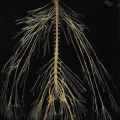
One day i knew a guy named Digestive System. He was born with two main functions. There names were digestive and absorption. Digestion told digestive that he needs to process the converting food into substances capable of being used by the cells for nourishment. Then absorption came along and does a process in which the digested nutrients are transferred from the intestines to the blood or lymph vessels so that they can be transported to the cells. Then there were two organs that he forgot he even had. These organs were the alimentary canal and the accessory digestive organs.Alimentary canal consists of the mouth, pharynx, esophagus, stomach, small intestine, and large intestine. Accessory digestive consists of the teeth, tongue, salivary glands, pancreas, liver, and gall bladder. Alimentary told digestive that he is a muscular tube that is five times as long as a person is tall and extends from the lips to the anus. Digestive always wondered why he had all these things going on in his system. He also is accompanied through physical and chemical means. The physical means involve the teeth, tongue, and involuntary muscles of the pharynx, esophagus, stomach, and small intestine. The teeth tear and grind the food into small pieces while the tongue mixes and moves the food that is called his buddy Chewing. His oral cavity prepares food for entrance into his stomach. in his mouth food is masticated(chewed) by the teeth and mixed by the tongue with secretions from his salivary glands. Saliva contains enzymes that begin to digest carbohydrates. his best friend "Bolus" is an action of the teeth, tongue, and saliva that prepare food into a soft ball that slides down the throat slide and is swallowed by voluntary and reflex muscles of the pharynx. After food travels down the esophagus it passes through the cardiac sphincter and enters the stomach where gastric juices is churned like butter and secreted from glands in the walls of the stomach that contain hydrochloric acid and protein-digesting enzymes. Chyme is like what we call a "smoothie" because it is a mixture of digesting juices, mucus, and food materials. Once we finish mixing our "smoothie" called chyme from the stomach it passes through the pyloric sphincter into the duodenum of the small intestine. Pyloric sphincter is the number one rookie because he is first to play an important role in determining how long food is held in the stomach. His other best friend small intestine is the longest part of the alimentary canal and consists of three of his partners in crime the duodenum, jejunum, and ileum. Bile from his liver and gall bladder is carried through the common bile duct and is essential for breakdown of fats. Then we have what he calls pancreatic fluid that enters the partner of crime the duodenum by way of his pancreatic duct and contains enzymes that act to digest proteins, carbohydrates, and fats. Then we have some small fingers that protect the covering of the intestinal walls called "Mr. Villi" the villain of his team. After Mr. digestive system has done all his digestion things, then comes the waste which is unusable materials and it moves through the ileocecal valve into a small pouch-like a kangaroo pouch which is part of the large intestine called the cecum. The large intestine or colon continues his process upward along the right side of the abdomen to form the ascending colon. Then it travels to the abdominal cavity and forms the transverse colon. It goes down on the left side of the abdomen to become the descending colon. As the colon reaches the left iliac region it forms a "Superman" shaped S band known as the "Superman" signoid colon. Mr. Rectum is temporary storage for waste. The distal part of the large intestine is the anal canal which ends with the anus where dookie or poop is expelled. Then comes along Mr. Digestive system's family member who is part of the urinary system that includes two kidneys, two ureters, one bladder, and one urethra. He has a bean shaped organ located at the back of the abdominal cavity between the tenth thoracic and third lumbar vertebrae and kept in place by fibrous connective and fatty tissues called Uncle Kidney. I always thought when people asked about the kidneys they were referring to the can of beans we eat called kidney beans. The functional unit of Uncle Kidney is his son "Nephron". Good ol' Nephron was born with two to three millions "nephrons". Each day he filters out forty to fifty gallons of plasma from the blood. That is way more gallons of water than an elephant can drink a day. Ninety percent of this fluid is reabsorbed into the blood stream. Uncle Kidney's ureters excrete the remaining water and wast products through these two items. As Uncle Kidney filters his blood, he removes a certain amount of water and nitrogenous waste products of metabolism. His ureters are tubes that carry urine from the kidneys to the bladder where his urine is stored. His bladder is a hollow organ constructed of walls of elastic fivers and involuntary muscles that act as a reservoir for the urine until its secreted from his body. When Kidney has to go to the doctor they perform a urinalysis, which is a chemical examination of his urine that is often part of the doctor's routine examination given by most doctors. When Uncle Kidney is healthy his urine would be a clear yellowish fluid. But if he is sick then it is reddish brownish and can indicate he has an infection. Uncle Kidney's function is to maintain his body's water balance and acid-base balance. Another function he does is the production of the hormone called Mr. Renin, which acts to regulate his blood pressure. When his blood pressure is low, he stimulates to release more of Mr. Renin into his bloodstream which causes his blood vessels to contract, therefore, raising his blood pressure.
By NaQuita McKnight8 years ago in Longevity
Stem Cell Research
Every human body has special cells that, when they divide, have the potential to become any specific cell with a certain function such as blood cells, brain cells, or muscle cells. However, a type of stem cell called adult stem cells are limited. There are specific stem cells that can only grow into certain organ tissue. For example, humans have liver stem cells that can only grow into liver cells and not into any other type of organ or tissue. Embryonic stem cells are not limited in this way. In a blastocyst, or a fertilized egg that has not yet attached to the uterine wall, there are millions of stem cells that have the potential to grow into any type of tissue. The eggs used for stem cell research are not extracted from a woman’s body, but rather from a fertilized egg in a petri dish. Many scientists want to use the flexibility and potential of stem cell research to better human life and ease suffering. However, there are those who oppose the use of these type of cells. One cause of the controversy of this issue is that in many cases, the blastocyst is destroyed in the process of extracting the stem cells. For almost 20 years, scientists have been debating back and forth about the ethics of stem cell research, specifically concerning embryonic stem cells.
By Ella MacQueen8 years ago in Longevity
The Life and Death of the Naturopathic Movement
Benedict Lust, ND, DO, MD (February 3, 1872 - September 5, 1945), born in Michelbach, Germany, was one of the founders of naturopathic medicine. When Lust worked as a waiter in Baden-Baden, Geneva, and then New York City, New York, he became ill. Lust thought that it could have been tuberculosis and thought that he did not have long to live, so he went back to Germany and was looking for anything that could act as a cure.
By Marquis Canaday8 years ago in Longevity
Nutritional Medicine and the Medical Monopoly
Many times people will say, they don’t ‘believe’ in so called ‘holistic medicines’ meaning that they don’t believe in the healing and medicinal values of plants, herbs, and vegetables. This just points to the fact that they don’t know much about medicines in general.
By Joe Snaith9 years ago in Longevity
Antibiotics and the Bacteria That Resist Them
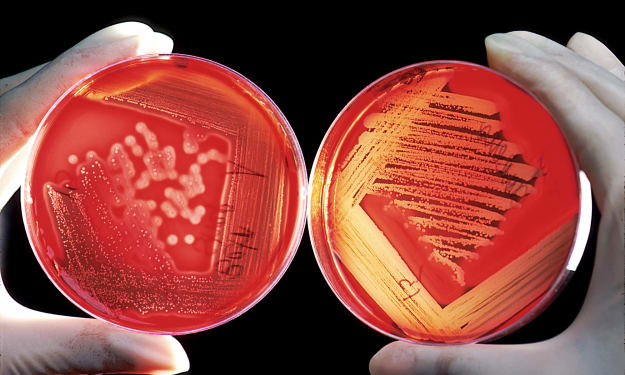
Since Alexander Fleming discovered penicillin, the first natural antibiotic, in 1928 we have been killing or slowing the growth of many types of bacteria with development of new antibiotics that are more and more powerful. At the time of Fleming’s discovery, he predicted that we would see the current rise of antibiotic resistant bacteria. After the discovery of penicillin other antibiotics related to it were developed such as benzylpenicillin, amoxicillin, and ampicillin that are still being routinely used to fight various bacterial infections. These usually work best for urinary tract, chest and skin infections. More modern antibiotics have been developed to treat a wide variety of bacterial infections.
By Kathy Craig9 years ago in Longevity
New Treatment May Stop The Spread of Cancer Cells
Researchers at Georgia Institute of Technology have discovered that removing the limbs of human cancer cells impairs their ability to metastasize, spread and migrate. Most cancer patients die from the spread of tumors to the liver, brain or other vital organs. This new treatment may halt the deadly spread and contain the diseased cells.
By Kathy Craig9 years ago in Longevity
How Disease Shapes Human History. Top Story - July 2017.
I'm going to talk about a subject that has become revitalized in the past few years and that is the impact that disease has on us as humans. Most people do things to prevent the spread of diseases in their day-to-day life as second nature because of the effect it's had on us in the past. Such as washing their hands or sneezing into their elbow. However, for the majority of people in first-world countries, it doesn't weigh on our mind 24/7 as it does in say, less developed countries. In modern life, with all of our current medicine, we don't seem to feel that a tiny micro-organism can be our undoing as it could have in ancient times but perhaps we'd better think again.
By Alissa Budzinski9 years ago in Longevity
I Constantly Relive My Past, Emotionally
In May 2013, the University of California, Irvine identified me as having HSAM (Highly Superior Autobiographical Memory). HSAM is an extremely rare kind of memory that makes a person able to recall all or most of their autobiographical memories in precise detail. Everyone has autobiographical memories, regardless of whether they have HSAM or not. Autobiographical memories are about what we’ve experienced personally throughout our lifetime. Essentially they are the kind of which we would include in an autobiography of our own life.
By Rebecca Sharrock9 years ago in Longevity