humanity
For better or for worse, relationships reveal the core of the human condition.
Finding Stillness in the Storm: Spiritual Perspectives on News Overload and World Anxiety.
The modern world is a deluge. A constant torrent of information, streamed directly into our pockets, tablets, and minds. From breaking news alerts to social media feeds buzzing with opinions and analyses, we are perpetually plugged into a global conversation, often dominated by conflict, tragedy, and uncertainty. This relentless stream of information can lead to news overload and, consequently, profound world anxiety.
By Wilson Igbasia day ago in Humans
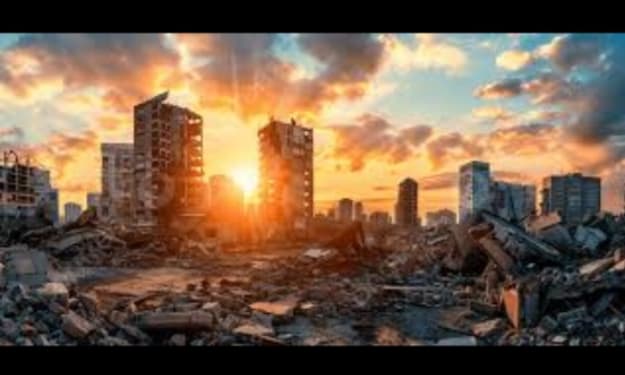
When the Sky Burned Red
When the Sky Burned Red The first bomb did not sound like thunder. It sounded like the sky tearing apart. Aamir had never heard silence scream before. But that morning, when the explosion shattered the windows of his small family home, silence screamed louder than the blast itself. For a moment, everything froze — the birds mid-flight, the wind mid-breath, his mother’s voice mid-sentence.
By Tazamain khan a day ago in Humans
Are We Closer Than We Think?
Lately, I have been thinking about something that feels uncomfortable to admit. Are we, as human beings, closer to psychological instability than we would like to believe? Not in a clinical sense. Not in the dramatic way people imagine madness. I mean in the quiet psychological sense. The sense where one more small trigger feels like it could push someone over the edge.
By Eunice Kamaua day ago in Humans
Honorable Humanity
Our founding people of the United States chose their words intentionally. It is no accident that a judge is referred to as “Your Honor.” That title is a constant reminder of what their position represents: honor, and that they never forget to be honorable. A Supreme Justice also holds a title as a reminder of what they represent: supreme justice for all, and this is echoed in our Pledge of Allegiance, written in 1892. I have included the years that changes were made; the original was intentionally non-religious.
By Whitney Carmana day ago in Humans
When the Shelter Closes
The first night I saw him, I thought he was waiting for someone. He sat across the street from my apartment building on a metal bench that had lost most of its green paint. A grocery cart stood beside him, overflowing with plastic bags, a torn blanket, and what looked like an old photo frame wrapped carefully in cloth. At his feet lay a dog — thin, golden-brown, ribs visible, but loyal in the way only dogs can be.
By imtiazalam2 days ago in Humans
Cynthia Lennon and the Cost of Loving a Beatle
Cynthia Powell was born in Blackpool on 10 September 1939, the youngest of three children. Her mother, Lillian, had been evacuated from Liverpool at the start of the Second World War, along with many pregnant women seeking safety from German air raids. Cynthia spent only her earliest days in Blackpool before the family relocated to Hoylake on the Wirral Peninsula, a quieter, middle‑class area where she grew up .
By Julie O'Hara - Author, Poet and Spiritual Warrior2 days ago in Humans
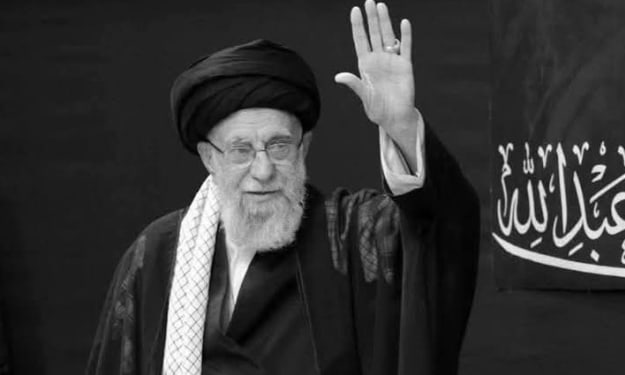
The Rise and Fall of Hamnaie
In the complex landscape of Middle Eastern politics, few figures have shaped the course of modern Iran as forcefully as Ayatollah Ali Khamenei. From his early years as a religious student to his long tenure as the Supreme Leader of the Islamic Republic, Khamenei’s story is one of ambition, influence, controversy, and ultimately, dramatic political upheaval. This article explores the arc of his life and leadership—what propelled him to power, how he governed, and the circumstances that led to his fall. Early Life and Ascent Born in 1939 in the small city of Mashhad in northeastern Iran, Ali Khamenei grew up in a devout Shiite Muslim family. From a young age, he showed a deep interest in religious scholarship and spent his formative years studying Islamic jurisprudence and philosophy. His education immersed him in the teachings of Shi’a Islam, shaping his worldview around principles of faith, authority, and the role of religion in public life. Khamenei’s early political involvement grew out of opposition to the secularizing policies of Shah Mohammad Reza Pahlavi. In the 1960s and 1970s, he became known as an articulate and committed critic of the monarchy. His activism brought him into close contact with other leaders of the Iranian revolutionary movement, including Ayatollah Ruhollah Khomeini, whose vision for an Islamic state would soon redefine Iran’s future. The Revolution and Rise to Power The 1979 Iranian Revolution was a watershed moment for both Iran and Khamenei. The overthrow of the Shah ended centuries of monarchical rule and brought religious leadership to the center of political power. Khamenei, now an influential cleric, became a key figure in the newly established Islamic Republic. In the years that followed the revolution, he served in several important roles, including as a representative in the Islamic Consultative Assembly (Iran’s parliament) and as the president of Iran. These positions allowed him to build alliances, consolidate support within religious and political networks, and enhance his reputation as a defender of the Islamic Republic’s ideals. Following the death of Ayatollah Khomeini in 1989, Iran’s Assembly of Experts selected Khamenei to succeed him as Supreme Leader—the highest authority in the country. At 50, he became one of the youngest leaders in the modern Middle East, with control over the military, judiciary, and media, alongside influence over foreign policy and religious institutions. Leadership and Controversy During his decades in power, Khamenei navigated an array of domestic and international challenges. Relations with the West, particularly the United States, remained tense. Internal tensions with reformist movements and demands for greater social freedoms also marked his tenure. Khamenei championed a vision of governance rooted in conservative religious principles, reinforced by a powerful security apparatus and ideological institutions. Supporters viewed him as a steadfast guardian of Iranian sovereignty and Islamic values. They praised his resistance to external pressure and his commitment to maintaining the revolution’s achievements. To many inside Iran and across the region, he symbolized continuity and stability in an era of upheaval. Critics, however, argued that his policies suppressed dissent, limited social freedoms, and isolated Iran economically and diplomatically. Human rights organizations raised concerns about restrictions on free expression, political opposition, and civil society. These internal tensions, combined with international sanctions related to nuclear and regional policies, created persistent pressures on the Iranian state. The Fall of a Leader In early 2026, events unfolded that dramatically altered the political landscape of the Middle East. A military conflict with Israel escalated into a full-scale confrontation involving multiple nations. Reports emerged—confirmed by some international officials—that Ayatollah Khamenei was killed during this conflict. The news sent shockwaves through Iran and beyond. Whether viewed as martyrdom by his supporters or as a dramatic turning point by his critics, Khamenei’s death marked the end of an era. For decades, he had embodied the religious and political identity of the Islamic Republic. His absence has raised urgent questions about the future direction of Iranian governance, the stability of its institutions, and the prospects for peace in a volatile region. Legacy and Future The legacy of Ayatollah Ali Khamenei will be debated for years to come. To many, he was a leader who fiercely protected national sovereignty and religious values. To others, he was a symbol of authoritarianism and missed opportunities for reform. Regardless of perspective, his life underscores the profound influence an individual can wield in shaping the history of a nation. As Iran and the wider world contemplate what comes next, the rise and fall of Khamenei offers lessons about leadership, ideology, and the complex interplay between religion and statecraft in the modern era. If you want, I can also write a shorter version, a social media summary, or an analysis piece on regional impacts of his fall.
By Hasbanullah2 days ago in Humans