Research
Why Does the United States Want Greenland? Trump, Resources and the New Arctic Power Struggle
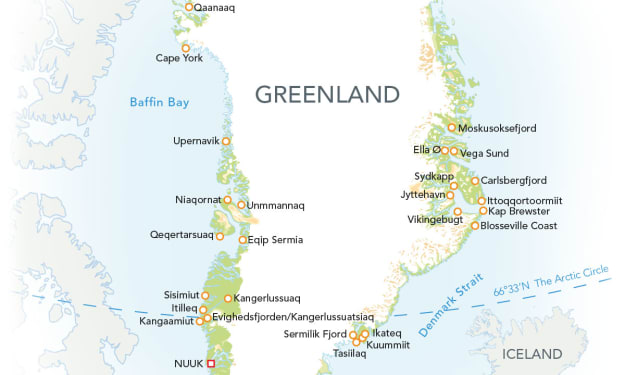
The desire to seize control of the world is not new. Throughout history, various adventurers and conquerors have attempted this, yet none succeeded in conquering the entire globe. Several figures did manage to capture large parts of the world, including Alexander the Great, Genghis Khan, and Sultan Mehmed the Conqueror. In recent history, a similar attempt was made by Adolf Hitler. However, Hitler’s primary objective was not to conquer the whole world; rather, his main goal was to occupy Eastern Europe and Russian territories in order to create “living space” for the German race. These days, comparable ambitions seem to be stirring in the heart of President Donald Trump. The real-estate investor within him appears eager to take control of vast territories. After Venezuela, his eyes are now fixed on Greenland—indeed, it would be more accurate to say that his covetous gaze has fallen upon Greenland, the world’s largest island, though not a continent. The name Greenland was introduced by Scandinavian settlers. It is a Danish word meaning “land of people.” This autonomous country is part of the Kingdom of Denmark and lies between the Arctic Ocean and the Atlantic Ocean. Its area is 2,166,000 square kilometers, of which 1,755,000 square kilometers—about 81 percent—is covered by ice. Its population is roughly 57,000. The history of Greenland dates back to 2500 BC, evidence of which still exists in the form of archaeological remains. Over the centuries, beginning in 986 AD, the western coast of Greenland was settled by people from Iceland and Norway. Some of these settlements survived for centuries, while others disappeared in the fifteenth century, possibly due to famine or conflict. In 1721, a major expedition was launched in which Norwegian missionaries and others traveled to Greenland. In July 1931, Norway declared eastern Greenland an uninhabited region and occupied it. Denmark took the case to the International Court in 1933, which ruled against Norway. During the Second World War, Greenland’s connection with Denmark was severed when Germany occupied Denmark. The United States then assumed responsibility for Greenland’s defense, returning control to Denmark after the war. During the Cold War, the U.S. established military bases in northern Greenland, turning the island into a strategic front between global powers. The minerals hidden beneath the ice, the opening Arctic sea routes, and geopolitical rivalry transformed Greenland from merely a geographic entity into a center of politics and power. In 1979 Denmark granted Greenland limited autonomy but retained control over defense, foreign affairs, currency, and economic matters. By the late twentieth and early twenty-first centuries, Greenland gained greater self-rule and established a local government, yet it remains part of the Danish realm. This raises the question: what is it about Greenland that makes the United States want to seize it? First, Donald Trump is not the first U.S. president to show interest in Greenland, though he is arguably the first to speak of capturing it by force. The United States considered purchasing Greenland in 1867 and again in 1946, but these plans never materialized. Even afterward, efforts did not cease, and successive presidents continued attempts to bring Greenland under American control. From a national security perspective, acquiring Greenland is crucial for the U.S. because growing Russian and Chinese activity in the Arctic could pose a threat. Experts believe that Trump’s interest is also driven by the island’s vast size and symbolic power. Moreover, Greenland holds extraordinary importance in terms of natural resources. It contains uranium, gold, oil, gas, and large deposits of rare earth minerals. According to the Geological Survey of Denmark and Greenland, the country is rich in rare metals, including seventeen elements used in drones, electric vehicles, and fighter jets—vital for modern technology and defense industries. Greenland also possesses graphite, lithium, and copper reserves amounting to about 0.75 percent of global deposits. Lithium, a key component of batteries, is expected to see its demand increase eightfold by 2040. At present, China dominates the global minerals market, and these reserves could be critical for countries seeking to reduce dependence on China—something the U.S. is already striving to achieve. By now, the answer should be clear as to why America wants control over Greenland. This is a war over resources and dominance. In earlier eras, grain, livestock, and even women were considered resources; today, the resources are different. Denmark and Europe will not easily allow Greenland to fall into American hands. Denmark is increasing its military presence there, while Germany, France, Sweden, Finland, Norway, Britain, and the Netherlands have sent troops for Denmark’s “Arctic Resilience” military exercises. Under such conditions, the risk of confrontation is growing, and for the first time since World War II, Europe and the U.S. appear to be drifting apart. Retreat on issues like Iran will be hard for Trump, and now Greenland and Denmark are showing resistance. In the future, the world may be composed of large empires and their client states. What will be our place in such a world? Our elite will need to decide wisely. The United States has historically opposed adventurism, yet this time it seems to have chosen that role itself. Many Americans consider this their right, and those familiar with the concept of “Manifest Destiny” know that this narrative has long been used as propaganda to justify American imperial dominance. Like earlier adventures, this American gamble will also end no differently—the adventurer will face defeat, and future generations will read about it in the pages of history. But this path is drenched in blood and will undoubtedly reshape the world’s geography. May God protect us all. Is this conversation helpful so far?
By Pets and animals 24 days ago in History
The Retreating Left
Democratic Socialism, Anarchism, and Left Communism are variations of the same failure. Each represents a retreat from the inherited legacy of communism and the revolutionary left. These three ideologies are idealist, Eurocentric, and petty bourgeois. They emerged in our context as different strategies of retreat — positions I once inhabited but no longer do. Through these three ideologies I carried variations of similar bourgeois fears about Marxism-Leninism. I followed multiple paths during my time on the left. Each promised a way forward. Three led to retreat. One did not.
By Victor Zemprano24 days ago in History
'Go' is an ancient Chinese game that archaeologists have found stones from.
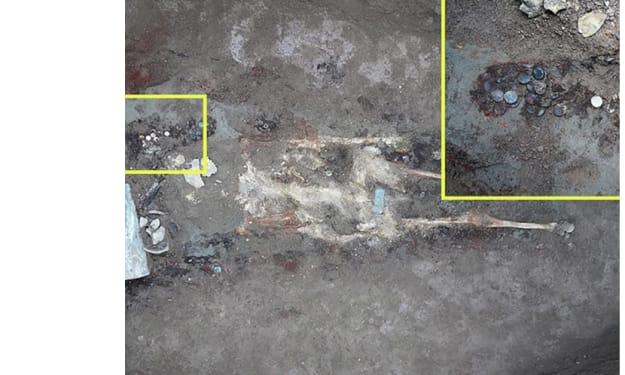
Over a thousand years ago, game pieces from the ancient Chinese board game "Go" were interred together. An examination of these "Go stones" reveals that they are made of expertly carved porcelain, smoke-blackened clay, or shell material.
By Francis Dami24 days ago in History
The "Demon Core": The two days in history when a sphere of plutonium "ticked" like a bomb.
The blue light didn’t flicker; it pulsed, a silent, electric scream that filled the room for a heartbeat before vanishing into the humid New Mexico night. Harry Daghlian didn’t scream. He didn’t even move at first. He just stood there in the heavy silence of the Omega Site, his hand hovering over a stack of tungsten carbide bricks, feeling a sudden, metallic tang on the back of his tongue. It tasted like pennies and ozone. It was the flavor of a death sentence.
By The Chaos Cabinet25 days ago in History
The Ecology of Self-Destruction
Human civilizations often imagine their downfall as something imposed from the outside—by enemies, invasions, or natural disasters. Yet, as Jared Diamond argues in Collapse: How Societies Choose to Fail or Succeed, many societies have played the central role in their own destruction. Through the reckless over-exploitation of natural resources, short-term thinking, and failure to adapt to environmental limits, nations repeatedly undermine the very ecological systems that sustain them. Diamond’s comparative study of past and present societies reveals a sobering pattern: environmental self-destruction is rarely accidental, and collapse is often the predictable outcome of collective choices.
By Rachid Zidine25 days ago in History
AI, Nuclear Weapons, and Accidental War
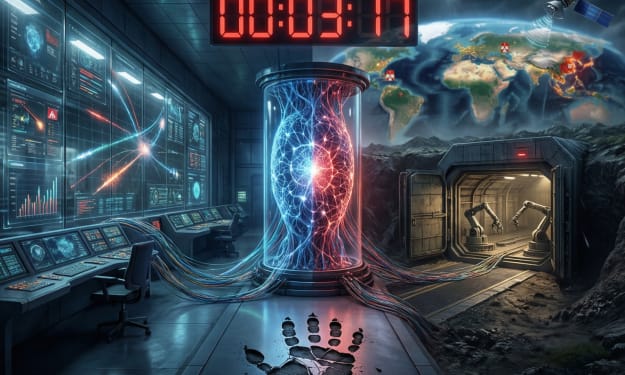
AI, Nuclear Weapons, and Accidental War In the modern world, wars are no longer fought only with soldiers, tanks, and planes. A new and dangerous element has entered global security: artificial intelligence (AI). While AI brings speed, efficiency, and advanced decision-making, it also introduces a serious risk—especially when combined with nuclear weapons. The greatest danger of the future may not be a planned nuclear war, but an accidental one.
By Wings of Time 28 days ago in History
Future Wars in the Age of Artificial Intelli
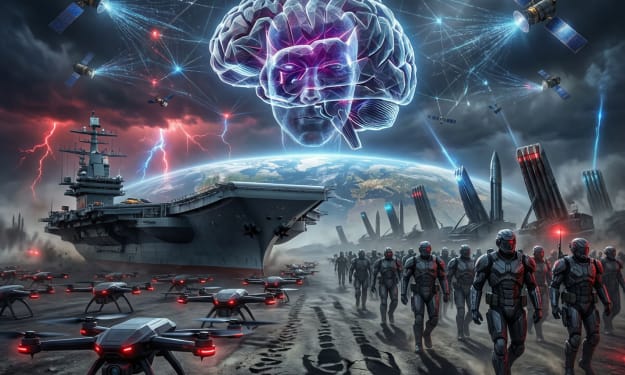
Future Wars in the Age of Artificial Intelligence If the new battlefield is hidden inside a nation’s systems, then Artificial Intelligence is becoming the most powerful weapon within it. Future wars will not begin with tanks crossing borders or fighter jets in the sky. They will begin with algorithms, data, and decisions made at machine speed. AI is changing not only how wars are fought, but also who controls power and how quickly conflicts can spiral out of control.
By Wings of Time 28 days ago in History
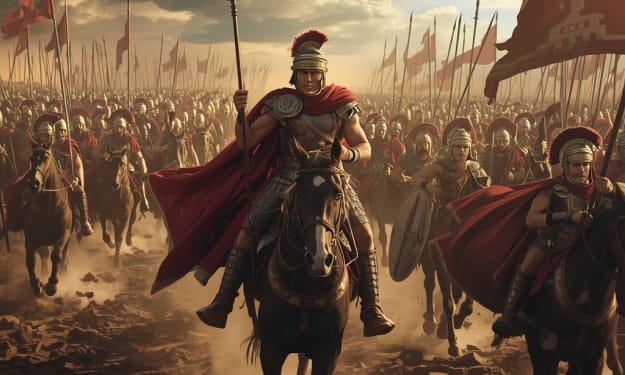
The Demanding Factors That Created Alexander the Great’s Path to Victory
1. The Foundation Laid by Philip II of Macedon One of the most important factors behind Alexander’s victories was the groundwork laid by his father, King Philip II of Macedon. Philip transformed Macedonia from a weak kingdom into a dominant military power. He reorganized the army, introduced the Macedonian phalanx, and armed soldiers with the long sarissa spear, which gave them a decisive advantage over traditional Greek hoplites.
By Say the truth 29 days ago in History
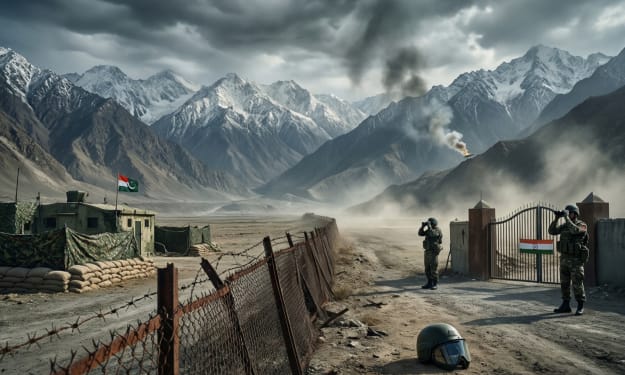
South Asia on Edge: Why Small Crises Carry Big Global Risks
South Asia on Edge: Why Small Crises Carry Big Global Risks South Asia is one of the most sensitive regions in the world today. It is home to a very large population and includes countries with strong militaries and nuclear weapons. Because of this, even small problems can turn into serious crises very quickly. Tensions, mistrust, and long history make the region fragile, and the whole world watches closely when situations become tense.
By Wings of Time 30 days ago in History