Humanity
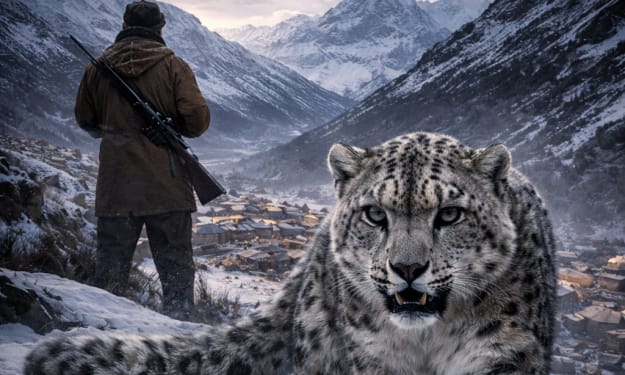
Human Revenge: A Hidden Cause Behind the Decline of Snow Leopards
High in the rugged mountains of Central and South Asia lives one of the world’s most mysterious and beautiful big cats—the snow leopard. Known for its thick grey-white fur, long tail, and incredible ability to blend into rocky landscapes, this elusive predator has fascinated scientists and wildlife lovers for decades. Yet despite its beauty and ecological importance, the snow leopard faces a growing threat: human revenge.
By Irshad Abbasi about 7 hours ago in Earth
Global Agreement to Limit Greenhouse Gases Enters into Force
A major step in the global fight against climate change has begun as countries around the world start implementing a landmark agreement designed to limit greenhouse gas emissions. The agreement represents years of negotiations, scientific warnings, and increasing public concern about the growing impacts of global warming on ecosystems, economies, and human life.
By Irshad Abbasi about 15 hours ago in Earth
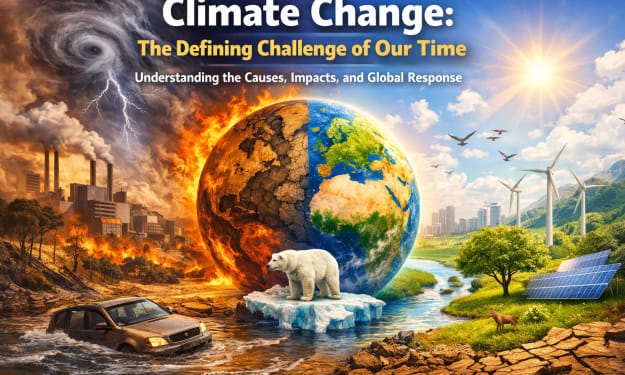
Climate Change: The Defining Challenge of Our Time
Climate change is one of the most pressing issues facing humanity in the 21st century. It refers to long-term changes in Earth’s temperature, weather patterns, and climate systems. While the planet’s climate has naturally changed throughout history, the changes observed today are occurring much faster and are largely caused by human activities. Scientists around the world warn that if these changes continue unchecked, they could have severe consequences for ecosystems, economies, and societies.
By Irshad Abbasi a day ago in Earth
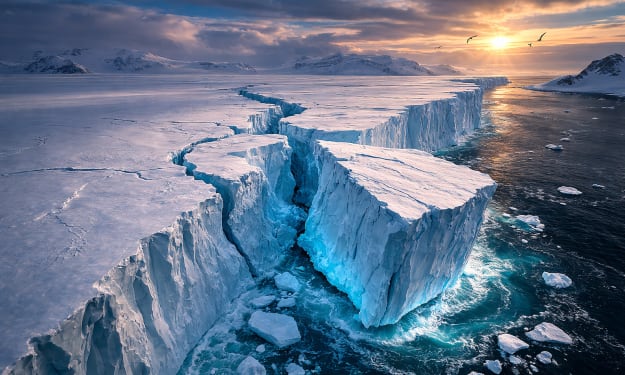
One of the World’s Ten Largest Ice Shelves on the Brink of Breaking Away
A massive ice formation in Antarctica—one of the ten largest ice shelves in the world—is reportedly close to breaking away from the continent, according to recent observations by climate scientists and satellite monitoring agencies. The development has drawn global attention, as experts warn that the detachment of such a huge ice mass could have significant implications for sea levels, ocean currents, and the stability of surrounding glaciers.
By Irshad Abbasi a day ago in Earth
Hotter Than Many Stars: Astronomers Discover an Ultra-Hot Exoplanet
Astronomers have discovered an extraordinary new exoplanet that is hotter than many stars, offering a rare glimpse into some of the most extreme conditions in the universe. The planet, located hundreds of light-years away from Earth, has stunned scientists with surface temperatures so intense that they rival those found on small stars. The discovery is providing new insights into how planets form, evolve, and survive in hostile cosmic environments.
By Irshad Abbasi a day ago in Earth
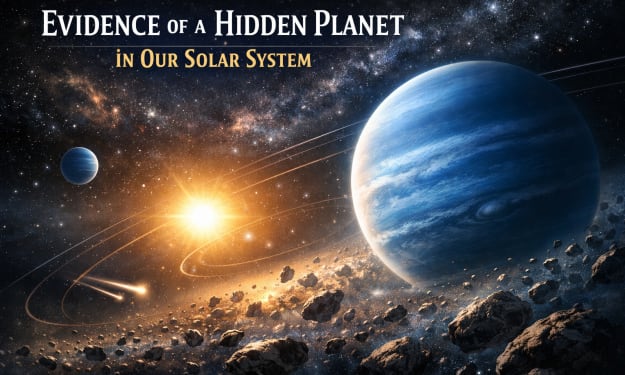
Evidence Suggests a Large Hidden Planet May Exist in Our Solar System
For centuries, scientists believed the major members of our Solar System were fully known. From the rocky inner planets to the gas giants and icy bodies beyond, astronomers thought they had mapped most of the significant objects orbiting the Sun. However, new research by American scientists suggests that a large, hidden planet may still be lurking in the distant reaches of our Solar System.
By Irshad Abbasi a day ago in Earth
Venus and Jupiter Shine Together: A Stunning Planetary Display in Earth’s Sky
For skywatchers across the world, there are few sights more captivating than seeing bright planets glowing in the night sky. Among these celestial wonders, the close appearance of Venus and Jupiter from Earth is one of the most spectacular. When these two brilliant planets appear close together in the sky, they create a stunning astronomical event that fascinates both professional astronomers and casual stargazers alike.
By Irshad Abbasi a day ago in Earth
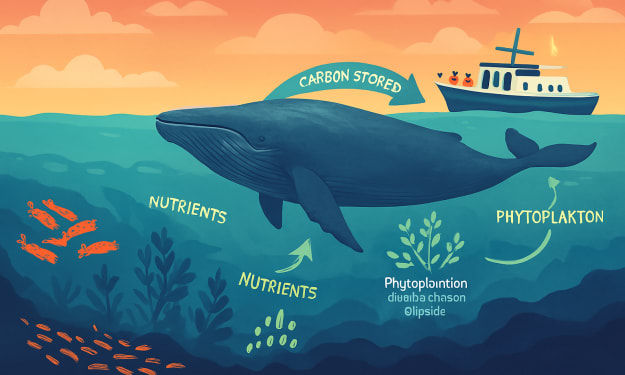
Whales should be protected!
Carbon dioxide is one of the main gases responsible for global warming. When too much carbon dioxide builds up in the atmosphere, it traps heat from the sun and causes the Earth’s temperature to rise. If this problem continues without control, it could lead to serious environmental damage and may even make parts of the Earth difficult for humans and animals to live in. Therefore, it is important to find natural ways to reduce carbon dioxide levels. One surprising but very important solution is protecting whales, as they play a role in storing carbon in their bodies and supporting ocean ecosystems.
By *+*+*~Teja~*+*+*2 days ago in Earth
Stephen Hawking’s Final Advice to Humanity
Few scientists have captured the imagination of the world quite like Stephen Hawking. Known for his groundbreaking work on black holes and cosmology, Hawking spent his life exploring the deepest mysteries of the universe. Even after being diagnosed with Amyotrophic Lateral Sclerosis (ALS) at the age of 21—a condition that gradually paralyzed him—he continued to produce revolutionary ideas that changed modern science.
By Irshad Abbasi 3 days ago in Earth
A Dozen Hidden Giants: Scientists Discover Multiple Black Holes at the Heart of Our Galaxy
In one of the most fascinating discoveries in modern astronomy, scientists have identified about a dozen previously hidden black holes near the center of our galaxy, the Milky Way. This remarkable finding provides new insight into the mysterious and chaotic region surrounding the galaxy’s core and may help astronomers better understand how galaxies evolve over billions of years.
By Irshad Abbasi 3 days ago in Earth
Could World War III Be Coming Soon?
The idea of World War III often appears in news discussions, political debates, and public imagination. After the devastating impact of World War I and World War II, humanity has become deeply aware of the catastrophic consequences of global war. Today, when international tensions rise, many people wonder whether the world could again face a conflict on such a massive scale. While no one can predict the future with certainty, understanding the current global situation can help us evaluate whether a third world war is truly likely.
By shaoor afridi3 days ago in Earth