jury
The right to trial by an impartial jury is a defendant's constitutional right; explore this pivotal duty to assess the evidence, deliberate and deliver a verdict.
Inside the Sordid World of Jeffrey Epstein and What His Troubling Emails to Women Really Reveal
There’s something almost hypnotic about the Epstein document archive. Sitting down to explore it isn’t just research—it’s immersion. Hours disappear as you scroll through emails, attachments, and fragments of conversations that hint at a larger system operating behind the scenes. The sheer volume alone is overwhelming. And yet, paradoxically, what’s most striking isn’t what’s there. It’s the constant awareness that much more may still be missing.
By Lawrence Lease17 days ago in Criminal
Polygraphs, Border Questions, and the Long Wait: Inside the Latest Developments in the Nancy Guthrie Investigation
They line the front of the property in quiet rows, most of them yellow, placed there by neighbors and strangers alike. They represent something simple but powerful: hope. Even as the investigation moves forward behind closed doors, the physical presence of those flowers is a reminder that Nancy is not forgotten.
By Lawrence Lease18 days ago in Criminal
SWAT Raid Near Nancy Guthrie’s Home Leads to Three Detentions
Three individuals were detained late Friday night after a coordinated SWAT operation unfolded in a Tucson neighborhood just miles from the home of missing 84-year-old Nancy Guthrie, marking one of the most significant developments in the investigation since her disappearance nearly two weeks ago.
By Lawrence Lease23 days ago in Criminal
The Death of Kendrick Simpson. Content Warning.
The scream for blood grew louder as the date approached for one, Kendrick Simpson. An insult to his hat starts the end of his life. The clock ticked down on a man who has had time to sit and think about the figurative sword that has dangled above his head for all these years. Since his convictions in 2007, a murderer has reflected on his actions. A sword that fell in the mid-morning hours of February 12, 2026.
By Cassie Moore24 days ago in Criminal
Awaiting Review Epstein | Leaked Emails EXPOSED Part 5
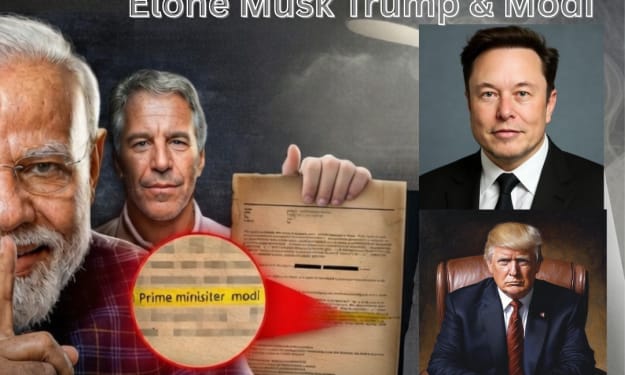
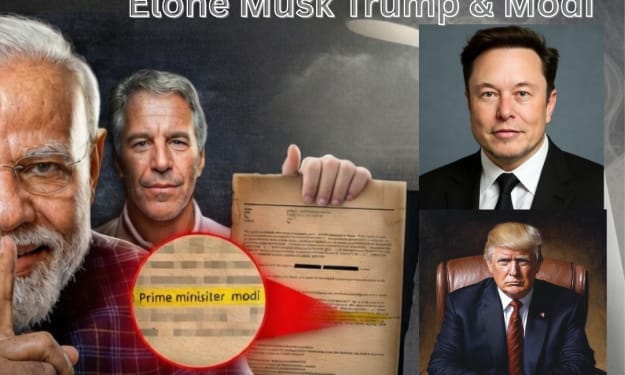
But this might be a metaphor. A dancing and singing program might have been organised in Israel. And presented something for the US President there. The spokesperson of the Indian Ministry of External Affairs, on January 31st, gave a statement regarding these files, "Beyond the fact of the Prime Minister's official visit to Israel in July 2017, the rest of the illusions in email, are little more than trashy ruminations, by a convicted criminal which deserve to be dismissed with the utmost contempt."
By Imran Ali Shah25 days ago in Criminal
Epstein | Leaked Emails EXPOSED Part 4
Totally buys into your vision." Pay attention to two things in these messages. First, he also mentions G20. India was going to host the G20 in 2022. And second, look at the first two words. "His guy" They referred to Anil Ambani as Narendra Modi's guy. The same night, at 1:05 AM, Epstein sent a message to Ambani. "Today was a treat. Nice seeing you." And between 4 - 4:30 in the morning, Epstein wrote to Bannon. "His focus wants to be stopping China. I can set. You should meet with Modi."
By Imran Ali Shah25 days ago in Criminal
Michael Dewayne Smith. Content Warning.
Michael Dewayne Smith was only 19 years old when he was called an “urban terrorist” by the district attorney. Smith was a kid from Del City, Oklahoma, Folks, he was barely out of his family home. He had been a kid who grew up in a gang culture that was hard to escape, even in a city in Oklahoma.
By Cassie Moore27 days ago in Criminal
The Man Who Confessed to a Murder He Didn’t Commit
M Mehran The police station was quiet when the man walked in at 4:46 a.m. No blood on his clothes. No weapon in his hands. Just a calm face and a single sentence that would haunt the city for years. “I killed my wife,” he said. Officer Lena Morales looked up from her desk, expecting panic or madness. Instead, she saw relief—like the man had been holding his breath for months and finally let it out. His name was Aaron Keller. A schoolteacher. No criminal record. No history of violence. And yet, an hour later, his wife Emily Keller was found dead in their suburban home. A Perfect Confession Aaron’s confession was detailed—too detailed. He described the argument, the kitchen knife, the exact moment Emily fell. He even told police where to find the weapon. Everything matched the crime scene perfectly. The media devoured the story. “Husband Confesses to Brutal Murder” “A Monster Behind a Gentle Smile” Aaron didn’t hire a lawyer. He waived his right to silence. He pleaded guilty in court with a steady voice. Case closed in three weeks. But something was wrong. The Detective Who Didn’t Believe It Detective Marcus Hale had seen hundreds of confessions. Real ones were messy—filled with excuses, anger, or fear. Aaron’s was clean. Almost rehearsed. More troubling was Emily Keller’s background. She worked as an accountant for a private investment firm currently under investigation for financial fraud. Millions were missing. Names were being erased. Files were vanishing. Emily had been scheduled to meet federal auditors the morning after her death. Then she never woke up. Hale dug deeper—and found a gap. No neighbors heard a fight. No defensive wounds on Aaron. And the knife? Wiped clean of all prints except Aaron’s. Too perfect. A Prison Visit That Changed Everything Six months into Aaron’s life sentence, Hale visited him in prison. “Why did you really confess?” Hale asked. Aaron stared through the glass. “Because if I didn’t, someone else would die.” Hale leaned in. “Who?” “My daughter.” That was when the truth began to bleed out. The Threat No One Saw Two weeks before Emily’s death, Aaron received an unmarked envelope. Inside were photos—his daughter walking home from school, playing in the park, sleeping in her room. Along with a note: Confess, or we finish what we started. Emily had discovered illegal transfers linked to organized crime. When she tried to leave the firm, she was marked. Killing her was easy. Framing Aaron was easier. “They told me exactly what to say,” Aaron whispered. “What to remember. What to forget.” The confession wasn’t guilt. It was a deal. When the Truth Is Too Dangerous Hale took the information to his superiors. The case was shut down within 24 hours. He was told to stop digging. The investment firm vanished overnight. Executives relocated. Records burned. Witnesses recanted. And Aaron Keller stayed in prison. A Second Murder Three years later, another accountant from the same firm was found dead—same method, same silence, same precision. This time, there was no confession. Hale reopened the Keller file quietly. He leaked evidence to a journalist. The pattern was undeniable. The killer wasn’t Aaron. It was a professional cleanup crew protecting a criminal empire. The Cost of a Lie Aaron Keller was released after four years behind bars. Emily Keller’s murder remains officially “solved.” But the truth never made headlines. Aaron lives alone now, raising his daughter in a town where everyone still remembers his face—but not the facts. Detective Hale resigned from the force. In his resignation letter, he wrote: “Our justice system doesn’t always punish the guilty. Sometimes it selects a sacrifice.” Why This Crime Still Haunts Us Criminal stories like Aaron Keller’s reveal a terrifying reality: confessions don’t always mean guilt. Sometimes, they’re weapons—used by powerful people to bury the truth. And sometimes, the most dangerous criminals are never arrested—because they never leave fingerprints. They leave fear.
By Muhammad Mehran28 days ago in Criminal