
From Chatroom to Grave: The Sharon Lopatka Murder
In 1996, Sharon Lopatka, a Maryland woman with extreme BDSM fantasies, met Robert Glass online. After detailed emails, she traveled to his North Carolina trailer, where he strangled her to death.
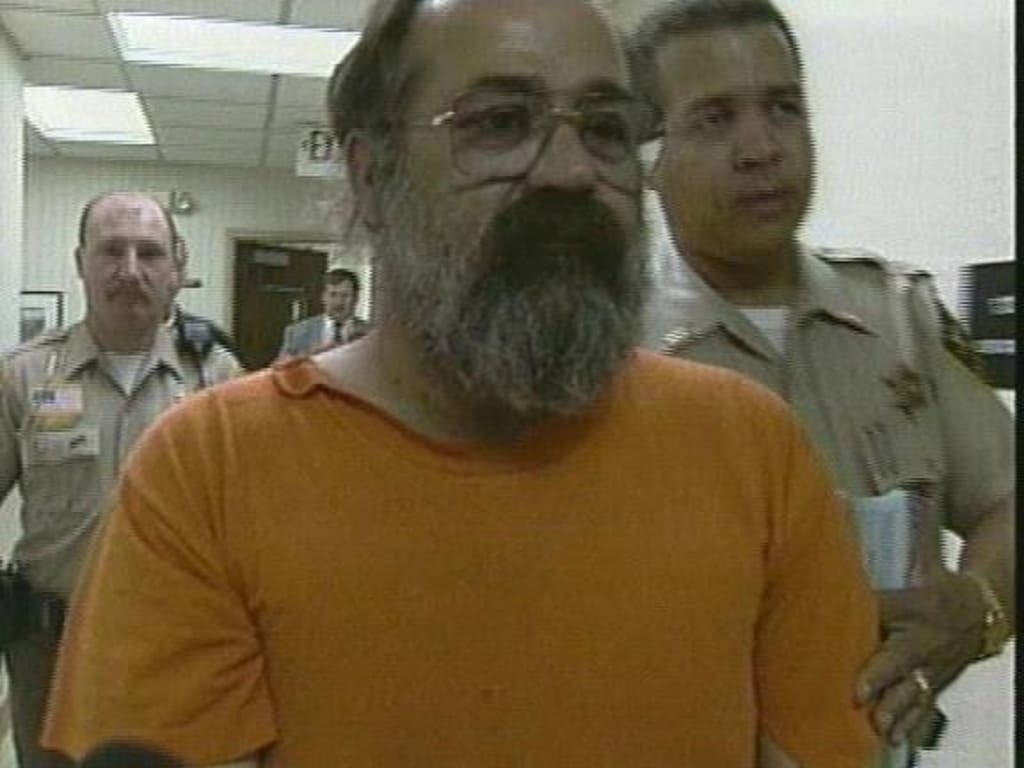
The case of Sharon Lopatka stands as one of the most chilling and pioneering examples of how the early internet could transform dark fantasies into irreversible reality. In 1996 the 35-year-old internet entrepreneur from Hampstead Maryland led a double life that shocked her community and highlighted the emerging dangers of online anonymity.To those who knew her in person, Sharon Rina Lopatka (née Denburg, born September 20, 1961) appeared utterly ordinary. Classmates and neighbors described her as normal as you can get—a seemingly typical suburban woman who ran her own small online business selling crafts digital services, and other internet-related offerings. Married and living a conventional life in Carroll County, she gave no outward indication of the extreme desires simmering beneath the surface. Yet online, under the alias Nancy Carlson Sharon immersed herself in the shadowy corners of the web, exploring BDSM, sadomasochism, and increasingly violent fantasies. She frequented fetish chat rooms and forums where participants discussed bondage, torture, and even death-related erotica—topics too taboo for mainstream spaces.
In August 1996, Sharon's online pursuits led her to Robert "Bobby" Frederick Glass, a 45-year-old computer systems analyst from North Carolina. Glass, who went by handles like "Slowhand," shared similar extreme interests. What began as typical chat-room banter quickly escalated into an intense, obsessive correspondence. Over the next six weeks, the pair exchanged nearly 900 emails, many of which detailed Sharon's explicit desire to be sexually tortured and ultimately killed as the culmination of her masochistic fantasy. These messages were graphic, mutual, and consensual in tone—Sharon repeatedly expressed her wish for Glass to fulfill this ultimate act, framing it as erotic gratification for both. Glass appeared to agree, engaging in detailed planning of how the encounter would unfold.
On October 13, 1996, Sharon put the plan into motion. She told her husband she was heading to Georgia to visit friends for the week—a cover story to mask her true destination. Instead, she boarded an Amtrak train from Baltimore to Charlotte, North Carolina, fully aware of the risks she was embracing. She arrived knowing danger, and possibly death, awaited. The couple met in person at Glass's modest trailer home in a rural area near Collettsville, in Caldwell County.
What happened over the next few days remains disputed in its finer details. According to investigators and the content of their emails, the encounter involved acting out their shared fantasies, including sexual torture and strangulation. Sharon was bound, subjected to prolonged abuse, and ultimately strangled to death on or around October 16, 1996. Glass later claimed the death was accidental—occurring during rough consensual sex and that he hadn't intended to kill her permanently. However, evidence suggested otherwise: the emails showed premeditation, and Sharon had expressed her expectation of not surviving the meeting.
When Sharon failed to return home, her husband reported her missing. Maryland State Police launched an investigation and made a groundbreaking discovery: her home computer contained a trove of the incriminating emails. This digital trail—hundreds of pages—was used to trace her movements and identify Glass as the key suspect. It marked one of the first major cases where email evidence alone led to an arrest for murder.
On October 25, 1996, authorities searched Glass's property. They found Sharon's belongings inside the trailer and, buried in a shallow grave (about 2.5 feet deep) outside, her bound body. An autopsy confirmed strangulation as the cause of death, with signs of prior torture. Glass was arrested and initially charged with first-degree murder.
The case drew widespread media attention as "the internet murder" or an early instance of consensual homicide facilitated online. It raised uncomfortable questions about consent, fantasy versus reality, and whether one person could legally agree to their own death. Glass's defense argued the killing was unintentional, aligning with his claim of an accident during erotic asphyxiation.
In January 2000, after years of legal proceedings, the first-degree murder charge was dropped. Glass pleaded guilty to voluntary manslaughter and sexual exploitation. He was sentenced to 36–53 months (3 to about 4.5 years) in prison at the Avery-Mitchell Correctional Institution. He served his time and was released, but tragically died in prison in February 2002 at age 51 from unrelated causes.Sharon Lopatka's death remains a haunting milestone in true-crime history. It exposed the internet's power to connect people with dangerous shared desires—and the thin line between fantasy and fatal outcome. In an era before widespread social media safeguards, her story served as an early warning about the very real risks lurking in anonymous online spaces. What began as pixels on a screen ended in a grave, forever blurring the boundaries of consent, desire, and mortality.
About the Creator
Keep reading
More stories from Kure Garba and writers in Criminal and other communities.
The Enigmatic Death of Ellen Greenberg: A Case That Defies Explanation
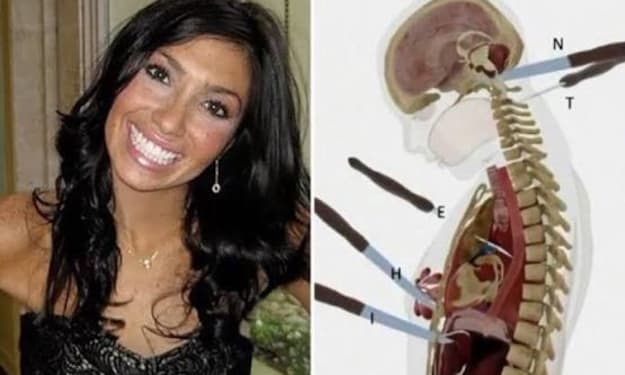
On a snowy January afternoon in 2011 the life of 27-year-old Ellen Rae Greenberg came to a tragic and baffling end. Ellen a vibrant first-grade teacher at Juniata Park Academy in Philadelphia was discovered lifeless on the kitchen floor of her Manayunk apartment. She had sustained an astonishing 20 stab wounds including deep penetrations to her chest neck abdomen, and even the back of her head. Some wounds were so severe they pierced her skull and damaged her brain and spinal cord. Her fiance Samuel Goldberg, found her after forcing his way into the locked apartment claiming he had stepped out briefly to the gym during a blizzard.Ellen was born on June 23, 1983, in New York City, but grew up in Harrisburg, Pennsylvania. Described by friends and family as outgoing, compassionate, and full of life, she had recently gotten engaged and was planning her wedding. She loved teaching young children, often sharing stories of her students' progress with her parents, Sandra and Joshua Greenberg. There were no overt signs of distress in her life, though reports later emerged that she had been experiencing anxiety and had sought psychiatric help shortly before her death. She was prescribed medication for anxiety, but nothing suggested she was suicidal.
By Kure Garbaa day ago in Criminal
The Murder of Cynthia Carver
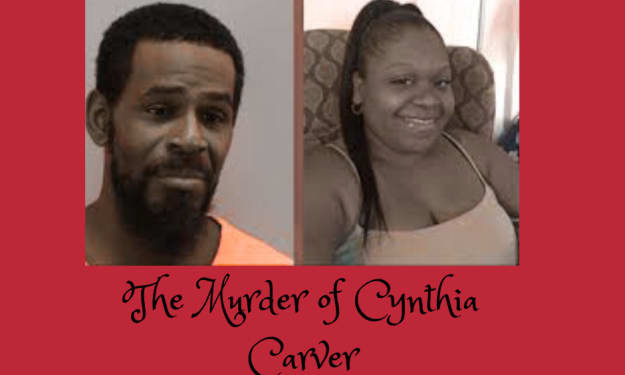
Cynthia Carver’s mother, Ann, knew immediately something was wrong when her daughter failed to show for her new job on February 22, 2019. She spoke to Cynthia the night before; she was excited. Around 1 p.m., she drove past Cynthia’s house in Newsoms, Virginia, and saw the front door open. She stopped to investigate, as any mother would. Already frightened, her fears were exasperated when she saw blood at the front door. More blood spatter in the living room. A knife is sitting in front of the sofa. The 35-year-old mother of two is nowhere to be found. Ann called the police.
By Criminal Matters3 days ago in Criminal
Trickle Them Down, But Not Out
The thing about smart people is that they should know better, but alas, intelligence is not the same as wisdom. Not only do the mistakes of experts too short on vision—when they are not corrected—have the potential to do great and far-reaching damage, but they also undermine public confidence in the very notion of expertise. This is particularly so when expertise is wielded in defence of the rich and powerful as a cudgel against those laid low. As an academic, this lack of faith in “so-called experts” is painful to see as it plays out in the spread of dis-/misinformation, conspiracy theories, and anti-intellectualism writ large. But it is also an understandable impulse given the catastrophic failure of an economic ideology pushed by certain economic experts. Supply-side economics has shaped a broken system for the last half-century and has arguably done more to undermine the fabric of the American Dream than any policy framework of the past century.
By Cory Wright-Maley7 days ago in Humans


Comments
There are no comments for this story
Be the first to respond and start the conversation.