science
Music is not just an art, but a science; the latest research about your brain on music, scientific innovation in the instrument industry and more.
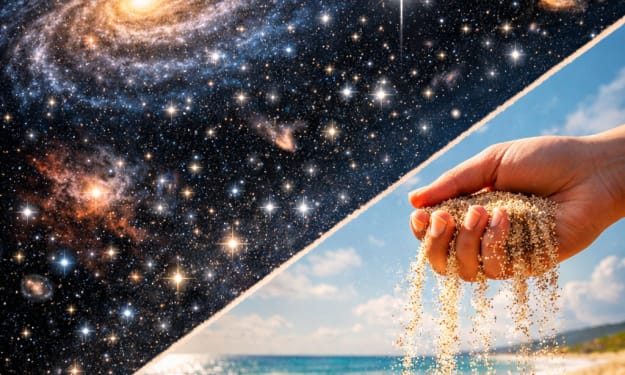
Stars or Sand: Which Is More Numerous in the Universe?
For centuries, humans have looked up at the night sky and wondered about the vastness of the universe. On a clear night, thousands of stars appear scattered across the sky like tiny shining dots. At the same time, anyone who has walked along a beach has seen what seems like an endless number of grains of sand. This raises a fascinating question: Are there more stars in the universe, or more grains of sand on Earth’s beaches?
By Irshad Abbasi 20 minutes ago in Beat
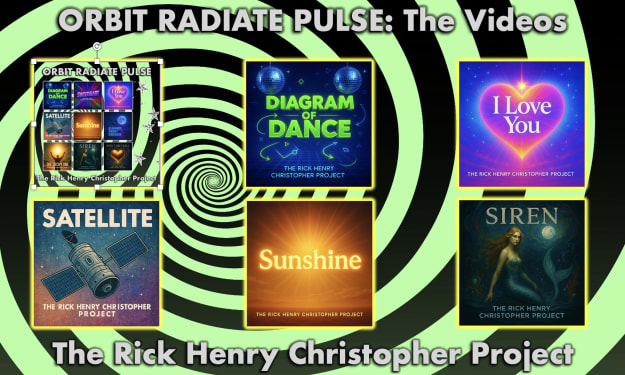
Orbit Radiate Pulse: The Videos
In October 2025, I discovered an app called Grok. It added a whole new layer to my creativity. At first, I used it for silly things, like making photos of my mom and me screaming at each other. It was really funny. But pretty quickly, I realized I could use Grok to bring my Gloria stories to life.
By Rick Henry Christopher about 21 hours ago in Beat
Why Actors Like Andreas Szakacs Are Stepping Into Production
From Interpreting Characters to Shaping Stories For many actors, the early years are focused entirely on craft — building emotional range, mastering technique, refining presence. That foundation remains essential. But storytelling decisions often happen long before cameras roll.
By Andreas Szakacs9 days ago in Beat
Scientists Observe a Hidden Water Reservoir Beneath the Desert Larger Than Expected. AI-Generated.
In what scientists are calling a surprising breakthrough, researchers have identified a much larger‑than‑expected reservoir of water hidden deep beneath a desert region, challenging long‑held assumptions about how arid landscapes store and cycle water. Far from being lifeless expanses of sand and rock, some deserts conceal complex underground water systems that could have big implications for water security, climate science, and our understanding of how rain and ancient climate events shape Earth’s interior.
By Sadaqat Ali24 days ago in Beat
NASA Tracking Plane-Sized Asteroid Approaching Earth Tomorrow. AI-Generated.
NASA has confirmed that a plane-sized asteroid will make a close approach to Earth tomorrow—a development that has captured public interest and scientific attention alike. While the idea of a space rock zooming toward our planet might seem alarming, space agencies emphasize that the upcoming pass poses no danger of impact and is a routine event within the solar system’s dynamic environment.
By Sadaqat Ali24 days ago in Beat
Meteorologists Warn of an Unusually Early Arctic Breakdown in February — Atmospheric Signals Not Seen in Decades. AI-Generated.
As winter deepens in the Northern Hemisphere, meteorologists are raising alarms about something unusual unfolding high above the Arctic Circle: an Arctic breakdown forming in February marked by atmospheric signals not seen in decades. While much of the world may still be shivering through routine winter weather, scientists watching from weather centers and research institutions are seeing patterns in the atmosphere that suggest one of the earliest and most pronounced disruptions of the Arctic’s typically stable winter circulation in modern memory.
By Sadaqat Ali25 days ago in Beat
Astronomers Detected a Strong Signal From Space Lasting Seven Hours — Now They May Have Worked Out What It Was. AI-Generated.
In July 2025, astronomers around the world were astonished when space observatories recorded an extraordinarily powerful and unusually long signal from deep space — a cosmic explosion of gamma rays that blazed for nearly seven hours. Ever since, scientists have been working to understand what produced this cosmic blast and whether it reveals new and exotic physics. Now, new research is offering the first substantial clues about this enigmatic event.
By Sadaqat Ali25 days ago in Beat
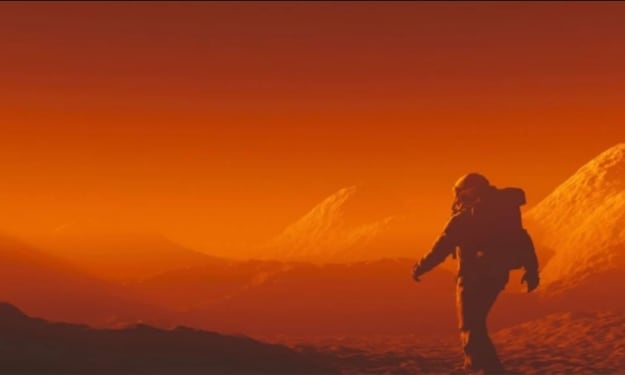
Mars Isn’t Plan B: Why Earth Stays More Livable — No Matter What. AI-Generated.
For decades, Mars has been portrayed as humanity’s backup plan—a distant refuge in case Earth becomes uninhabitable due to climate change, war, or resource depletion. Rocket launches, bold timelines, and science-fiction dreams have reinforced the idea that the Red Planet could one day host thriving human settlements. But strip away the hype, and the reality is far less forgiving. Mars is not, and may never be, a viable “Plan B.” No matter how advanced technology becomes, Earth remains overwhelmingly more livable than any other known world.
By Sadaqat Ali25 days ago in Beat
Forget the Great Wall: The Human Landmark Astronauts Actually See from Space. AI-Generated.
For generations, a popular myth has endured: that China’s Great Wall is the only human-made structure visible from space. The idea has been repeated in textbooks, trivia games, and casual conversation, cementing itself as a symbol of humanity’s architectural ambition. Yet astronauts who have actually looked down on Earth from orbit tell a very different story. From hundreds of kilometers above the planet, the Great Wall is nearly impossible to distinguish with the naked eye. Instead, the true human landmarks visible from space are far more modern—and far more revealing of how humanity now shapes the Earth.
By Sadaqat Ali27 days ago in Beat
Andreas Szakacs Productions Officially Begins Production on New Project
Andreas Szakacs Productions has officially entered production on its latest project, marking an exciting and ambitious new chapter for the studio. Known for its striking visual storytelling, meticulous craftsmanship, and commitment to high production standards, the company is poised to deliver a project that promises to engage audiences both emotionally and visually.
By Andreas Szakacs30 days ago in Beat
Albert Einstein: The Genius Who Redefined the Universe. AI-Generated.
Albert Einstein is widely regarded as one of the greatest minds in human history. His ideas reshaped modern physics and transformed our understanding of space, time, energy, and the universe itself. More than just a scientist, Einstein became a global symbol of intelligence, curiosity, and intellectual freedom.
By Ayesha Lashariabout a month ago in Beat