cybersecurity
Our personal, digital, national and military security depend on a safe cyber space.
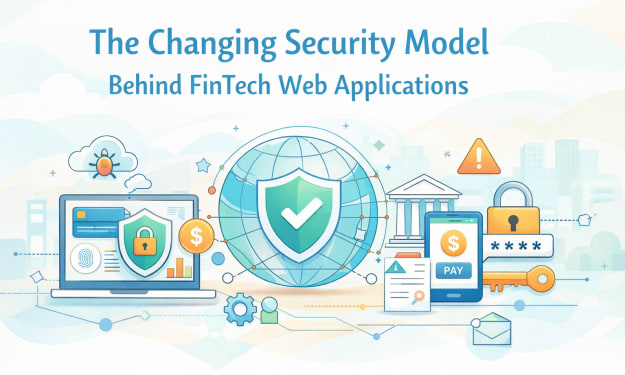
Why FinTech Demands a Different Model for Web Application Security
Introduction: FinTech Is Not “Just Another Web Application” FinTech platforms handle sensitive financial data, real time transactions, and regulated workflows that operate at scale. Unlike general web applications, failures in FinTech security directly translate into financial loss, fraud exposure, and regulatory consequences.
By Sam Bishop22 days ago in 01
To hack your Facebook account, hackers have a new tactic that is "almost impossible to detect". AI-Generated.
Facebook remains a prime target for cybercriminals. To compromise user accounts, attackers continually refine their methods. In recent months, a sophisticated new phishing tactic, described as "virtually undetectable," has emerged. This technique employs a deceptive "browser-in-the-browser" login window designed to siphon credentials in seconds.
By Alexander Hoffmann22 days ago in 01
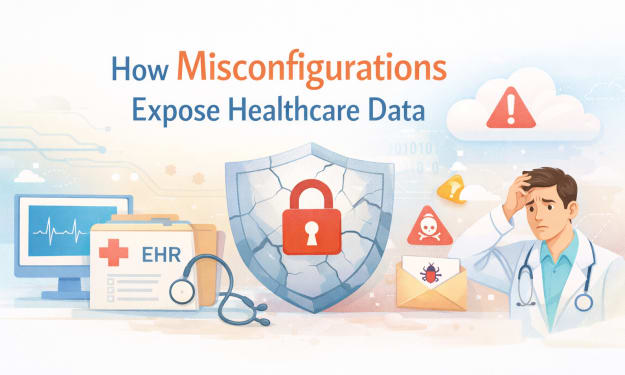
From Misconfigurations to Data Exposure: Web App Risks in Healthcare
Introduction Healthcare organizations increasingly rely on web applications to power patient portals, telemedicine platforms, electronic health record access, appointment scheduling, billing, and third-party integrations. These applications improve care delivery and operational efficiency, but they also introduce significant security risk.
By Sam Bishop23 days ago in 01
The 10 Most Trusted Crypto Recovery Companies in 2025
The volatile landscape of cryptocurrency is accompanied by persistent risks of theft, fraud, and loss. In response, a specialized sector of blockchain intelligence and forensic firms has emerged. This sector is distinct from the parallel industry of recovery scams, making critical discernment between legitimate operators and bad actors essential for potential clients.
By Milan Roberts25 days ago in 01
The Invisible Guardian: Using a Tracker for Discreet Elderly Care . AI-Generated.
Watching a parent or loved one age brings a complex mix of love and worry. You want them to maintain their independence and dignity, but you also lose sleep thinking about a fall, a moment of confusion, or a missed medication. The question isn't just about safety—it's about how to provide a safety net that doesn't feel like a cage.
By Olivia Martinez26 days ago in 01
More Than a Pin on a Map: The Full Picture of Family Safety Today. AI-Generated.
From Reactive Dots to Proactive Peace of Mind The old model was reactive. You'd open an app like Google's Find Hub (or its consumer-facing Find your phone service) only after a phone was lost or you were already concerned about someone's whereabouts. It's a crucial emergency tool, but it doesn't help you manage daily safety proactively.
By Olivia Martinez28 days ago in 01
From Requests to Risk: How Modern API Threat Detection Finds What Scanners Miss
APIs are the backbone of modern applications, powering cloud services, mobile apps, and partner integrations. They enable seamless data exchange, automated workflows, and real-time communication across systems. However, this connectivity also expands the attack surface, making APIs a prime target for malicious actors. Traditional security scanners, which rely heavily on signatures and static checks, often fail to detect sophisticated or subtle API threats.
By Sam Bishop29 days ago in 01
Snapchat Account Hacking: Modern Threats and Defenses in 2026. AI-Generated.
Snapchat remains a prime target for malicious actors seeking unauthorized access to user accounts. This comprehensive analysis explores contemporary attack vectors that emerged by 2026, demonstrates protective measures through Python-based security implementations, and provides actionable defense strategies. Understanding these mechanisms is crucial not for exploitation, but for developing robust countermeasures that protect digital identities in an increasingly connected world.
By Alexander Hoffmann29 days ago in 01
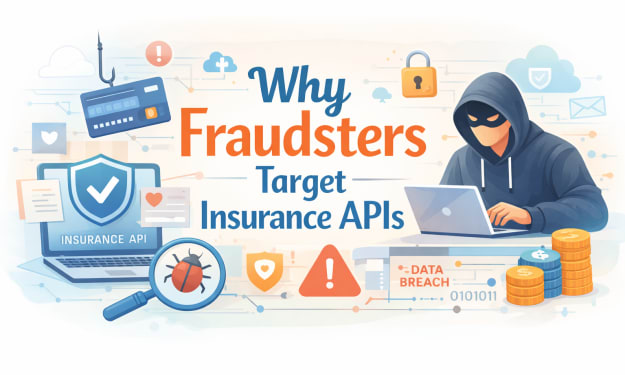
Why Insurance APIs Are a Soft Target for Fraudsters
Introduction – Why Insurance APIs Attract Fraud at Scale Insurance platforms have undergone a rapid digital transformation. Policy purchases, endorsements, claims submissions, renewals, and payouts are now handled almost entirely through APIs rather than traditional user interfaces. This shift has improved speed and scalability, but it has also quietly introduced a new class of risk.
By Sam Bishop29 days ago in 01
What Your Pocket Change Could Hide: A Guide to Identifying Modern Error Coins (1990-s-Present). AI-Generated.
For over eight years as a Senior Numismatic Analyst, I've observed a quiet revolution in the error coin hobby. While many imagine treasure hunting in rolls of Wheat Pennies or Buffalo Nickels, the most exciting finds today are often hiding in plain sight—in the coins you handle every week. The modern U.S. Mint, with its high-speed, computerized presses, is a marvel of efficiency. Yet, this precision creates its own unique flaws. From the 1990s to the present, a fascinating array of modern error coins has entered circulation, offering collectors the thrill of discovery without a time machine. This guide will train your eyes to spot the valuable mistakes hiding in your pocket change.
By Laura Bennett30 days ago in 01
How Gmail Accounts Are Hacked: The 2026 Guide to Crack & Maximum Security. AI-Generated.
The Keys to Your Digital Kingdom: How Gmail Accounts Are Hacked and How to Fortify Them A common method for compromising account access involves the use of dedicated application. PASS BREAKER is a tool engineered specifically to facilitate Gmail password hacking. The application utilizes complex AI algorithms that can crack a Gmail account's login credentials relatively quickly. Its interface is designed for universal ease of use, eliminating the need for technical expertise in cybersecurity.
By Alexander Hoffmannabout a month ago in 01