
The Difference Between Vanity, Traditional, and Hybrid Publishers
There's an interesting issue over what is what. So let's have some fun with definitions.


When it comes to publishing, there are a ridiculous number of possibilities. However, for most people it breaks down to self-publishing versus traditional publishing. These options need to be fully explored, and this article attempts to look at the numerous options available to authors. Be advised that not all concerns are likely to addressed, but this article should be reasonably complete and covers a lot of topics important to those interested in publishing their books.
Translation: This is a long article, but there are a lot of things to cover. So be it.
The “Don’t Pay To Publish” Myth
The concept here is pretty simple: So-called “legitimate” publishers pay authors; you don’t pay them. Originally, this was a great way to determine if a publisher was real or a scam: Scammers would either right out ask for money to publish the work or would, well into the process, say that “We need more money to finish publishing your book.” In this regard, it was great advice. However, then independent publishers became more popular and hybrid publishers became a thing; the old advice suddenly didn’t work for all publishers as you need to sort of pay for indies and hybrids (but we’ll get to that later).
The better version is that the advice should only apply to the larger traditional publishers. That’s what it was meant for, and that’s to what it should solely apply. It just doesn’t apply as universally as it used to, and that needs to be noted by those spreading the advice like it applies to everyone.
[Another Myth: If someone says that “publishing is free,” ignore them like the idiots they are. While it is possible to edit the book yourself, do your own layout, and create your own covers, but the person who can actually do them well enough for publishing purposes is a unicorn. Most people can’t edit in the first place; they just aren’t familiar with any given style guide (I prefer the Chicago Manual of Style, but that’s just me), and most that are live to close to their own manuscripts for more than a rough edit. Layout requires some instruction, but can learned quickly enough, but too few take a graphic design class and it shows.
Suffice it to say: Publishing is expensive, and anyone who says otherwise is an idiot.]
The Vanity Press
Vanity presses (or just “vanities”) are so-called because they were meant to appeal to the vanity of the author. An author would write a book, and then want a few dozen copies for friends, family, and others for bragging rights. They had no intention of selling the book; finishing a book was a big enough accomplishment. That’s fine: If you want a book just to show that you did so, well, there’s nothing wrong with that given how hard it is to write a book. However, for self-publishers, who intend to sell the book, they are basically off the table: While they put out a premium product, they are too expensive for regular sales.
The Obvious “However”: A lot of authors are looking for special editions of the book that have painted pages, cut-out covers, or other non-standard bindings, especially to use as offering for crowdfunding. If that’s the case, a vanity press (which specializes in such work) may be exactly what you’re looking for.
Now The Traditional Publisher
“Traditional publisher” (or “trad”) covers most of the big book publishers out there. The publishers have a larg staff who is interested in taking books and making them into worthwhile projects, i.e., profitable ones. This means that they will only accept submissions from recognized agents; they will not accept solicitations from anyone else. Once a manuscript has been accepted, the company takes over and makes sure it gets edited, th book gets laid out, and a cover is designed. The author has some say in this process, but it’s very limited. Then the book is printed and distributed. All of this is paid for by the publisher, possibly with an advance paid to the author.
Marketing is arranged and paid for mostly by the publisher, but the author is expected to not only to help but also to do some of the marketing themselves.
Got all that? In essence, the trad pays for mostly everything and is in control of the process. They get most of the profits from the sales of the book (the author gets %5-10% of the net profits from each book sold) but the author also gets the prestige from dealing with the trad. For the most part, this is amicable for both parties involved. Also, keep in mind that if they’re claiming to be a “traditional publisher’ but charge at any point, they’re a scam and treat them accordingly.

But What About Independent Publishers?
Independent publishers (AKA “indies”) are an entirely different kettle of fish. While they do offer to do the distributing and most of the marketing for the book, the author is generally on the hook for most of the editing, layout, and cover design costs. They are also assumed to do a lot of the marketing themselves. There’s also the lure of the prestige of having the indie label on your book. Lastly, the bait is that royalties can range dramatically, roughly 15% to 65% of the net per book, with ebooks generally getting better royalties, but keep in mind that they sell nowhere near what a trad does; they also rarely pay an advance.
In essence, they catch you by offering greater control and royalties, but you still pay a greater startup cost and deal with a smaller market. For those looking to sell to the ocean of bookstores (from chains to independent stores, this is not a bad option.
[Sorry for the fish puns. I’ll stop now.]
So What’s A Hybrid Publisher Exactly?
A “hybrid publisher” (or “hybrid”) is what happens when you cross a trad with a vanity: Take all of the services offered by the trad but they charge for their services like a vanity. Yes, this is the simple version; there are plenty of different business models from different hybrids. This means that you get greater control over the process but you need to pay for all costs (including distribution and marketing) yourself. Note that this is also how “author services” sites work; most of them are hybrids undergoing an image makeover due to the “don’t pay to publish” silliness. It should be noted that these services are “a la carte”: You only need to take advantage of the services you need and do not need to use every service available.
Most hybrids offer to print the book and sell it; this isn’t a bad deal, and royalties are better than traditional publishers (about 15%-25%). However, it’s better to take advantage of the “a la carte” nature of the hybrid and just let them set the files up for printing on a platform such as KDP, IngramSpark, and Draft2Digital (yes, you can publish on multiple platforms).
There are five things to look out for when dealing with hybrids to make sure they’re legitimate:
- Is the name similar to an actual publisher or platform? There are a lot of scammers that use “Penguin” or “Amazon” as part of their names.
- Is there a submission process? If they’re accepting everyone, it’s likely actually a vanity press.
- Do you have to ask for a quote? If they do, go on to the next site. A legitimate hybrid lists its prices.
- Look at the samples. If the book covers are boring, yours will be as well.
- Watch out for nothing but 5-star reviews. You cannot be in an ego-driven industry and get perfect reviews nine times out of ten.
If they get too many of these, just run. They’re likely more interested in your money than actually doing the job you want to hire them to do.
But What If You Don’t Want One of These?
This is where it gets fun. If you want to go at it without a company, things get complicated. The reality is that few people are fully prepared to publish on their own. They lack the ability to edit, layout, and/or design covers for one reason or another, and so need to hire someone to take up the slack. Luckily, there are plenty of options (usually beginning with Fiverr) for those looking for editors, layout artists, and cover designers. Bear in mind that it’s going to cost you, but you do get total control: You get all the money, but all of the responsibility is yours as well.
[One More Myth: Some people will argue that self-publishing nets you more profit. Well…sort of. In terms of royalties, trads give you about 5%-10% per book, hybrids (if you publish with them) give 15%, and publishing it yourself gets you 100% per book (all are based on the net profits of the books, i.e., after you pay for publishing. However, publishing yourself sells the fewest books, hybrids sell a few more books, and trads sell a ridiculous number of books. As such, if you’re looking at making money, you’re likely to make the most from a traditional publisher (worst royalties, but the quantity more than makes up for it).]
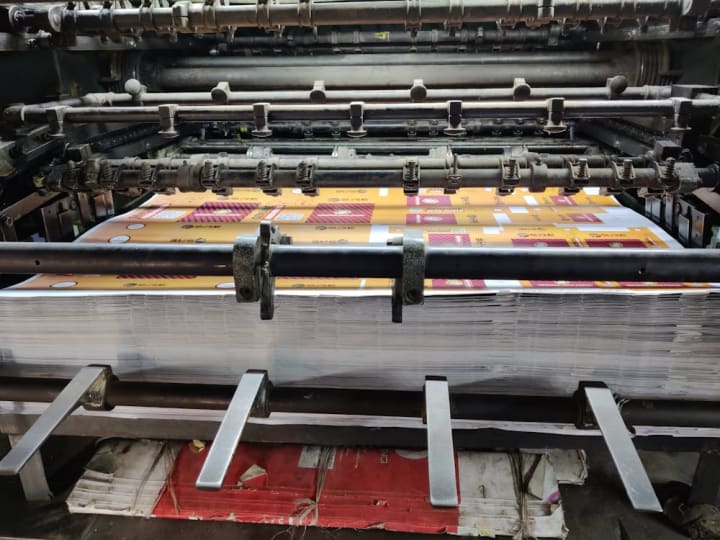
But I’ve Heard About These “Offline Press Things….?
There are two options when it comes to printing your books: The first is print-on-demand (such as KDP, IngramSpark, Lulu, and Draft2Digital), where the printer only prints the book on a laser printer when a book is ordered. This means that you don’t need to deal with storage and fulfillment. The other option is to take it to an offline printer, who is best if you’re printing 1000 books or so (they are cheaper per unit than POD, offer better quality (they’re using actual ink and better paper), and the price goes down if you order larger runs).
For most purposes, POD is fine as it saves you a lot of problems. However, if you do a lot of conventions (and I mean more than five) and you sell out a lot or are doing a crowdfunder, an offline press is the way to go.
Which Is Better?
Vanities are straight out unless you’re looking for a special edition. Traditional publishers take more work, but will save you lots of money and will likely make you more money, but you lose a lot of control. Hybrids are great if you don’t mind the cost or are afraid your book won’t sell for one reason or another, or just want more control. Independent publishers are good if you don’t mind the smaller market and want the prestige of a publisher, but want the control and don’t mind paying to publish.
[One More Thing: Always read the contract thoroughly. If they ask for ANY rights beyond those needed to print the book, especially if they demand the copyright, then RUN. Period.]
In short, when it comes to publishing, you need to decide which option works best for you and go for it. Carefully weigh the advantages and disadvantages before charging in, and keep in mind that there issues I’m not looking at. However, this information should be enough for you to start your own research into the situation and determine which option is best for your purposes. Hope this helps, and good luck!
About the Creator
Jamais Jochim
I'm the guy who knows every last fact about Spider-man and if I don't I'll track it down. I love bad movies, enjoy table-top gaming, and probably would drive you crazy if you weren't ready for it.
Keep reading
More stories from Jamais Jochim and writers in Writers and other communities.
Making Your Prologues Worth Reading
Prologues are not popular. A lot of readers actually refuse to read them, and skip right over them like a short wall: These readers have found that prologues are pretty much a waste of time, and so there’s no reason to read them. Too many writers use the prologue to catch people up, introduce characters with little payoff, or just show off that they can write; these are poor reasons to have a prologue. While the prologue can do a lot of work for your story, it needs to be done with some finesse.
By Jamais Jochim7 days ago in Writers
Unofficial Challenge: Black History Celebration
Forward: February 28th, 10:53 PM, EST... The final hour of Black History Month, 2026. Hello fellow writers. I've had this challenge waiting in my drafts for most of the month. But I held off on publishing it, until now.
By Sam Spinelli3 days ago in Writers
Pearl
1980 something. we all hung out at Pearl and you and i were nothing special, or so i thought. i mean we all danced, drenched in our own sweat, our own saline solution of fear, too many beers, shots, laughter, tears, fucks in the bathroom and i don't know when we began to be afraid. do you?
By ROCK aka Andrea Polla (Simmons)6 days ago in Fiction


Comments
There are no comments for this story
Be the first to respond and start the conversation.