
Trump Wants Role in Picking Iran’s Leader; Israel Warns Lebanese to Flee for Their Lives
Washington Seeks Influence Over Tehran’s Future as Conflict Engulfs the Region
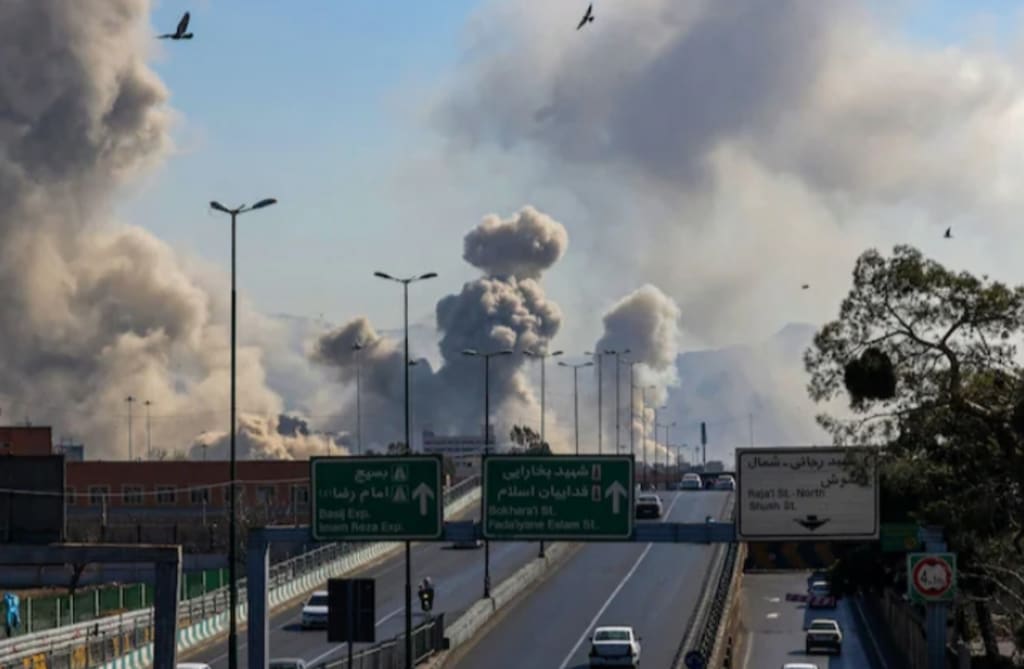
As the U.S.–Israel military campaign against Iran continues, the conflict is taking on new political and humanitarian dimensions. President Donald Trump is insisting on a role in choosing Iran’s next supreme leader, while Israel has issued urgent warnings for civilians in Lebanon to evacuate as fighting intensifies. These developments illustrate how the war is reshaping foreign policy objectives and impacting civilian safety across borders.
Trump Seeks Influence Over Iran’s Leadership
Following the killing of Iran’s Supreme Leader Ayatollah Ali Khamenei in a joint U.S.–Israeli strike, Iran faces a rapid leadership transition. Trump has stated that he must be “involved in the appointment” of the next supreme leader, rejecting Mojtaba Khamenei, the late leader’s son, as “unacceptable” and a “lightweight.”
He has compared his desired role to past U.S. interventions in Venezuela, suggesting that Washington should help select a leader who would bring “harmony and peace” to Iran. Critics argue this signals an unprecedented U.S. effort not only to topple the regime but also to influence its succession.
Trump’s insistence on shaping Iran’s leadership underscores Washington’s interest in restructuring the country’s political order rather than allowing a return to the pre-conflict status quo. This stance has sparked intense debate, with some warning it could inflame anti-American sentiment while others view it as an opportunity to prevent hardline figures from ascending to power.
Lebanon’s Civilian Population Told to Evacuate
Simultaneously, Israel has warned residents of southern Beirut’s Dahiyeh district to flee immediately, citing impending attacks on Hezbollah infrastructure. The area is densely populated, and the evacuation order has prompted thousands of civilians to move east and north in panic.
This is the first time Israeli officials have issued such widespread warnings, highlighting the conflict’s expansion beyond Iran and into neighboring countries. Roadways out of southern Beirut have become congested with families carrying belongings to safer locations, while humanitarian services scramble to accommodate the displaced.
Regional Impact of the Conflict
The escalation in Lebanon is part of a broader regional spillover. Iran’s retaliation for Khamenei’s death has included missile and drone attacks across Gulf states, forcing neighboring countries and global powers to adjust their military and diplomatic strategies.
The war has also drawn in international actors: U.S. submarines have engaged Iranian vessels, and attacks on airports in Iran’s neighboring countries underscore the growing geographic reach of hostilities.
Global Reactions and Strategic Stakes
Trump’s statements about influencing Iran’s succession have elicited mixed reactions internationally. Some world leaders express concern that attempting to influence a sovereign nation’s leadership undermines international norms, while others see it as a strategic opportunity in light of the leadership vacuum.
The Middle East itself is divided: some governments wary of Iran may welcome U.S. involvement, while others fear further escalation.
Meanwhile, the war has triggered global economic consequences, including rising energy prices and potential disruptions to international shipping routes. Trump’s approach signals a broader U.S. interest in reshaping Iran’s political future in tandem with ongoing military operations.
Humanitarian Toll
Beyond geopolitics, the human cost is mounting. Thousands have been killed in Iran, Lebanon, and Israel, and civilians face displacement, injury, and the destruction of homes and businesses.
The evacuation warnings in Beirut reflect the immediate danger to non-combatants. Humanitarian organizations are struggling to accommodate tens of thousands of displaced residents, while local health systems cope with casualties and the stress of disrupted services.
Looking Ahead
As Iran undergoes its leadership transition and the war spreads, Trump’s push for influence and Israel’s evacuation warnings underscore how political objectives and humanitarian crises are intertwining.
The next weeks will likely determine not only Iran’s future leadership but also the stability of Lebanon and the broader Middle East, highlighting the profound human and strategic consequences of the ongoing conflict.
Key Points:
President Trump insists on a role in selecting Iran’s next supreme leader, rejecting Mojtaba Khamenei.
Israel has ordered residents of southern Beirut to evacuate amid ongoing strikes targeting Hezbollah.
The conflict has spread across the region, impacting civilian populations and security.
Tens of thousands have been displaced in Lebanon due to evacuation orders.
The war’s geopolitical fallout includes energy market shocks, international diplomatic tensions, and evolving U.S. strategic objectives.
The developments in Iran and Lebanon underscore how the current conflict is reshaping the Middle East, affecting leadership succession, civilian safety, and international diplomacy on an unprecedented scale.
About the Creator
The Saddest Thing - The Billionaires Who Rule America Aren't Even Enjoying Themselves
This single post says more about our ruling class than a thousand policy papers. The saddest thing about today's system is that the men robbing the rest of us - sabotaging our economic prospects, our pensions, our access to affordable healthcare - are not even happy.
By Scott Christenson🌴27 days ago in The Swamp
Tatt~Master
— Assembly Line Tatt Machine ~ Impressions to Impress — As I begin to understand more about the Tattoo Phenomenon. I've written silly, yet verbatim, dating site anecdotes in 'Frazzled.' So let me ask you: Would you be More attracted to someone slathered with tattoos, or Less?
By Jay Kantor5 days ago in Humor



Comments
There are no comments for this story
Be the first to respond and start the conversation.