
Pakistan Strikes Bagram Air Base, Escalating ‘Open War’ With Taliban
Cross-border missile fire marks dangerous new phase in Islamabad–Kabul confrontation
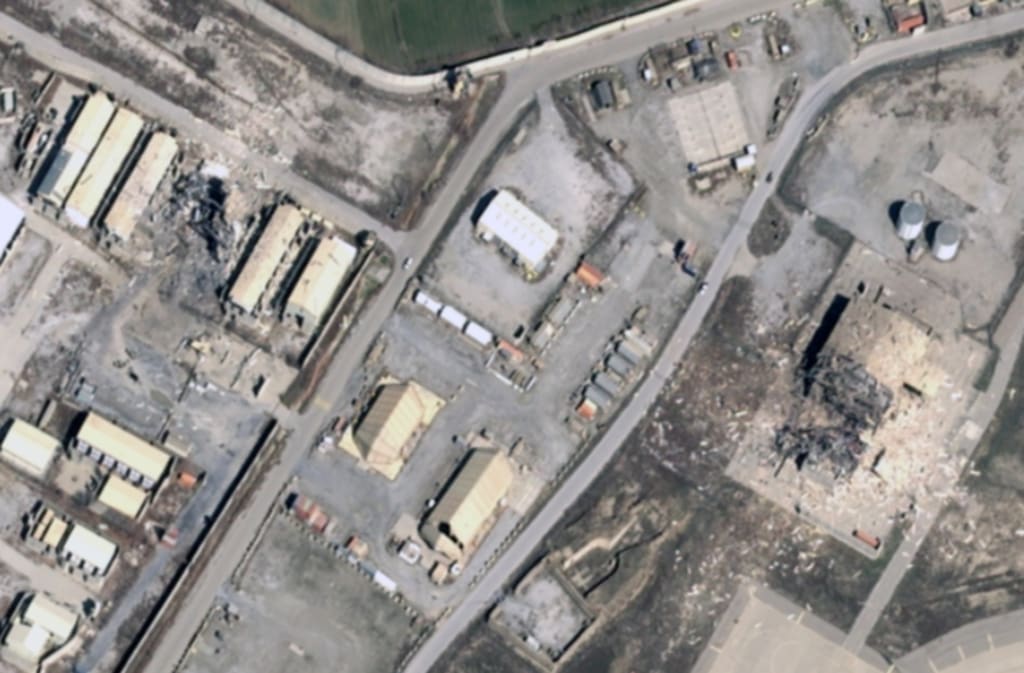
Tensions between Pakistan and Afghanistan’s ruling Taliban authorities have erupted into what officials on both sides are now describing as “open war,” after Pakistan launched a strike on Bagram Air Base, one of Afghanistan’s most symbolic and strategically significant military sites.
The strike marks a dramatic escalation in months of mounting friction along the porous Durand Line border, where Islamabad has accused the Taliban government of harboring militants responsible for attacks inside Pakistani territory. Taliban leaders have denied the accusations, calling Pakistan’s action an act of aggression and a violation of Afghan sovereignty.
What was once simmering tension has now entered a perilous new phase.
A Symbolic Target
Bagram Air Base, located north of Kabul in Parwan Province, carries immense symbolic weight. Once the largest U.S. military installation in Afghanistan during two decades of war, it became a potent emblem of foreign presence and, later, Taliban victory after the 2021 U.S. withdrawal.
By targeting Bagram, Pakistan signaled more than a tactical move. Analysts say the choice of site sends a strategic message: Islamabad is willing to strike at the heart of Taliban-controlled infrastructure if it believes its own national security is threatened.
Pakistani officials claim the strike targeted facilities allegedly being used by anti-Pakistan militant groups, particularly factions linked to cross-border insurgent attacks. Islamabad has repeatedly blamed militants operating from Afghan soil for deadly bombings and ambushes in Pakistan’s Khyber Pakhtunkhwa and Balochistan provinces.
The Taliban government, however, insists that Afghanistan will not be used as a launching pad for attacks against any country and has accused Pakistan of fabricating pretexts for military action.
From Tension to “Open War”
The language has hardened significantly in recent weeks. Pakistani military spokespeople described the strike as a “defensive response to sustained provocations,” while Taliban officials labeled it “a declaration of open war.”
Skirmishes along the border are not new. Since the Taliban’s return to power in 2021, relations between Islamabad and Kabul have steadily deteriorated. Pakistan initially hoped that a Taliban-led Afghanistan would bring strategic depth and security stability. Instead, it has faced a resurgence of militant violence.
The Tehreek-e-Taliban Pakistan (TTP), a separate but ideologically aligned group, has intensified operations inside Pakistan. Islamabad alleges that TTP fighters find safe haven across the border. The Afghan Taliban denies offering such sanctuary but has struggled to convincingly address Pakistan’s concerns.
The strike on Bagram represents the most visible and direct confrontation between the two governments to date.
Military Calculations
Pakistan’s military is one of the most powerful in the region, with a modern air force and missile capabilities. The Taliban, while battle-hardened from decades of insurgency, lacks conventional air power.
However, Afghanistan’s mountainous terrain and entrenched militant networks make any sustained campaign complex and risky. A prolonged conflict could devolve into asymmetric warfare, with cross-border raids, improvised explosive devices, and retaliatory strikes becoming routine.
Islamabad likely calculated that a limited but high-profile strike would demonstrate resolve without triggering full-scale war. Yet the Taliban’s rhetoric suggests it may feel compelled to respond, if only symbolically, to avoid appearing weak domestically.
The danger lies in escalation cycles: one retaliatory strike can justify another.
Domestic Pressures in Pakistan
Pakistan’s leadership faces significant domestic pressure to address rising militant violence. Attacks on security forces and civilians have shaken public confidence and intensified criticism of the government’s handling of national security.
By striking Bagram, Pakistan signals to its population that it is willing to act decisively. The move may also aim to deter further cross-border infiltration by demonstrating reach and capability.
However, critics warn that external military action could inflame anti-Pakistan sentiment inside Afghanistan and complicate diplomatic channels that still exist between the two neighbors.
Taliban’s Dilemma
For the Taliban, the strike poses both a security challenge and a political test.
The group must balance nationalist messaging with practical considerations. Afghanistan’s economy remains fragile, international recognition is limited, and foreign aid flows are constrained. A full-scale war with Pakistan — one of its key trading partners — would strain already thin resources.
At the same time, failing to respond risks undermining the Taliban’s image as a sovereign authority capable of defending Afghan territory.
Some analysts suggest the Taliban may pursue calibrated retaliation, possibly through indirect pressure rather than overt conventional strikes.
Regional Implications
The conflict does not exist in isolation. Afghanistan sits at a crossroads of regional interests involving China, Iran, Central Asia, and Gulf states. Pakistan itself maintains delicate diplomatic balancing acts.
Any sustained instability risks disrupting trade corridors, refugee flows, and counterterrorism cooperation. It could also invite outside powers to recalibrate their strategies.
China, for example, has invested in regional connectivity projects under the Belt and Road Initiative. Prolonged violence along the Afghanistan–Pakistan border would complicate these ambitions.
Meanwhile, international observers worry that escalating hostilities could provide space for extremist groups seeking to exploit chaos.
A Precarious Future
The strike on Bagram Air Base marks a turning point. What began as mutual accusations over cross-border militancy has transformed into direct military confrontation.
Both Pakistan and the Taliban leadership face stark choices. Escalation could lead to a drawn-out conflict with unpredictable consequences. De-escalation would require back-channel diplomacy and potentially difficult compromises.
History offers sobering lessons. Cross-border disputes rooted in militancy and mistrust are rarely resolved through force alone.
For now, the rhetoric of “open war” hangs heavily over the region. Whether it becomes reality on a sustained scale depends on how both sides interpret this moment: as a warning shot — or the first chapter of a much wider confrontation.
The coming weeks will determine whether Bagram becomes a symbol of limited deterrence or the spark of a broader regional crisis.
About the Creator
A Gathering of Evil Bosses
“I’m the queen of chin jutting while I smooth my hair, attacking, insulting, and deflecting to protect my appointer.” “Oh, please, Blondi, my hair is curled, highlighted, and longer than yours. I feature television commercials telling immigrants that we will give them a free plane ride home, and if they voluntarily turn themselves in, they will be allowed to legally apply for re-entry. It runs everywhere, and I look good in it! You can’t compete because of your blond hair. Mine is nicer, and my lips are prettier than yours.”
By Andrea Corwin 13 days ago in The Swamp
Researchers Praise ‘Stunning’ Results of New Prostate Cancer Treatment
In a development that researchers are calling “stunning,” a new prostate cancer treatment has delivered results that could significantly reshape how one of the most common cancers in men is treated. Early data from clinical trials indicate substantial improvements in survival rates and disease progression, prompting cautious optimism across the oncology community.
By Aarif Lashari3 days ago in The Swamp




Comments
There are no comments for this story
Be the first to respond and start the conversation.