
Oil Shipments in Persian Gulf Already Disrupted by Iran Attack
Shipping through the Persian Gulf’s vital Strait of Hormuz has been thrown into disarray after U.S. and Israeli military actions against Iran led to warnings, suspensions of oil and LNG shipments and rising maritime risk costs.

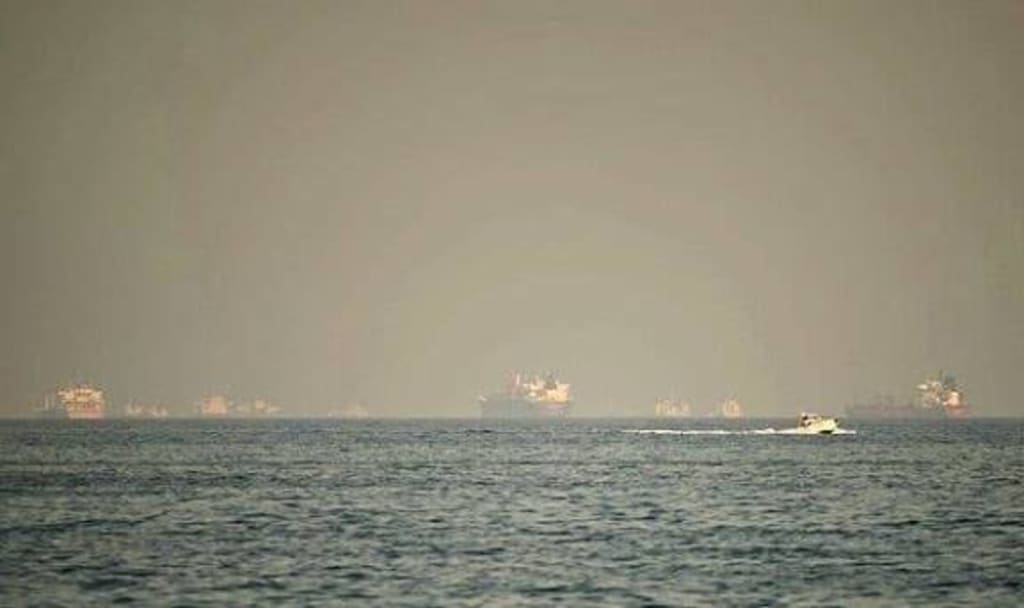
Oil markets and global shipping routes have been thrown into disarray following the recent U.S. and Israeli military strikes on Iran, with major disruptions already reported in the Persian Gulf — a region that handles a substantial share of the world’s energy exports. The attacks have sent shockwaves through global shipping, forcing oil companies and tanker operators to halt or reroute shipments, at least temporarily, raising questions about supply security and broader economic impact.
Strait of Hormuz Under Strain
At the centre of the disruption is the Strait of Hormuz, a narrow waterway between Iran and Oman that links the Persian Gulf to the Gulf of Oman and the open sea. It is one of the most strategically important maritime chokepoints in the world: roughly 20% of global crude oil and a similar share of liquefied natural gas (LNG) exports pass through it every day.
In the aftermath of the strikes, Iranian authorities — including elements of the Islamic Revolutionary Guard Corps — reportedly broadcast radio warnings telling all vessels that no ship is allowed to pass through the strait, effectively asserting a ban on navigation through the key trade route. Although these broadcasts are not legally binding, they have dramatically raised fears among shipowners and insurers alike.
Shipping Suspensions and Vessel Backups
Major oil companies, global trading houses, and tanker operators have responded by suspending shipments of crude oil, refined fuels, and LNG through the Strait of Hormuz. Several vessels that were en route are now idling near ports such as Fujairah in the United Arab Emirates, with satellite tracking imagery showing congestion at key anchorage points.
A top trading desk executive told Reuters that many ships are expected to remain in port for several days until the situation stabilises. Additionally, international advisories from naval and maritime security bodies — including warnings that the U.S. Navy cannot guarantee safe passage through the region — have prompted Greek, British, and Japanese ship owners to recommend avoiding the Persian Gulf, Gulf of Oman, and Hormuz until further notice.
Japanese shipping companies, among others, have temporarily halted operations in the region, instructing crews to stay in safer waters as a precaution, since there are no viable alternative routes for the vast quantities of oil that typically transit the strait.
Impact on Oil Markets
The disruptions present significant risks to global energy markets. Because such a large share of crude and LNG shipments passes through the strait, any sustained interruption — even temporarily — has the potential to tighten supply, drive up wholesale prices and increase volatility in energy derivatives markets.
Traders and analysts have already noted sharp increases in war-risk premiums for tankers operating in the region, with some insurers cancelling policies or raising costs sharply to reflect heightened risk. War-risk insurance prices in the Gulf and Hormuz corridor could increase by up to 50%, significantly raising the cost of transporting oil by sea and reflecting growing concern about the possibility of a broader conflict extending to commercial shipping.
Broader Logistical and Economic Consequences
Even before a potential full closure of the strait, tanker operators are making decisions that will have ripple effects on shipping schedules and supply chains. Some vessels have halted or reversed course, while others are delaying entry into the area altogether. According to tracking data, some tankers carrying crude from Gulf producers like Saudi Arabia, Iraq, and the UAE have stopped outside the Gulf of Oman rather than risk navigating a contested waterway.
Experts warn that the longer these conditions persist, the more likely it is that buyers will seek alternative supply routes or sources, which could involve lengthier voyages around the southern tip of Africa or other strategic adjustments — all of which are costlier and slower. That, in turn, could put upward pressure on refined fuel and shipping costs globally.
Regional Dynamics and Future Risk
Why the disruption is taking place now is directly tied to the broader military confrontation involving Iran, the United States, and Israel — hostilities that have introduced new layers of risk into maritime trade. Tehran’s reprisals, warnings to shipping, and the perceived risk of escalation are collectively affecting operational decisions by energy companies and shipowners.
The situation also highlights the geopolitical sensitivity of the Strait of Hormuz: any escalation that is perceived to threaten security along this narrow sea lane almost immediately resonates in oil markets and the global economy at large. Policymakers and oil market watchers are closely monitoring developments, especially as the impact of sustained disruptions could extend far beyond the region.
About the Creator
Fiaz Ahmed
I am Fiaz Ahmed. I am a passionate writer. I love covering trending topics and breaking news. With a sharp eye for what’s happening around the world, and crafts timely and engaging stories that keep readers informed and updated.
Keep reading
More stories from Fiaz Ahmed and writers in The Swamp and other communities.
Iran’s Supreme Leader Ayatollah Ali Khamenei, Who Led the Islamic Republic Since 1989, Is Dead at 86
Ayatollah Ali Khamenei, the supreme leader of the Iran for more than three decades, has died at age 86, Iranian state media confirmed, marking a historic turning point for Tehran and a potential reshaping of Middle East geopolitics. His death was announced Sunday following a major joint military operation by the United States and Israel that reportedly struck his compound in Tehran over the weekend. Iran’s official broadcaster described Khamenei’s death in solemn terms, saying the supreme leader “has reached martyrdom” and announcing 40 days of public mourning across the country. Authorities declared a week-long holiday to honour him, a signal of his central role in Iran’s state identity. A Leader Who Dominated Iranian Politics Khamenei assumed the post of supreme leader in 1989 after the death of Ayatollah Ruhollah Khomeini, the founder of the Islamic Republic. Although originally seen by some as a compromise successor with weaker religious credentials, Khamenei consolidated power over time and became one of the most influential figures in Iran’s modern history. As supreme leader, he held ultimate control over the government, military, judiciary, and state media — outranking elected officials such as the president and parliament. He was the commander-in-chief of the armed forces and the final authority on foreign policy, security, and national ideology, shaping Iran’s path through repeated domestic and international crises. Domestic Hardline Rule and Crises Domestically, Khamenei’s tenure was marked by repeated unrest and government crackdowns. Major waves of protest erupted under his watch, including large-scale demonstrations in 2022 over the death of Mahsa Amini, an Iranian Kurdish woman who died in morality police custody, sparking widespread outrage. Security forces were accused of lethal force against demonstrators, intensifying international criticism of Tehran. Through periods of economic hardship, unemployment, inflation, and social restrictions, opposition to the clerical establishment grew among younger Iranians who chafed under political and cultural repression. Yet, the regime maintained control through a network of loyal institutions, including the powerful Islamic Revolutionary Guard Corps (IRGC), which became a dominant force in both security and economic spheres. Foreign Policy and Regional Influence Khamenei’s foreign policy was defined by opposition to Western powers, particularly the U.S. and Israel, and by expanding Iran’s influence across the Middle East. Tehran supported allied militias and political groups in countries such as Iraq, Syria, Lebanon, and Yemen, viewing them as part of an “Axis of Resistance” against Western influence. His resistance to U.S. pressure over Iran’s nuclear ambitions was a defining feature of his leadership. Although he issued a religious ruling that nuclear weapons were forbidden under Islam, Tehran advanced its nuclear program significantly, drawing intense scrutiny and sanctions from the West. In 2015, Iran agreed to an international nuclear deal, but the U.S. withdrawal from the pact in 2018 led to renewed escalation and reciprocal violations. The Strike and Its Aftermath According to multiple reports, Khamenei was killed on February 28, 2026, after a coordinated military operation by U.S. and Israeli forces targeting key locations in Tehran, including his residence and other strategic sites. President Donald Trump publicly confirmed the death on social media platforms, framing it as justice for the victims of the Iranian regime and a potential catalyst for change in Iran’s governance. Before Iranian state confirmation, there was confusion about his status, with semi-official outlets initially reporting that he remained “steadfast and firm.” However, the state broadcaster’s confirmation has now ended that uncertainty. Business Standard Uncertain Succession and Power Struggles Khamenei’s death leaves a significant power vacuum. Iran’s constitution empowers the Assembly of Experts, a body of senior clerics, to select his successor, but no clear front-runner has emerged. Analysts warn that factional infighting among hard-liners, conservatives, and pragmatic elements could intensify as various interests seek to shape the next era of Iranian leadership. The role of the IRGC is also critical; the powerful military institution has played a central role in maintaining internal order and executing foreign policy goals. Its influence may be decisive in determining Iran’s political direction and stability in the coming months. Regional and Global Repercussions The death of such a pivotal figure is bound to send shockwaves beyond Iran’s borders. Middle Eastern governments, global powers, and international markets are all closely watching the developments. Security measures have been heightened across the region amid fears of retaliation or escalation, while diplomatic efforts to manage tensions are likely to intensify. Oil markets, already sensitive to geopolitical risk, may also react to the leadership transition and potential instability, given Iran’s strategic position in global energy corridors. End of an Era Ayatollah Ali Khamenei’s death marks the end of an era that saw Iran transform from a revolutionary state into a formidable regional power, albeit one fraught with internal repression and international isolation. His legacy is deeply polarizing — venerated by loyalists and reviled by critics who accuse him of authoritarianism and human rights abuses. As Iran enters a period of uncertainty, questions loom about its future direction, leadership dynamics, and the broader implications for Middle East stability in an already volatile geopolitical landscape.
By Fiaz Ahmed 3 days ago in The Swamp
The Saddest Thing - The Billionaires Who Rule America Aren't Even Enjoying Themselves
This single post says more about our ruling class than a thousand policy papers. The saddest thing about today's system is that the men robbing the rest of us - sabotaging our economic prospects, our pensions, our access to affordable healthcare - are not even happy.
By Scott Christenson🌴25 days ago in The Swamp
Trump Administration Live Updates: Bill Clinton Is Questioned for Hours About Epstein
The political landscape in the United States has once again been shaken by developments tied to the long-running investigation into disgraced financier Jeffrey Epstein. Recent reports that former President Bill Clinton was questioned for hours by federal authorities have reignited public attention, political debate, and difficult questions about accountability, transparency, and justice. These revelations, unfolding against the backdrop of the Trump Administration, highlight how unresolved controversies can continue to shape the national conversation years after the original crimes occurred.
By Jameel Jamali4 days ago in The Swamp
Cassie and Johnny
I’m the kind of dame you notice. I’m no femme fatale, but you can’t ignore me, at least not until I warn you about what’s coming, then everybody ignores me. Hell, they usually blame me afterwards and give Johnny all the credit for saving the day, but my Johnny couldn’t save a seat at the movies without my help. Sure, he’s brawny, but brainy? Not so much. Like that time I asked him to spot me five bucks, and he said he didn’t see it anywhere on me, and believe you me, he looked but good.
By Harper Lewis5 days ago in Critique



Comments
There are no comments for this story
Be the first to respond and start the conversation.