
Ayatollah Khamenei’s Iron Grip on Power in Iran Comes to an End
With Ayatollah Ali Khamenei’s death confirmed after joint U.S.–Israeli strikes, Iran’s decades-long centralized theocratic rule ends, ushering in a fragile power transition.

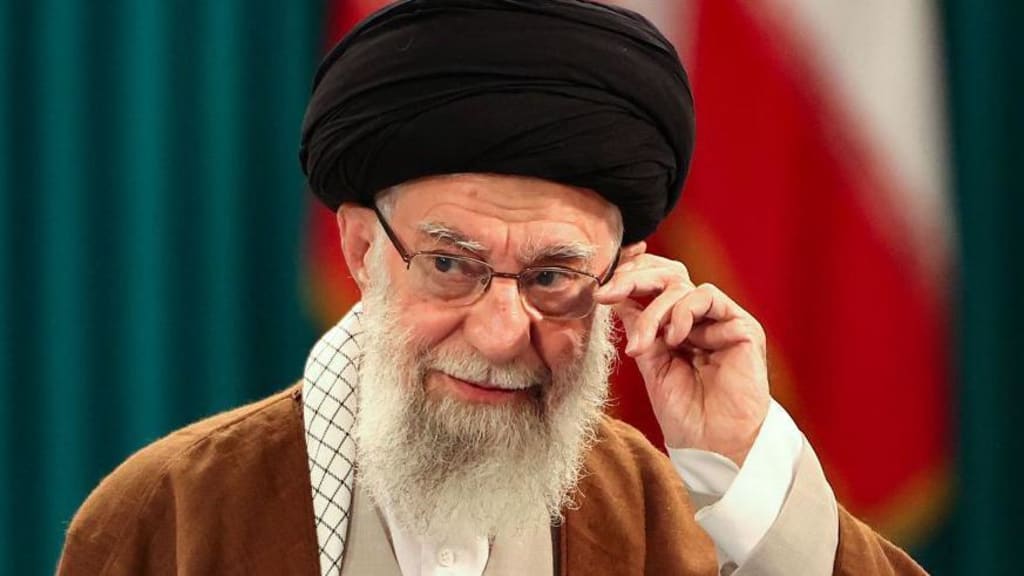
Ayatollah Ali Khamenei, who ruled Iran with an iron grip for more than three decades, is dead at age 86 — a historic turning point that brings an abrupt end to his authoritarian control over the Islamic Republic’s political, military, and religious machinery. Iranian state media confirmed his death early Sunday following coordinated airstrikes by the United States and Israel that targeted key leadership sites in **Tehran. The announcement, broadcast on state television, declared a period of 40 days of national mourning and marked the beginning of a volatile succession process.
For decades, Khamenei embodied the Islamic Republic’s theocratic establishment, maintaining ultimate authority over Tehran’s political, military, and security institutions. He succeeded Ruhollah Khomeini after the latter’s death in 1989 and fundamentally shaped Iran’s trajectory as a deeply authoritarian state. Under his rule, the clerical elite and the Islamic Revolutionary Guard Corps (IRGC) became dominant forces within Iran’s power structure, controlling everything from national defence to major economic assets.
A Regime Built on Control and Repression
Khamenei’s leadership was defined by rigid ideological control and the suppression of dissent. Though Iran maintained formal republican institutions — including a president and parliament — it was the supreme leader who wielded final authority over internal policy, the judiciary, and foreign affairs. Dissent was routinely met with harsh crackdowns, and major protest movements were often brutally suppressed. The nationwide protests following the 2022 death of Mahsa Amini, a young woman who died in morality police custody, were among the largest challenges to his rule. Security forces responded with lethal force, resulting in tragic loss of life and drawing international condemnation.
Internationally, Khamenei pursued a confrontational foreign policy centered on anti-Western rhetoric and strategic competition with the United States and Israel. He championed support for allied militia and political movements across the region — from Syria to Lebanon — creating what Tehran described as an “Axis of Resistance” against perceived external threats. This network helped expand Iran’s regional influence, even as U.S. and allied forces pushed counter-measures.
Death and Power Vacuum
Khamenei’s death follows a dramatic escalation triggered by U.S.–Israeli strikes in Iran. Iranian state media reported that he died “while performing his assigned duties,” blaming Israel and the U.S. for the attack and describing him as a martyr of the Islamic Republic. Flags were ordered lowered to half-mast, and state media suspended regular programming.
The immediate consequence of his death is a power vacuum at the heart of Iran’s political system. Iran’s constitution requires the Assembly of Experts, a body of senior clerics, to select the next supreme leader. However, no clear successor has been identified, and hardliners associated with the IRGC are widely seen as likely contenders. In the interim, a three-member leadership council — composed of the president, the head of the judiciary, and a jurist from the Guardian Council — is expected to assume temporary authority.
Uncertain Succession and Factional Tensions
The transition period could expose fractures within Iran’s political elite. Khamenei’s authority was sustained by a tightly controlled security apparatus and loyalty networks, but without his unifying figure, rival factions could struggle for dominance. The IRGC’s role will be especially significant: as the backbone of Iran’s domestic control and foreign projection, it may seek to shape the succession in its favour, raising fears of further militarisation of politics.
At the same time, public reactions inside Iran are complex. While conservative factions mourn his death and frame it as martyrdom, segments of the population — especially those critical of years of economic hardship and restricted freedoms — view his passing as the end of an era marked by repression and isolation. Analysts caution that if the transitional process lacks legitimacy or transparency, it could exacerbate unrest and deepen internal instability.
Khamenei’s death has prompted concern across the Middle East and beyond. Governments in the region are bracing for possible escalation or fallout from Tehran’s reaction. Western capitals have urged restraint, warning that unchecked conflict could destabilise key energy corridors and international markets. Meanwhile, global powers are watching developments in Tehran’s political process closely, aware that leadership shifts in Iran could upend decades-long strategic calculations.
As Iran embarks on this uncertain transition, the question of what replaces Khamenei’s iron grip — whether a continuation of hardline rule or a contest for influence among competing elites — will be central to determining the future of the Islamic Republic and its role on the world stage.
About the Creator
Fiaz Ahmed
I am Fiaz Ahmed. I am a passionate writer. I love covering trending topics and breaking news. With a sharp eye for what’s happening around the world, and crafts timely and engaging stories that keep readers informed and updated.
Keep reading
More stories from Fiaz Ahmed and writers in The Swamp and other communities.
British Jets in the Air in Defensive Action Over Middle East
British fighter jets are actively flying defensive missions over the Middle East as part of regional security operations in response to escalating hostilities following recent military strikes on Iran by the United States and Israel, British officials have confirmed. The deployment marks a significant moment in London’s military posture in the region, underscoring both the strategic importance of allied defence cooperation and the intensifying security environment. Prime Minister Keir Starmer announced on Feb. 28 that British military aircraft are “in the sky today” over the Middle East as part of “coordinated regional defensive operations” intended to protect British personnel, strategic interests, and allied partners. Starmer stressed that while the United Kingdom had not participated in the initial U.S.–Israeli strikes against Iranian targets, it was committed to safeguarding forces and installations in an increasingly volatile theatre. What London Calls Defensive Operations According to Starmer’s statement, British jets — understood to include Royal Air Force Typhoon and possibly F-35 aircraft — are engaged in patrols designed to deter and, if necessary, intercept hostile activity in the region. The operations follow a surge in tensions that began when U.S. and Israeli forces launched strikes inside Iran, reportedly targeting nuclear and missile infrastructure. Iran responded with widespread missile and drone attacks against U.S. and allied bases, prompting concerns about escalation. Defence Secretary John Healey reiterated that the RAF jets are conducting defensive actions to protect British personnel and assets. “Force protection for British bases and personnel is at the highest levels,” he said, underscoring the precautionary posture being adopted across the region. London has also elevated security measures at its bases in the Gulf and eastern Mediterranean, including enhanced anti-aircraft defences and alert levels for troops. Starmer’s government has further urged British nationals in Gulf Cooperation Council states — such as Bahrain, Qatar, and the United Arab Emirates — to shelter in place should further escalation occur. Avoiding Direct Combat Involvement Both Starmer and his defence chiefs have been careful to emphasise that British armed forces are not participating in offensive action against Iran, and have no role in the U.S.–Israeli strikes that triggered the latest round of hostilities. Instead, the RAF’s involvement is characterised as a defensive response to protect UK interests and allies from potential Iranian retaliation. This distinction seeks to keep Britain out of a direct combat role while acknowledging its commitments to NATO and regional securit “Our forces are active and British planes are in the sky today as part of coordinated regional defensive operations to protect our people, our interests and our allies — as Britain has done before, in line with international law,” Starmer said in a televised address. He added that Iran “must refrain from further strikes” and urged a return to diplomatic negotiations to de-escalate the conflict Diplomatic and Regional Concerns The British government’s approach comes amid intense diplomatic pressure to prevent a wider regional conflict. Leaders in London, Paris, and Berlin have jointly called for restraint and emphasised the importance of pursuing diplomatic avenues to resolve the crisis. European officials have signalled alarm about the potential for spillover violence that could threaten global energy supplies, disrupt trade routes, and destabilise neighbouring states. Starmer’s administration has underscored that Britain’s priority is the safety of its forces and citizens, and that UK involvement will remain defensive unless broader alliance commitments dictate otherwise. He also reiterated the long-standing British position that Iran should not be allowed to develop nuclear weapons, framing that as a key element both of the current response and of broader Middle East strategy. Public and Parliamentary Reaction The deployment has sparked debate domestically in the UK. Some lawmakers and commentators argue that Britain must avoid becoming entangled in a larger conflict, while others support the government’s decision to protect personnel and demonstrate solidarity with regional allies. Opposition voices have also highlighted the need for a clear legal framework for involvement in overseas military activity, especially in what may not yet be a formal state of war. Looking Ahead With British jets actively patrolling Middle East skies, the situation remains fluid. Military planners in London are monitoring developments closely, including potential expansions of defensive missions or adjustments to force postures should Iranian retaliation intensify. For now, the British government’s messaging prioritises deterrence and protection over offensive engagement, even as concerns about wider conflict persist.
By Fiaz Ahmed 3 days ago in The Swamp
A Gathering of Evil Bosses
“I’m the queen of chin jutting while I smooth my hair, attacking, insulting, and deflecting to protect my appointer.” “Oh, please, Blondi, my hair is curled, highlighted, and longer than yours. I feature television commercials telling immigrants that we will give them a free plane ride home, and if they voluntarily turn themselves in, they will be allowed to legally apply for re-entry. It runs everywhere, and I look good in it! You can’t compete because of your blond hair. Mine is nicer, and my lips are prettier than yours.”
By Andrea Corwin 14 days ago in The Swamp




Comments
There are no comments for this story
Be the first to respond and start the conversation.