
Commuting, Travel, All-Day Standing: Which 3D Printed Shoe Fits Your Lifestyle Best?
From City Streets to Long Shifts: The Ultimate 3D Printed Shoe Match for Your Daily Life

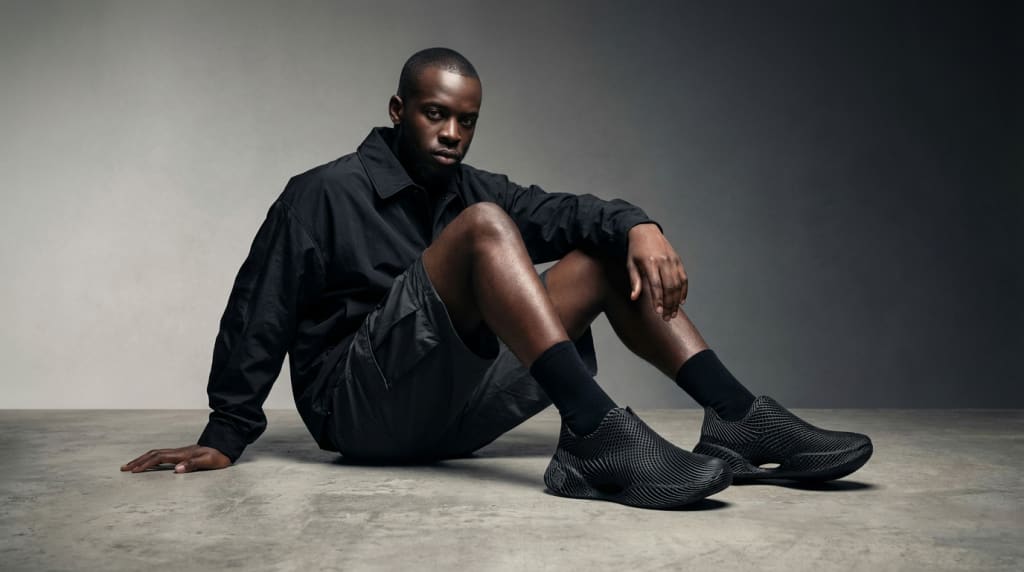
Over the past decade, 3D printed shoes have evolved from niche prototypes to a major force in the footwear industry. Leading brands like Adidas (with its 4DFWD and Futurecraft lines) and innovative players like ARKKY are using advanced lattice midsoles to deliver zoned cushioning, superior breathability, and personalized comfort that traditional foam simply can’t match.
Consumers often get lost in buzzwords—“digital light synthesis,” “biomechanical tuning,” “anisotropic lattices.” This guide cuts through the hype. We’ll explain why lattice midsoles dominate today’s market, break down three key lifestyle scenarios—urban commuting, travel, and prolonged standing—and provide clear, practical advice on choosing 3D printed shoes that look futuristic and truly support your biomechanics.
Why Lattice Midsoles Outperform Traditional EVA/TPU Foam (The Science)
For decades, EVA and TPU foams ruled midsoles: reliable, affordable, but fundamentally “uniform.” The same density everywhere means if your heel needs softness, your arch gets it too—leading to compression set over time (tiny air cells collapse, cushioning fades permanently).
3D printed lattice structures change everything. Using programmable geometric networks, manufacturers vary strut thickness, angle, and density within a single midsole:
- Heel zone: lower density, high shock absorption (like thousands of micro-springs).
- Midfoot/arch: higher density for stability and energy return.
- Forefoot: balanced for propulsion.
This zoned tuning reduces peak plantar pressure, improves gait efficiency, and maintains performance far longer than foam (backed by pressure-mapping studies on lattice-based footwear). In short: traditional foam compromises; lattice midsoles “talk” to your unique weight distribution.
Scenario-Based Buying Guide: Pick the Right 3D Printed Shoe for You
Scenario A: Urban Commuter (Stop-and-Go + Heat & Fatigue)
Pain points: Walking/running to transit on hard pavement, then sitting all day—feet get hot, tired, and swollen.
3D printed solution: High energy return + exceptional breathability. Open lattice designs create 360° airflow channels; longitudinal spring-like struts deliver a crisp, responsive ride without the “mushy” feel of thick foam.
What to look for: Shoes with vertically oriented lattice density and large ventilation openings (e.g., ARKKY’s breathable lattice models or Adidas Clima-inspired lines).
Avoid: Overly plush, thick lattices—they dull responsiveness and make city navigation feel sluggish.
Scenario B: Modern Traveler (Versatility + Lightweight Packing)
Pain points: One pair must handle cobblestone streets, light hikes, airport security, and dinners—while keeping luggage light.
3D printed solution: Hollow lattice cores reduce weight by 20–30% compared to solid rubber outsoles. Multi-density zones adapt to uneven terrain (local deformation absorbs sharp impacts without bottoming out).
Key buying tips: Prioritize UV-resistant, high-durability elastomers (e.g., advanced TPU or bio-based EPU) to prevent brittleness in sunlight. Early 3D shoes sometimes degraded outdoors—modern ones (ARKKY, Adidas 4D lines) use proven materials for trip-long reliability.
Best fit: Mid-thickness, multi-zone lattice shoes built for mixed surfaces.
Scenario C: All-Day Standing (Nurses, Retail, Teachers – Static Fatigue)
Biggest issue: Foam “bottoms out” after hours—stays compressed, loses rebound, arches collapse by hour 6–8.
3D printed advantage: Lattice is structural, not chemical. Mechanical struts resist permanent deformation; support remains consistent even under prolonged static load. Side-to-side stability stays strong—no late-shift rollover.
Must-have features: “Barrel” or perimeter-reinforced lattice (denser edges prevent ankle rollover); avoid ultra-soft designs—standing demands structured support over plushness.
Real-user insight: Many report the cushioning still feels fresh at the end of a 12-hour shift—something traditional shoes rarely achieve.
The Tech Behind the Trend (What Makes It Work in 2026)
High-end 3D printed shoes use DLS (Digital Light Synthesis) or similar photopolymerization (Carbon’s platform powers many Adidas models), creating seamless, defect-free parts. Emerging brands like ARKKY leverage AI-HALS (AI Hindered Asynchronous Light Synthesis)—a breakthrough that speeds printing dramatically (20–100× faster in some cases), improves consistency, and enables affordable, durable everyday wear.
Lattice designs often mimic human bone: dense where strength is needed, porous where weight can be shed. This biomimetic engineering delivers precision cushioning without added bulk.
Inclusivity & Real-World Buying Recommendations
One huge 3D printing win: no molds = easy large sizes (up to 48+). Brands like ARKKY now offer full size ranges affordably—democratizing comfort for bigger feet.
Top picks in 2026:
- Everyday commuting / casual use → ARKKY AeroBB or Aerodash series (great value, breathable lattice, lightweight).
- Performance & brand trust → Adidas 4DFWD or similar lattice lines (proven tech, wide availability).
- Other innovators are catching up fast.
Current drawback: Prices remain higher than traditional sneakers (though dropping rapidly with scale). Expect parity in the next 2–3 years as AI-optimized printing matures.
Final Takeaway: Time to Step Up
3D printed shoes are no longer sci-fi—they’re practical solutions for human foot diversity. Whether you’re dodging city crowds, exploring new cities, or powering through long shifts, zoned lattice midsoles provide targeted support and lasting comfort traditional foam can’t replicate.
One rule: Don’t buy just because they look cool. Buy because you feel the intelligent architecture underfoot—precise, responsive, fatigue-resistant. When your stride feels supported and alive, you’ve found the right pair.
About the Creator
TrailCam
I work in the internet industry and enjoy communicating through text, discussing fashion, IT, and sharing my feelings.
Embroidered Straight Suit vs Plain - What to Choose?
You're shopping online or standing in a store, staring at two gorgeous straight suits. One's covered in beautiful embroidery, the other's plain but elegant. Your brain goes into overdrive trying to decide which one deserves your hard-earned money. We've all been there, and honestly? There's no universal right answer. It depends on your life, your plans, and what's already hanging in your closet.
By Amit Mandal2 days ago in Styled



Comments
There are no comments for this story
Be the first to respond and start the conversation.