
What are the main differences between European hair and other types of hair for wigs and extensions?
European, Chinese, or Indian — Why the Source of Your Hair Still Matters More Than You Think

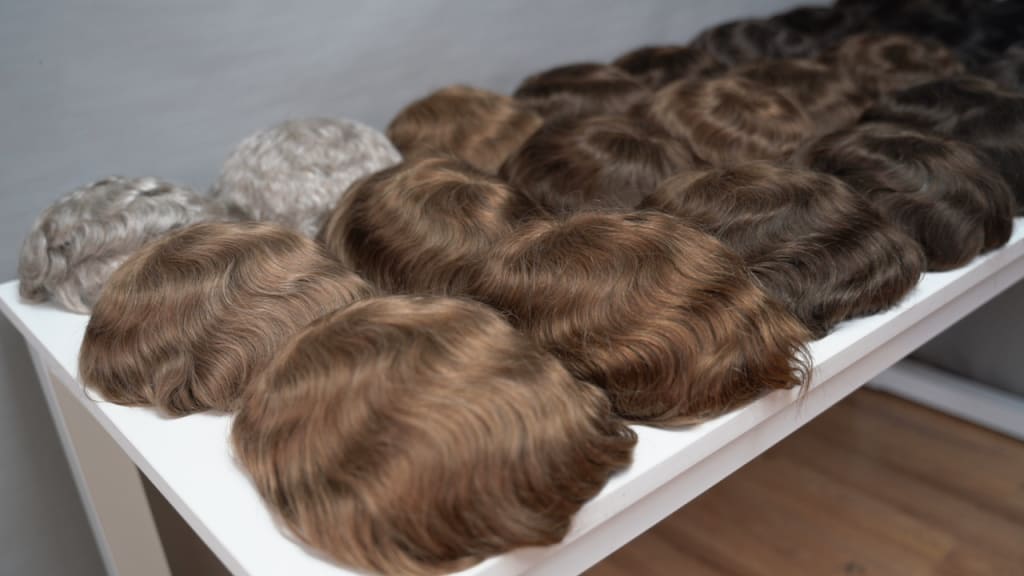
It’s 2026: The Wig Hair Debate That Never Gets Old
European, Chinese, or Indian — Why the Source of Your Hair Still Matters More Than You Think
In 2026, some trends come and go. Curtain bangs resurface. Blowouts get louder. Minimalism quietly fades again.
But one debate in the wig world refuses to age:
Is European hair really better?
If you’ve ever researched premium wigs or high-end extensions, you’ve seen the hierarchy. European at the top. Indian in the middle. Chinese at the base of most mass-market production.
But like all hierarchies, it’s more nuanced than it looks.
Let’s break it down — not as marketing hype, but as material science.
European Hair: The Luxury Benchmark
European hair is often described as the “cashmere” of the wig world.
Why?
1. Texture & Thickness
European hair has the finest denier — meaning each strand is thinner in diameter. The result:
Softer feel
Lightweight density
Airy, wispy movement
It doesn’t sit heavy. It doesn’t feel bulky. It mimics naturally fine biological hair with remarkable accuracy.
2. Natural Color Advantage
Unlike darker Asian or Indian hair, European hair naturally appears in blondes, light browns, and ash tones.
That matters because light colors don’t require aggressive bleaching. And less bleaching means:
Cuticles remain intact
Elasticity is preserved
Shine stays natural
Less chemical stress = longer structural integrity.
3. Longevity
European hair is more fragile in raw form, yes. But because it undergoes minimal processing, it often outlasts heavily treated alternatives in wig construction.
The catch?
It’s rare. Truly sourced European hair can cost anywhere from $2,000 to $10,000 in luxury wig markets. Supply is limited. Authenticity is harder to verify than most people realize.
Indian Hair: The Versatile Middle Ground
If European hair is cashmere, Indian hair is silk.
Indian hair naturally sits in the medium-thickness category. It’s not as fine as European, not as coarse as Chinese.
What makes it popular?
Natural body wave
Strong strand resilience
Excellent curl retention
It adapts. It styles easily. It holds volume without collapsing.
For many wig wearers, Indian hair strikes the perfect balance between softness and durability.
Chinese Hair: Strength and Structure
Chinese hair is typically the thickest of the three.
It’s extremely straight. Naturally strong. Highly abundant.
But here’s where processing enters the conversation.
Because it starts darker and thicker, manufacturers often use:
Bleaching
Acid baths
Silicone coatings
to soften and lighten it for Western markets.
Initially, silicone-treated hair feels silky. Glossy. Luxurious.
But once coatings wash away?
The underlying coarseness can resurface. Tangling becomes more common. Shine fades.
This doesn’t make Chinese hair “bad.” It makes it highly dependent on processing quality.
So Why Does European Hair Dominate the Narrative?
Because luxury markets equate:
Fine texture
Minimal processing
Rarity
with exclusivity.
And exclusivity sells.
But here’s what’s changed in 2026:
Construction quality now matters just as much as origin.
Where Brands Like Bono Hair Fit In
Companies like Bono Hair have shifted the focus from “origin obsession” to integrity and craftsmanship.
Instead of relying purely on geographic labeling, premium manufacturers now emphasize:
Cuticle alignment (true Remy integrity)
Ethical sourcing transparency
Low-chemical color customization
Advanced lace and silk-top construction
Because here’s the truth:
Even the finest European strands can look artificial if the cap construction is poor.
And well-processed Indian hair can outperform expectations when craftsmanship is high.
Material matters. But execution defines the final result.
Durability vs. Softness: The Real Trade-Off
Let’s simplify:
European hair → softest, lightest, most natural movement, highest cost
Indian hair → balanced softness and strength, highly versatile
Chinese hair → strongest structure, more processing needed for softness
Your ideal choice depends on:
Desired density
Climate (humidity affects finer hair differently)
Styling frequency
Budget
Maintenance habits
There is no universal “best.” Only “best for you.”
The Bigger Question
In 2026, we’re more informed than ever. Ingredient lists matter. Fabric sources matter. Sustainability matters.
So does hair origin.
But maybe the more important shift is this:
We’re no longer buying just hair.
We’re buying engineering.
We’re buying longevity.
We’re buying realism.
And realism isn’t just about where the hair comes from.
It’s about how honestly it’s handled from donor to finished piece.
Because in the end, the best wig isn’t the one with the rarest label.
It’s the one that moves like it belongs to you.
About the Creator
Alex Morgan
Written by Bono Hair’s content team — experts in professional hair replacement solutions and advocates for confidence, authenticity, and self-expression through modern hair systems.
Keep reading
More stories from Alex Morgan and writers in Potent and other communities.



Comments
There are no comments for this story
Be the first to respond and start the conversation.