
3 Reasons Gold Prices Are Falling Despite an Escalating Iran Conflict
Why a Strong Dollar, Rising Bond Yields, and Inflation Fears Are Outweighing Gold’s Traditional Safe-Haven Appeal
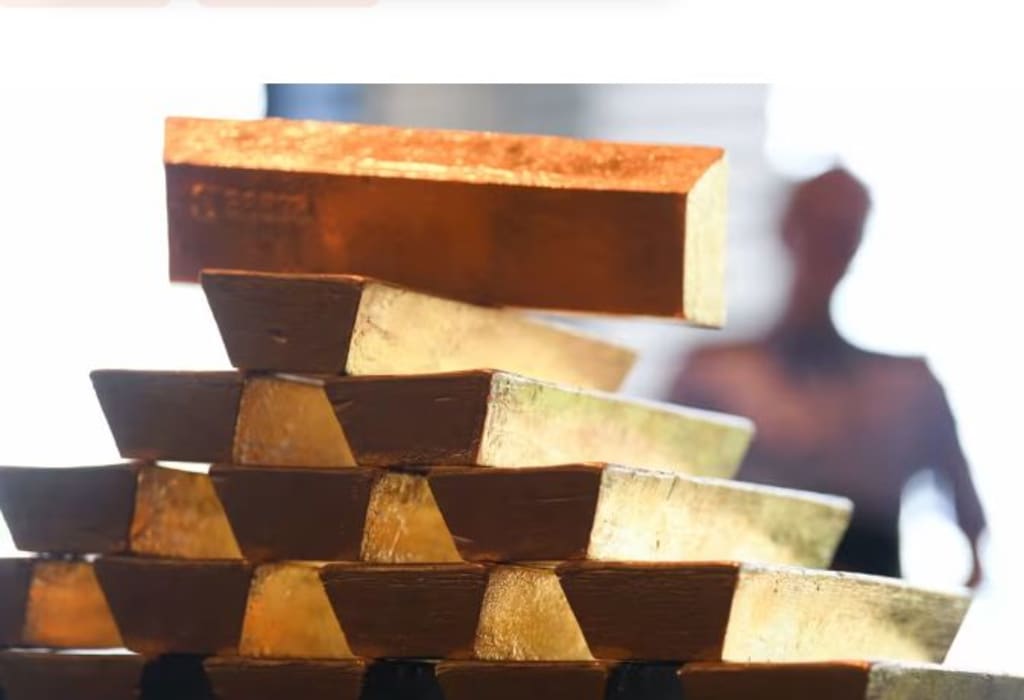
In times of war, investors typically rush toward one asset above all others: gold. For decades, gold has been viewed as the ultimate financial shelter during geopolitical turmoil. So naturally, as tensions escalate between the United States, Israel, and Iran, many expected gold prices to surge.
Instead, something surprising has happened.
Gold prices have recently declined—even as headlines warn of expanding regional conflict, oil volatility, and global uncertainty. For investors trying to make sense of this contradiction, the answer lies in a complex mix of currency strength, interest rates, and inflation expectations.
Here are three key reasons gold prices are falling despite the escalating Iran conflict.
1. The U.S. Dollar Is Acting as the Stronger Safe Haven
One of the most important forces pushing gold lower right now is the strength of the U.S. dollar.
Gold is globally priced in dollars. When the dollar strengthens, gold becomes more expensive for buyers using other currencies. That reduces international demand and places downward pressure on prices.
During major geopolitical shocks, investors often seek safety not only in gold—but also in the U.S. dollar itself. In the current environment, the dollar has rallied sharply as investors poured money into U.S. Treasury bonds and dollar-denominated assets.
Why does this matter?
Because gold and the dollar often move in opposite directions. When confidence in the dollar rises, gold’s appeal can weaken. Right now, many global investors appear to view the dollar as the more liquid and flexible safe haven.
In other words, money that might normally flow into gold during a conflict is instead flowing into cash and U.S. bonds.
This shift in preference has capped gold’s upside and, in recent sessions, pushed prices lower.
2. Rising Bond Yields Are Increasing the Opportunity Cost of Holding Gold
Unlike bonds or savings accounts, gold does not generate income. It doesn’t pay interest. It doesn’t produce dividends. Investors hold it primarily as a store of value.
That’s usually fine—until bond yields start rising.
As conflict in the Middle East raises fears of higher oil prices and inflation, U.S. Treasury yields have moved upward. When yields climb, investors can earn more income simply by holding government bonds.
This creates what economists call “opportunity cost.” If investors can earn 4%–5% on relatively safe bonds, holding non-yielding gold becomes less attractive.
Additionally, inflation fears linked to rising energy prices have changed expectations around Federal Reserve policy. Markets are beginning to believe the Fed may delay interest rate cuts to prevent inflation from accelerating further.
Higher-for-longer interest rates tend to weigh on gold prices.
So even though geopolitical risk would normally support gold, higher yields and restrictive monetary policy expectations are pushing in the opposite direction.
3. Inflation Fears Are Boosting Liquidity Demand Instead of Gold
It may sound counterintuitive, but inflation fears are not always immediately bullish for gold.
Yes, gold is traditionally viewed as an inflation hedge. However, when inflation fears lead to stronger bond yields and a stronger dollar—as we’re seeing now—the net effect can be negative for gold in the short term.
The escalating Iran conflict has triggered concerns about disruptions in oil supply routes, particularly near the Strait of Hormuz. Higher oil prices increase transportation costs, production expenses, and overall inflation pressure worldwide.
Instead of rushing into gold, many investors are choosing liquidity.
They are holding cash. They are buying short-term Treasuries. They are reducing risk exposure across portfolios.
This “flight to liquidity” often happens during fast-moving crises. Investors prefer assets they can quickly access or that provide income while uncertainty unfolds.
Gold, while historically reliable, doesn’t provide immediate yield—and in a high-rate environment, that matters.
Market Psychology Also Plays a Role
Financial markets do not move solely based on headlines. They move based on expectations.
If investors already anticipated conflict escalation, gold may have priced in that risk earlier. When reality matches expectations instead of exceeding them, prices can stabilize—or even fall.
Additionally, short-term traders often take profits after strong rallies. If gold recently approached technical resistance levels, automated trading systems may have triggered selling.
This doesn’t necessarily mean gold’s long-term outlook has changed. It simply means that in the current macroeconomic environment, other forces are temporarily stronger.
Does This Mean Gold Is No Longer a Safe Haven?
Not necessarily.
Gold’s long-term reputation as a crisis hedge remains intact. But its short-term performance depends heavily on:
Currency movements
Interest rate expectations
Real bond yields
Investor liquidity preferences
Right now, the combination of a strong dollar, rising yields, and inflation-driven policy caution is outweighing the geopolitical premium.
However, if:
The conflict widens significantly
Oil prices spike further
Financial markets experience deeper instability
Or central banks pivot toward easing
Gold could quickly regain upward momentum.
Markets are fluid. What suppresses gold today could fuel it tomorrow.
The Bigger Picture for Investors
The current decline in gold prices during an escalating Iran conflict serves as an important reminder: markets are multi-dimensional.
It’s easy to assume that war automatically equals higher gold prices. But the reality is more nuanced. Gold competes with other safe-haven assets, especially the U.S. dollar and Treasury bonds.
At the moment:
The dollar is strong.
Bond yields are elevated.
Rate cuts are uncertain.
Investors are prioritizing liquidity.
Those factors are overpowering traditional safe-haven demand.
For long-term investors, this may not signal weakness in gold’s structural role. Instead, it highlights how macroeconomic forces—particularly interest rates and currency strength—can override geopolitical headlines in the short term.
Final Thoughts
Gold’s recent pullback amid rising tensions in Iran may seem contradictory at first glance. But once we examine the broader economic environment, the picture becomes clearer.
Three primary forces are driving gold lower:
A strengthening U.S. dollar
Rising Treasury yields and delayed rate-cut expectations
Inflation fears increasing demand for liquidity rather than bullion
Geopolitical risk still matters. But in today’s interconnected global economy, gold’s price reflects far more than conflict alone.
For investors watching markets closely, the lesson is simple: always look beyond the headlines.
Because sometimes, even in the middle of escalating conflict, the strongest force in the market isn’t fear—it’s interest rates.
About the Creator
The Downfall of HubPages and Concerns About The Arena Group’s Practices
Another writing platform has succumbed to the changing nature of the Internet. To be more precise, HubPages as a user contribution publisher ended because of a tale as old as time: (1) a company buys up a media outlet or publication, (2) it makes lofty promises it can’t keep, (3) it sells things for parts, initiates layoffs or major staff changes, and (4) cuts corners to pinch every penny possible to encourage higher profits for what we can assume are those in C-suites or similar positions of power.
By Andrea Lawrence4 days ago in Journal




Comments
There are no comments for this story
Be the first to respond and start the conversation.