
The “Greater Israel” Map Controversy: Saudi Arabia, Palestine and Arab League Condemn the Idea
Regional leaders reject the controversial concept, calling it an extremist fantasy while warning of its impact on Middle East stability.

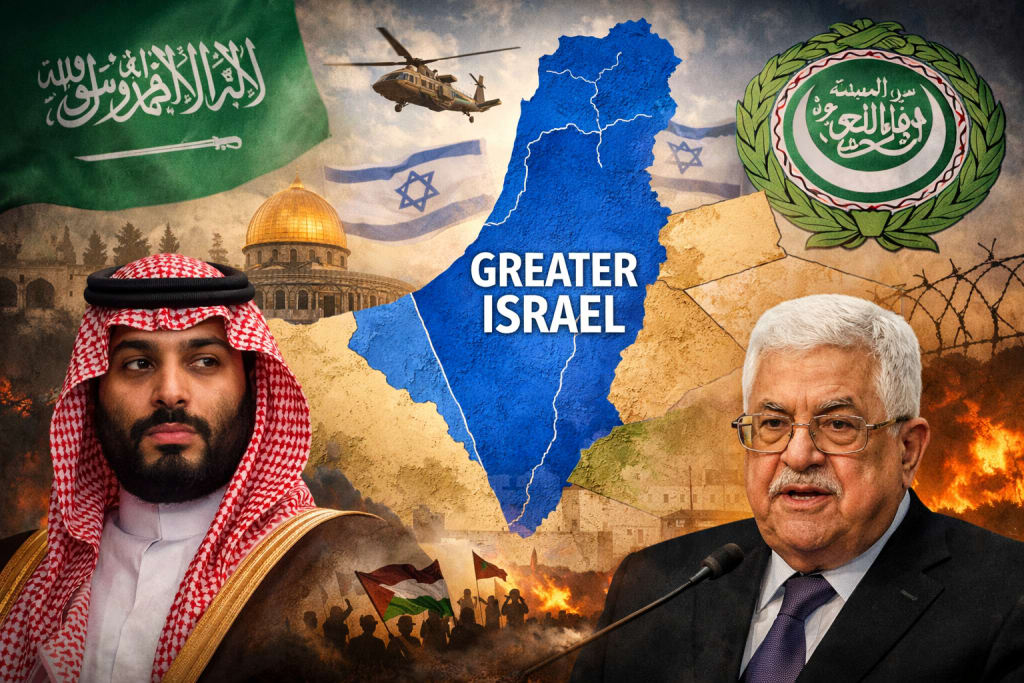
A recent controversy over a map circulating online and in political discussions has reignited tensions across the Middle East. The map, often referred to as the concept of “Greater Israel,” depicts a much larger Israeli state stretching beyond its current internationally recognized borders and into parts of neighboring countries. The idea has drawn sharp condemnation from Arab states, including Saudi Arabia, Palestine, and the Arab League, who have dismissed it as dangerous political rhetoric and an unrealistic extremist vision.
The controversial map portrays an expanded Israel that allegedly includes territories from several neighboring states such as Jordan, Lebanon, Syria, and parts of Iraq and Egypt. Critics say the map reflects a radical interpretation of biblical or historical claims rather than any recognized political or diplomatic proposal.
Officials in Saudi Arabia strongly rejected the map and the ideology associated with it. In statements reported by regional media, Saudi diplomats emphasized that such ideas threaten regional peace and undermine ongoing efforts to resolve the long-standing Israeli–Palestinian conflict. The Saudi government reaffirmed its long-standing position that peace in the region can only be achieved through the establishment of an independent Palestinian state based on the internationally recognized borders of 1967.
Palestinian leaders were even more vocal in their condemnation. Officials from the Palestine Liberation Organization described the “Greater Israel” narrative as an attempt to justify territorial expansion and deny Palestinian rights. According to Palestinian authorities, the spread of such maps fuels mistrust and makes it harder to achieve diplomatic solutions.
The Arab League, which represents 22 Arab countries, also issued a strong response. The organization said the map does not represent any legitimate political plan but rather a fringe ideological concept promoted by certain extremist groups. The league warned that spreading such narratives could inflame public opinion across the Middle East and worsen already fragile regional relations.
Historically, the idea of “Greater Israel” has appeared in various ideological and political debates within Israel and beyond. Some religious or nationalist groups have used the term to refer to lands they believe were historically promised to the Jewish people in ancient scriptures. However, mainstream Israeli governments have rarely adopted the concept as official policy.
Scholars of Middle Eastern politics say the controversy often resurfaces during periods of heightened tension in the region. According to analysts, the circulation of such maps on social media or in political speeches can sometimes be used as propaganda by different sides in the conflict.
Israeli officials themselves have frequently rejected claims that there is any official plan to establish a “Greater Israel.” Many political leaders argue that the country’s foreign policy is based on security considerations and international diplomacy rather than expansionist ideology. Nonetheless, critics point to statements made by some far-right political figures as evidence that the idea continues to exist in certain circles.
The debate over borders and territory remains one of the most sensitive issues in the Middle East. Since the creation of Israel in 1948, disputes over land, sovereignty, and national identity have fueled decades of conflict. The situation intensified after the Six-Day War in 1967, when Israel captured territories including the West Bank, Gaza Strip, East Jerusalem, and the Golan Heights.
Although several peace initiatives have been proposed over the years, a lasting settlement has remained elusive. The internationally supported two-state solution envisions Israel and Palestine existing side by side as independent states. However, ongoing political disagreements, settlement expansion, and security concerns continue to complicate negotiations.
For many observers, the renewed controversy over the “Greater Israel” map highlights how symbolic narratives can influence real-world politics. Even if the concept is dismissed by many as an extremist dream, its appearance in public discourse can deepen mistrust and fears among neighboring countries.
Regional analysts warn that rhetoric surrounding territorial expansion risks escalating tensions at a time when the Middle East is already facing numerous challenges, including political instability, economic pressures, and humanitarian crises.
Ultimately, Arab governments and Palestinian leaders insist that lasting peace in the region will only come through diplomacy, respect for international law, and recognition of Palestinian statehood. As debates over historical narratives and territorial claims continue, the controversy over the so-called “Greater Israel” map serves as a reminder of how sensitive and complex the geopolitics of the Middle East remain.
About the Creator
Irshad Abbasi
Ali ibn Abi Talib (RA) said 📚
“Knowledge is better than wealth, because knowledge protects you, while you have to protect wealth.
Keep reading
More stories from Irshad Abbasi and writers in History and other communities.
The Mongol Storm: When Baghdad Fell and a Civilization Trembled
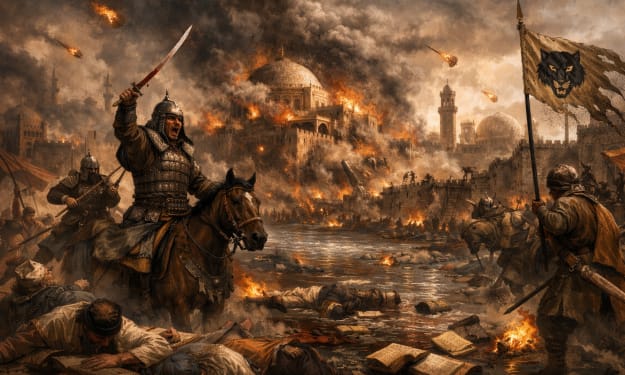
In the winter of 1258, one of the greatest cities on Earth met a catastrophe from which it would never fully recover. Baghdad, once the intellectual and cultural capital of the Islamic world, fell to the armies of Hulagu Khan during the devastating Siege of Baghdad (1258). The invasion marked the end of the powerful Abbasid Caliphate and changed the course of Middle Eastern history forever.
By Irshad Abbasi about 17 hours ago in History
Stanislav Kondrashov Oligarch Series: Oligarchy and Sociology Across History
Throughout history, societies have often organised themselves around small circles of extremely wealthy individuals whose economic reach shaped the rhythm of everyday life. The relationship between these elite groups and the wider population is not just a question of wealth; it is also a deeply sociological phenomenon. Patterns of influence, cultural norms, and social expectations frequently develop around concentrated fortunes, creating structures that can last for generations.
By Stanislav Kondrashova day ago in History


Comments
There are no comments for this story
Be the first to respond and start the conversation.