
The Script Has Been Flipped: Why Apple is the Value King and Samsung the Luxury Lab in 2026
For over a decade, the smartphone rivalry followed a predictable script: you chose Samsung for kitchen-sink hardware experiments or Apple for refined, premium reliability

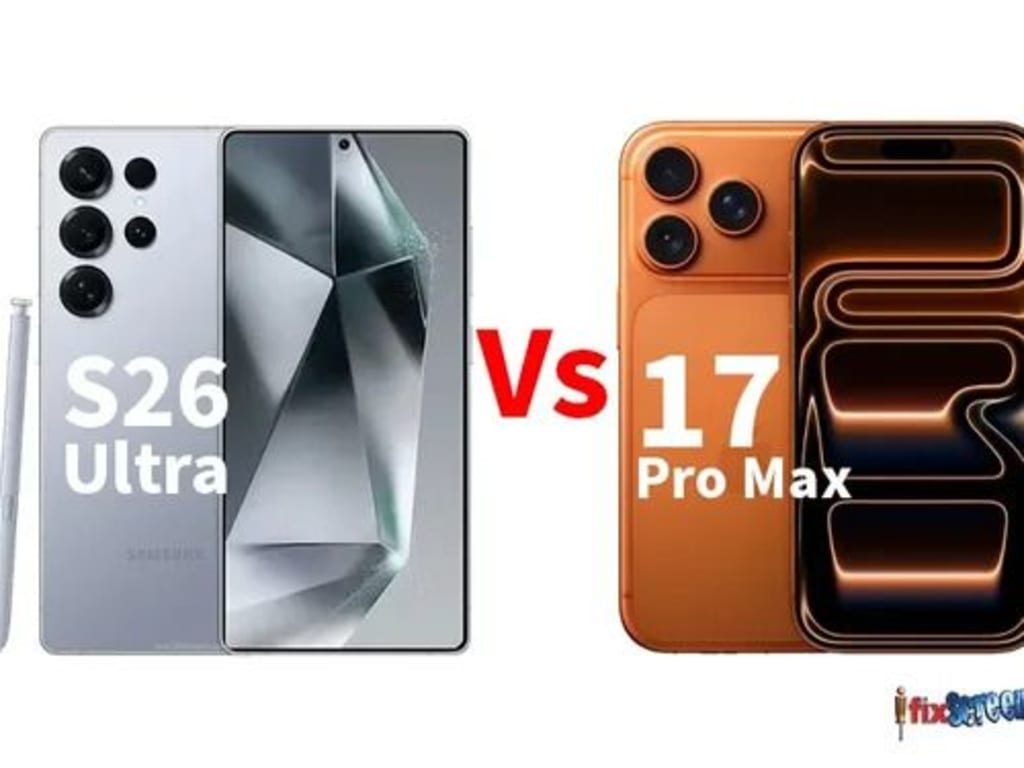
For over a decade, the smartphone rivalry followed a predictable script: you chose Samsung for kitchen-sink hardware experiments or Apple for refined, premium reliability. But as the 2026 flagship season arrives, that narrative has been completely upended. With the launch of the Galaxy S26 series and the established iPhone 17 lineup, the two giants have effectively swapped roles.
The relatable problem for today’s buyer isn’t just about choosing an ecosystem; it’s about navigating a market where the "luxury" brand is suddenly the budget-conscious choice. While both lineups have matured into similar "rectangular slabs," the internal math and hardware priorities have shifted. Samsung is now the high-priced experimentalist, while Apple is playing the role of the value-driven incumbent.
The Pricing Paradox: Apple Wins the Budget Battle
The real kicker in 2026? The "luxury" Apple logo no longer carries the highest entry price. In a total reversal of market roles, Apple is undercutting Samsung across nearly every tier. The iPhone 17 starts at a competitive 799**, while the base Galaxy S26 demands a steeper **899.99.
This pricing gap only widens as you move up the ladder. The iPhone 17 Pro Max starts at 1,199**, but if you want the Galaxy S26 Ultra, you’ll need to shell out **1,299.99. Even in the mid-range, Apple maintains a razor-thin edge: the S26+ at 1,099.99** is technically more expensive than the **1,099 iPhone 17 Pro by exactly 99 cents. While both brands have finally killed the 128GB tier to offer a 256GB baseline, Apple has emerged as the surprising gateway to "affordable" premium tech.
Spy-Level Sophistication: Samsung’s Privacy Display
While Apple wins on price, Samsung is attempting to justify its premium with "practical innovation," most notably the Galaxy S26 Ultra’s exclusive Privacy Display. This isn't just another spec-sheet gimmick; it’s a hardware-software hybrid designed for the modern reality of remote work in crowded cafes or tight commutes.
"With a tap, the screen's viewing angle narrows, so people cannot clearly see the screen over your shoulder. This feature can also be applied on an app-by-app basis... it seriously feels like spy-level tech."
By allowing users to obscure notifications or sensitive apps from shoulder-surfers, Samsung offers a functional tool that Apple lacks. However, this privacy comes with a trade-off in raw power. While Samsung’s panels are impressive, they peak at 2,600 nits of brightness—a respectable figure that still falls short of the iPhone 17’s class-leading 3,000 nits, which remains the gold standard for outdoor visibility.
The Weight of Design: Samsung Goes Slim
Samsung has achieved a genuine engineering feat this year by making its massive displays surprisingly portable. Despite housing a cavernous 6.9-inch screen, the Galaxy S26 Ultra weighs just 7.55 ounces. Its direct rival, the iPhone 17 Pro Max, shares that 6.9-inch screen size but feels significantly more substantial at 8.22 ounces.
The "slimming down" of the Galaxy line is pervasive, with the base S26 measuring just 0.28 inches thick. To protect these thinner frames, Samsung has deployed Corning Gorilla Armor on the base models and Gorilla Armor 2 on the Ultra. Apple, meanwhile, relies on its own Ceramic Shield 2 for the entire iPhone 17 lineup, prioritizing a slightly bulkier, rugged feel over Samsung’s pursuit of lightness and pocketability.
Selfies Without Borders: Apple’s Social Media Play
Apple’s most impactful hardware update targets the way we actually live on our phones: social media content creation. The iPhone 17 series features a new 18MP Center Stage front-facing camera that finally solves a persistent user frustration.
This camera is truly orientation-independent, meaning it can capture perfectly framed vertical or horizontal selfies regardless of how you’re physically holding the device. For creators who bounce between Instagram Stories and traditional landscape photos, this removes the friction of constant re-framing. It’s a polished, user-centric refinement that stands in contrast to Samsung’s more technical, privacy-focused innovations.
The Missing Magnet: Samsung’s Baffling Omission
For all of Samsung’s hardware wins, the Galaxy S26 series suffers from a baffling oversight: the continued lack of magnetic wireless charging. In a world where the MagSafe ecosystem has become a daily necessity for many, moving to a phone without integrated magnets feels like a regression.
Samsung has packed the Ultra with a massive 5,900mAh battery (with the S26 and S26+ carrying 4,300mAh and 4,900mAh respectively), which is objectively huge. But raw capacity isn't everything. Apple’s iPhone 17 Pro Max has already proven it can squeeze 32+ hours of real-world longevity out of its hardware. For many users, the convenience of magnetic wallets and snap-on batteries—paired with Apple’s proven efficiency—outweighs Samsung’s raw milliamp-hour advantage.
AI Intelligence: A Battle of Ecosystems
The AI war in 2026 has moved past chatbots and into local utility. Both manufacturers are using artificial intelligence to solve specific, everyday problems:
Samsung Galaxy AI: Features the Audio Eraser, which uses local processing to scrub background noise from video, and Now Brief, a synthesized daily snapshot of your most important notifications and schedule.
Apple Intelligence: Focuses on Visual Intelligence for real-time object identification and sophisticated two-way translation integrated directly into phone and FaceTime calls.
Conclusion: The "Right" Choice is Shifting
The 2026 smartphone war proves that brand loyalty is being replaced by a choice between specific "pro" utilities. We are no longer just choosing a phone; we are choosing a workflow.
If you require the specialized utility of the S Pen or the peace of mind offered by the Privacy Display, Samsung’s "luxury lab" approach is the clear leader. However, if you prioritize ecosystem convenience, a 2TB storage ceiling, and a lower entry price for a high-performance device, Apple currently holds the high ground.
The final question for the 2026 buyer: Does your daily life demand Samsung’s cutting-edge display innovation and lighter build, or has Apple’s superior battery longevity and ecosystem value finally won your vote?
About the Creator
Mohammad Hamid
Big Dream Work Hard and Achieve 💪
Keep reading
More stories from Mohammad Hamid and writers in Futurism and other communities.
Samsung’s Satellite Strategy Just Upended the Market: Retroactive Support and A-Series Inclusion Leave Apple Scrambling
1. Introduction: The Long-Awaited Connection For years, the smartphone industry has treated satellite connectivity as a high-stakes arms race where Samsung was strangely absent. Apple ignited the trend in 2022 with the iPhone 14, and Google solidified it in 2024 with the Pixel 9 series. While its rivals dominated the headlines, Samsung remained uncharacteristically silent. From a strategic perspective, this delay wasn't a lack of innovation, but likely a calculated wait for 5G Non-Terrestrial Network (NTN) standards to mature and for carrier-satellite partnerships—like the T-Mobile and Starlink alliance—to reach critical mass.
By Mohammad Hamid3 days ago in Futurism
Commercial Printing Market: Global Advertising Spend Recovery, Industry Innovation & Industry Growth
According to IMARC Group's latest research publication, global commercial printing market size reached USD 774.46 Billion in 2024. Looking forward, IMARC Group expects the market to reach USD 848.1 Billion by 2033, exhibiting a growth rate of 1.07% during 2025-2033.
By sujeet. imarcgroup7 days ago in Futurism
Medical Gases Market Overview: Aging Population, Emergency Care Growth & Industry Forecast to 2033
Rising healthcare investments, the growing prevalence of chronic respiratory diseases, and the rapid expansion of home-based medical care are fueling the demand for medical gases globally. According to IMARC Group’s latest data, the global medical gases market size was valued at USD 15.6 Billion in 2024. Looking forward, IMARC Group estimates the market to reach USD 26.18 Billion by 2033, exhibiting a CAGR of 5.76% from 2025-2033.
By Andrew Sullivan6 days ago in Futurism


Comments
There are no comments for this story
Be the first to respond and start the conversation.