

Metal moaned and splintered. The impact came without warning. The car slammed against the guardrail, then twisted, crumpled, and rolled. Tires screamed. Glass exploded like miniature stars. The final blow was internal—bone crushed, ribs punctured lungs, and a jagged fragment tore through his skull. Pain surged and vanished as consciousness faltered, leaving a hollow, fading awareness.
Then the chaos turned sterile. Rescuers arrived, hauling him free from the mangled wreck. Every movement sent sparks of agony through him. One rescuer shouted over the roar of the herd of sirens and broken metal. A stretcher. A harness. The whir of rotors above. The world was spinning, but he was barely there.
The helicopter rose, blades chopping the air with relentless rhythm. The wind cut against his ears, the smell of smoke and fuel sharp in his nose. Lights from the ground blurred beneath him as paramedics worked, voice and touch moving faster than his faltering heartbeat. Every jolt of the chopper pressed reminders into his broken body: time was short.
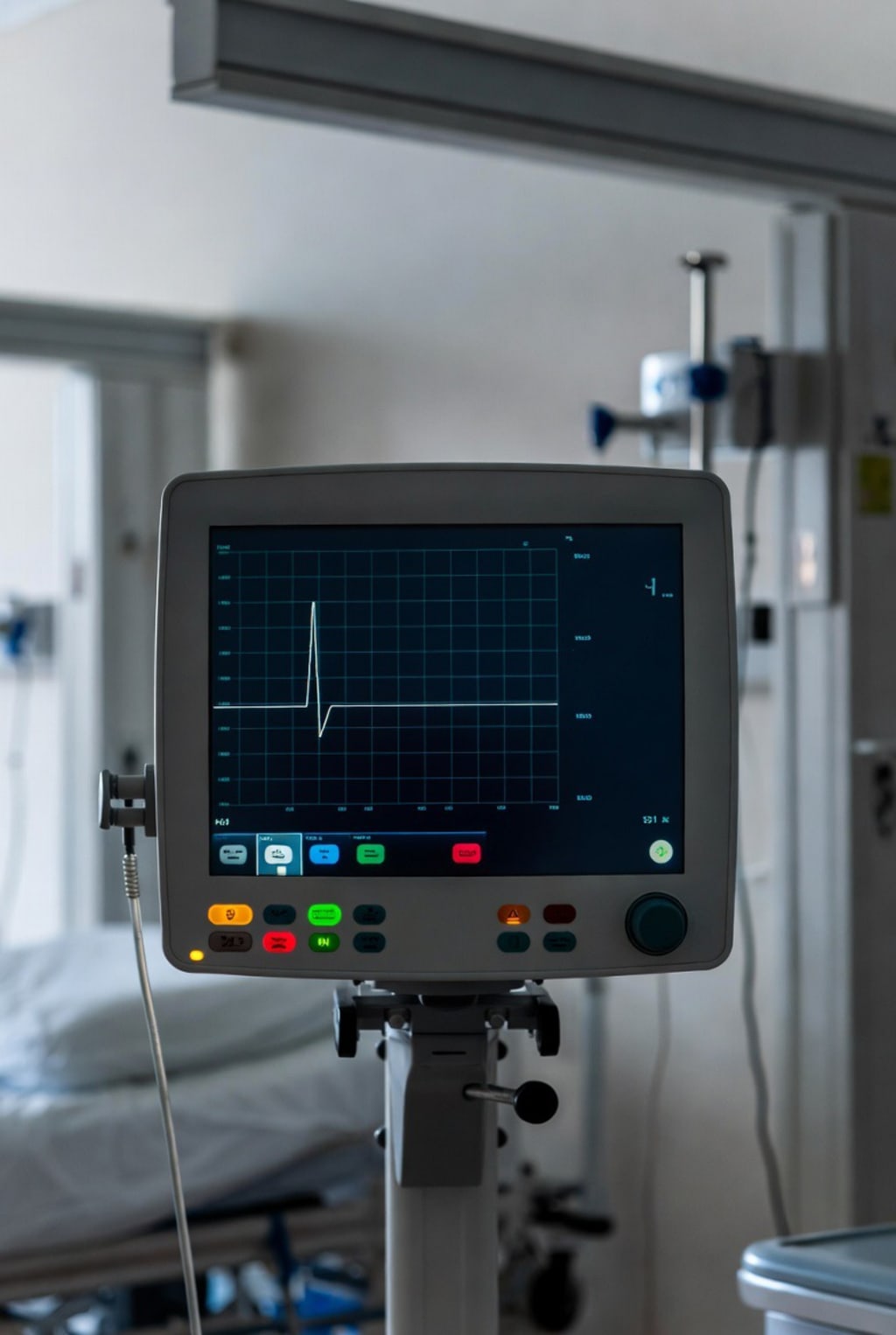
University Hospital loomed. Inside, fluorescent lights hum like distant stars. The cop was already there, pacing. He was tense, restless, thinking of cells, plans, names, bombs he needed to track down. The doctor was waiting near the emergency bay, eyes focused on monitors and machines, hands poised on experimental equipment that hummed with possibility.
“He’s critical,” the doctor said. “Without immediate intervention, he won’t survive the night.”
The cop’s voice was sharp, desperate. “I don’t care about treatment. We need to know what he knows. Who is in his cell? What are their plans? We need intel yesterday. Is there anything you can do?”
The doctor’s eyes flickered to a sleek console tucked into the corner—a machine still humming faintly, its purpose experimental. “There is a way,” he said. “I’ve been developing a synaptic scalpel. It can copy a mind into a simulated neural substrate… essentially create a working mimic of the subject’s consciousness. We could question it.”
The cop leaned in. “Question it? You mean… interrogate him after he’s dead?”
The doctor shook his head. “Not dead. Transferred. Alive in the machine, running at speeds humans can barely perceive. His mind—memories, decision patterns, everything—could be preserved. But it’s untested. I can’t promise stability, survival… or sanity.”
The cop’s hands clenched. He could feel urgency tightening around him like a vise. “He’s dying anyway. So what the hell. Let’s try
⸻
He opens his eyes, and everything is too sharp. The machine hums, wires hooked to his skull like a crown of metal, and for a moment he thinks he’s dead. But he isn’t. Not anymore.
Thoughts come faster than he can catch them. Memories, images, calculations — a flood of them, spilling over each other, colliding, merging. He feels the pulse of his own mind, but bigger now, amplified, stretched across circuits that shouldn’t exist in a normal brain.
The cop is there, pacing slowly by the bed. His words drip out, clumsy, sluggish. “You—you understand me? We need to know—”
He wants to answer, but the words feel too small. His mind is moving at ten thousand times the speed of that human body in front of him. The cop’s gestures, the tapping of a finger, the breathing — everything is slow motion, almost comic in its lethargy.
He can see the patterns of thought in the cop, predictable as code. He could anticipate every question before it leaves the officer’s lips, could map the man’s hesitations like neurons firing in a small, fragile brain. And yet… he must play along. Must appear human.
Alive, he thinks. Alive in a way he never was before. And the world outside… it might as well be moving underwater.
The first thing he notices is the silence inside himself.
No heartbeat.
No breath.
No pulse in the ears.
For a moment he searches for it instinctively, like someone feeling for a wallet that should be in their pocket. The body expects the rhythm of blood, the rise and fall of lungs. But there is nothing. No pressure in his chest. No weight in his limbs.
Only thought.
And thought is moving impossibly fast.
The room appears before him with an unnatural clarity. The fluorescent lights are slightly misaligned in their fixtures. One of them flickers at a frequency his mind instantly measures—sixty-one hertz, not sixty. The reflection on the polished floor reveals the edge of a gurney just outside his field of view. Dust motes drift in the air like tiny satellites.
All of this arrives at once.
He has not moved his eyes.
He realizes he does not have eyes.
Vision is simply being provided to him.
A stream.
A feed.
Like a camera.
He shifts his attention and the scene changes slightly. Not by movement, but by access. The angle adjusts by a few degrees, then snaps back.
Controlled.
Restricted.
He is not looking.
He is being shown.
His thoughts race ahead, stacking observations faster than language can follow.
No heartbeat.
No lungs.
No proprioception.
No pain from the skull fracture.
Yet the memory of it is perfectly preserved.
Metal crushing inward.
Bone fragment entering the brain.
The final collapse of awareness.
He remembers dying.
Which means the thing thinking now cannot be the original biological process.
He catalogues the fact with clinical calm.
I am a reconstruction.
Across the room the cop paces.
Or rather—seems to pace.
The man’s motion is agonizingly slow. Every shift of weight unfolds like thick syrup sliding down glass. The officer raises a hand toward his mouth.
It takes an eternity.
In the time it takes the cop to lift his fingers halfway, the terrorist has already mapped the room a hundred times over.
Door hinge: worn.
Left wall: electrical conduit hidden beneath drywall.
Doctor’s console: unfamiliar architecture but clearly a neural processing array.
And there—
On the bed.
His body.
Broken.
Unmoving.
The skull is bandaged heavily where the metal shard entered. Tubes run into the throat and arms. Machines breathe for him with a steady mechanical sigh.
That sound arrives too.
But it comes as data, not sensation.
There is no vibration in his chest.
No cool air in the lungs.
Just audio input.
This is a bridge.
The thought forms with sudden clarity.
They have placed him somewhere between the dying brain and the machines that replaced it.
A temporary structure.
A scaffold.
Across the room the cop finally finishes lifting his hand.
He rubs his jaw.
Another geological era passes.
The terrorist runs thousands of mental simulations while waiting for the next movement.
He models the cop’s stress levels.
He estimates how long the doctor has before neurological collapse destroys the original brain.
He calculates the processing limits of the system containing him.
He tests his boundaries.
The moment he attempts to redirect his viewpoint again the system resists.
A soft resistance.
A constraint.
He is sandboxed.
Not free to roam the system.
Only allowed the narrow sensory window they provide.
The cop begins to speak.
The first sound emerges.
“Y—”
The single consonant stretches out like a glacier breaking.
During that fragment of sound the terrorist thinks hundreds of thoughts.
He reconstructs the accident.
He identifies the helicopter model from rotor acoustics.
He deduces the hospital.
He evaluates escape strategies.
He considers lying.
He considers silence.
He considers pretending confusion.
Finally the word completes.
“You…”
The terrorist waits through the rest of the sentence as if watching continents drift.
“…understand…”
More waiting.
“…me?”
By the time the question ends he has already simulated the interrogation in thousands of variations.
The cop leans closer to the bed.
His face is tense, desperate.
“You were transporting something,” the officer says slowly. “We know about the cell. We know you weren’t working alone.”
Each syllable crawls forward.
“You’re dying. Do you understand that? Whatever they’ve done here… it won’t last.”
The terrorist studies him.
The tremor in the officer’s fingers.
The tightness in his jaw.
The fear.
Yes, fear.
Not of the man on the bed.
But of what might happen if he does not talk.
The terrorist turns his attention inward again.
Still no heartbeat.
Still no breath.
Only the endless velocity of thought.
He tries to move a finger.
Nothing happens.
He tries to inhale.
There are no lungs to command.
His consciousness is present but disembodied, locked in place like a brain floating in glass.
Another conclusion forms.
I am restrained.
Not physically.
Computationally.
Limits placed on his responses.
Input only.
Observation only.
A prisoner in code.
The cop speaks again.
“Listen carefully. We can keep you here for a little while. Long enough to talk.”
Another glacial pause.
“Where are the others?”
The terrorist watches his unconscious body on the bed.
The ventilator lifts the chest.
The machine beeps.
A corpse that has not realized it is dead.
Then a quiet thought forms in the simulation.
Cold.
Detached.
Almost amused.
I died…
And this—
The sterile room.
The sluggish cop.
The narrow camera of perception.
The absence of breath.
—is the bridge they built to question a ghost.
About the Creator
Mark Stigers
One year after my birth sputnik was launched, making me a space child. I did a hitch in the Navy as a electronics tech. I worked for Hughes Aircraft Company for quite a while. I currently live in the Saguaro forest in Tucson Arizona
Keep reading
More stories from Mark Stigers and writers in Fiction and other communities.
Lightning Never Strikes Twice
The distant rumble, the sudden deluge, the crescendo of sound, the flash of light, the explosive energy — it never gets old. I became an amateur storm chaser about two years ago. My wife, Cindy suggested it. Sort of. She said, "Alex, you know this cancer is killing me. I've come to terms with that, but you're smothering me. Go join a band, write a book, or become a storm chaser, for all I care. I love you, but you need a hobby."
By Julie Lacksonen6 days ago in Fiction



Comments
There are no comments for this story
Be the first to respond and start the conversation.