
Can Training Farmers End Hunger?
Discover how training farmers in sustainable agriculture boosts food security, reduces hunger, and creates lasting economic opportunities worldwide.

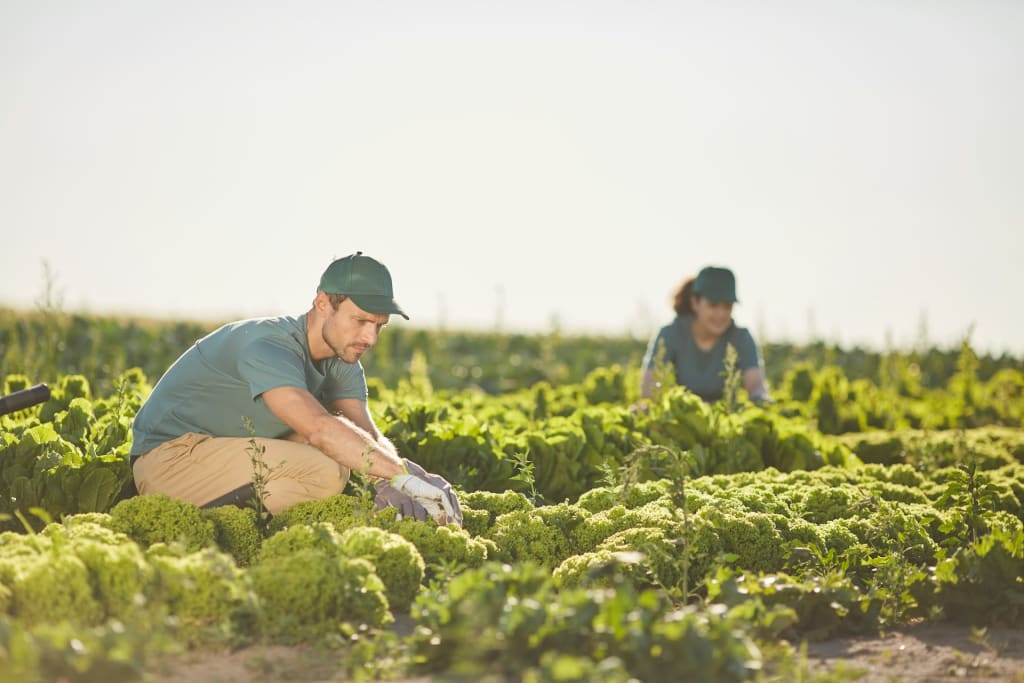
What if one of the most powerful solutions to global hunger is not food aid, but knowledge? Around the world, millions of smallholder farmers grow the food that feeds their communities. Yet many of them struggle with low crop yields, unpredictable weather, poor soil quality, and limited market access. If farmers are at the center of food production, could empowering them with better skills be the key to ending hunger?
Farmer training programs aim to answer that question. Instead of focusing only on short-term food distribution, these initiatives invest in long-term agricultural education. But how exactly does training translate into fuller plates and stronger communities?
When farmers learn improved techniques in soil management, irrigation, pest control, and crop selection, productivity often increases. Higher yields mean more food for families and more surplus to sell. Could this shift—from subsistence to sustainability—be what transforms vulnerable regions into food-secure ones?
Understanding agriculture as a pathway out of hunger requires looking beyond seeds and tools. It involves exploring how education, innovation, and resilience come together to create lasting change.
Have you ever wondered why some farms thrive while others struggle under similar conditions? Often, the difference lies in knowledge and access to modern practices. Traditional farming methods hold valuable wisdom, but in the face of climate change and population growth, are they always enough?
Farmer training programs introduce sustainable agricultural techniques that improve both yield and environmental health. For example, crop rotation and composting enhance soil fertility. Drip irrigation systems conserve water while ensuring consistent crop growth. Integrated pest management reduces dependence on chemical pesticides. Could these strategies make farming more efficient and environmentally responsible at the same time?
Climate-smart agriculture is another area gaining attention. As droughts, floods, and unpredictable weather patterns become more common, farmers need tools to adapt. Drought-resistant seed varieties, diversified crops, and agroforestry systems help reduce risk. If farmers can better anticipate and manage climate challenges, might their harvests become more reliable year after year?
Improved post-harvest practices also play a role. What happens after crops are harvested? Without proper storage and transportation, a significant portion of food can be lost. Training in post-harvest management ensures that more food reaches markets and households. Could reducing waste be just as important as increasing production?
When farmers apply these modern techniques, food availability improves locally. This reduces dependence on imports and emergency aid. It also strengthens community resilience.
Food production is only part of the equation. What about income? Many smallholder farmers produce just enough to feed their families, leaving little room for financial growth. If training could help them generate surplus crops and access better markets, how might that change their economic future?
Agricultural education often includes financial literacy and business management. Farmers learn how to keep records, budget expenses, and understand market pricing. Some programs connect them to microfinance services or cooperative groups. Could access to credit and collective bargaining power enable farmers to invest in better equipment and expand their operations?
Market access is another critical factor. Growing crops is one thing—selling them profitably is another. Training programs frequently guide farmers on quality standards, packaging, and value chain participation. By reducing post-harvest losses and improving product quality, farmers can increase their earnings.
Higher income does more than improve individual livelihoods. It allows families to invest in education, healthcare, and improved housing. Could this ripple effect—starting in the field—be what gradually reduces poverty and hunger at the community level?
Agriculture also offers opportunities for women and youth. In many regions, women contribute significantly to farming but face barriers to land ownership and financial services. When training programs prioritize inclusion, productivity often increases. Could empowering women farmers be one of the most effective strategies for improving household nutrition?
Hunger is rarely caused by food scarcity alone. It is often linked to economic instability, environmental degradation, and limited infrastructure. So how does agricultural training address these broader challenges?
By promoting diversified cropping systems, farmers reduce their reliance on a single crop. If one harvest fails, others may succeed. Agroforestry and soil conservation practices protect ecosystems while maintaining productivity. Could these methods create farms that are not only productive but also sustainable for future generations?
Community-based farmer field schools encourage collaboration and knowledge-sharing. When farmers exchange experiences and solutions, innovation spreads. Cooperatives allow them to pool resources and negotiate better market prices. Might this collective approach strengthen entire local food systems?
Technology is also reshaping agriculture. Mobile applications now provide weather forecasts, pest alerts, and market prices in real time. If farmers have access to accurate information, can they make more informed decisions and reduce risks? Engaging young people through digital tools may also ensure the long-term sustainability of agriculture.
Nutrition-sensitive farming is another emerging concept. Instead of focusing solely on staple crops, farmers are encouraged to grow fruits, vegetables, and legumes. Could diversifying diets at the production level improve public health outcomes and reduce malnutrition?
While farmer training is essential, can it succeed without supportive policies and infrastructure? Roads, storage facilities, irrigation systems, and research institutions all influence agricultural success. Governments that invest in rural infrastructure often create enabling environments for farmers to thrive.
Agricultural research centers develop improved seed varieties and innovative farming methods. But how can these advancements reach smallholder farmers without strong extension services? Knowledge transfer bridges the gap between research and practice.
Public-private partnerships also contribute to sustainable agricultural development. Agribusinesses, non-governmental organizations, and financial institutions provide technical expertise and resources. Could collaboration across sectors accelerate progress toward food security?
Land rights and financial inclusion are equally important. When farmers have secure land tenure, they are more likely to invest in long-term improvements. Access to affordable credit reduces financial risk. Together, these factors strengthen agricultural resilience.
Training farmers is about more than increasing yields. It is about building skills, strengthening economies, and fostering hope. If agriculture can provide stable income, improved nutrition, and environmental sustainability, might it truly be one of the most powerful pathways out of hunger?
The fields may hold more than crops—they may hold solutions. By investing in farmer education and sustainable practices, communities can harvest not only food, but opportunity and resilience for generations to come.
About the Creator
Convoy of Hope
Convoy of Hope, founded in 1994, is a faith-based humanitarian organization that provides disaster relief, children’s meals, agricultural training, and support for women and families worldwide.
Website: https://convoyofhope.org
Keep reading
More stories from Convoy of Hope and writers in Education and other communities.
When Vision Turns into Value: How Women Lead and Unlock Economic Power
Economic growth depends on strong leadership. Around the world, more people now recognize the impact of women's leadership. Businesses grow faster. Communities become more stable. Families gain better access to education and health. When women lead, the benefits spread far beyond the workplace.
By Convoy of Hope7 days ago in Education
Comprehensive Curriculum of a Reliable Online Pharmacy Technician Course Explained
If you’re planning a career as a pharmacy technician, choosing the right online course is crucial. A well-structured pharmacy technician course not only helps you prepare for certification exams but also equips you with the practical knowledge and skills needed for real-world pharmacy settings.
By Meaghan Howe5 days ago in Education
The First UK Baby Born from a Deceased Donor’s Uterus
In a historic medical breakthrough, a baby boy named Hugo was born in the United Kingdom just days before Christmas 2025, weighing 7 pounds and making global headlines. His birth was not only a moment of joy for his family but also a landmark achievement in modern medicine. Hugo is the first baby in the UK to be born using a uterus transplanted from a deceased donor, marking a new era in reproductive science and offering hope to millions of women around the world.
By Irshad Abbasi 6 days ago in Education
Trickle Them Down, But Not Out
The thing about smart people is that they should know better, but alas, intelligence is not the same as wisdom. Not only do the mistakes of experts too short on vision—when they are not corrected—have the potential to do great and far-reaching damage, but they also undermine public confidence in the very notion of expertise. This is particularly so when expertise is wielded in defence of the rich and powerful as a cudgel against those laid low. As an academic, this lack of faith in “so-called experts” is painful to see as it plays out in the spread of dis-/misinformation, conspiracy theories, and anti-intellectualism writ large. But it is also an understandable impulse given the catastrophic failure of an economic ideology pushed by certain economic experts. Supply-side economics has shaped a broken system for the last half-century and has arguably done more to undermine the fabric of the American Dream than any policy framework of the past century.
By Cory Wright-Maley7 days ago in Humans




Comments
There are no comments for this story
Be the first to respond and start the conversation.