
Industrial Deployment of Biochar in Modern Metal Smelting Systems
Optimizing Carbon Reactivity and Structural Stability

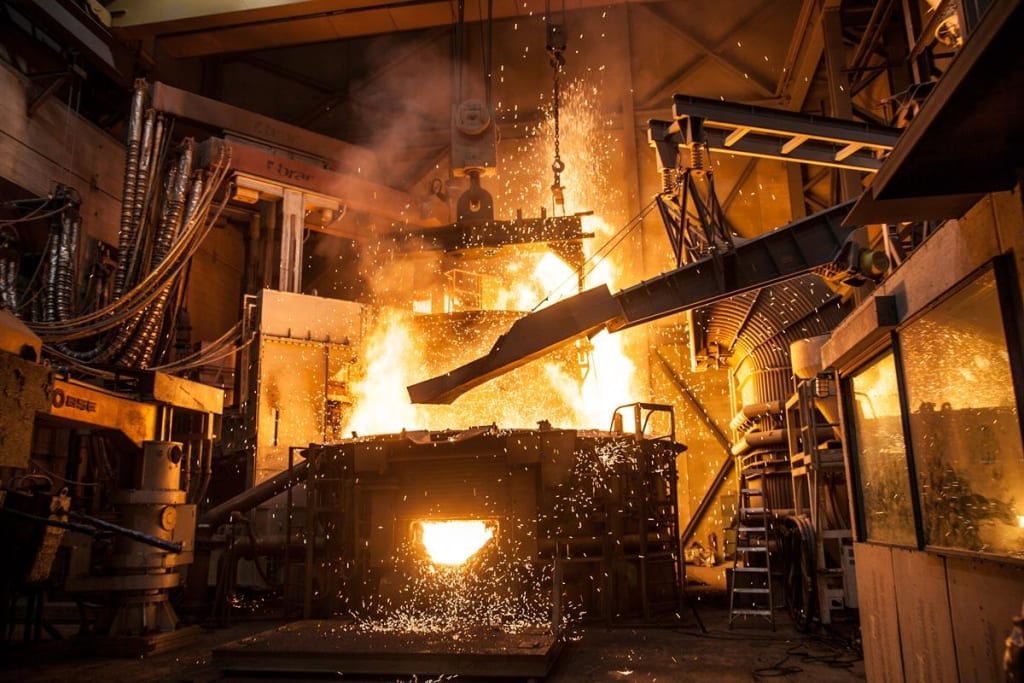
Biochar is increasingly examined as a functional carbonaceous material in high-temperature metallurgical operations. Traditionally dominated by fossil-derived coke and coal, metal smelting processes are under pressure to decarbonize while maintaining reductive efficiency and structural reliability. Biochar, when properly engineered, presents a technically viable supplementary reductant in the production of steel, silicon, and ferroalloy. Its application, however, requires stringent control of physicochemical properties and integration within existing furnace infrastructure.
Carbon Functionality in Metallurgical Systems
Reductive Mechanism
In pyrometallurgical operations, carbon serves as a reducing agent that reacts with metal oxides to liberate elemental metal through carbothermic reduction. The reductive potential of biochar depends on fixed carbon content, microstructural ordering, and reaction kinetics at elevated temperatures.
Biochar with a high aromatic carbon matrix exhibits adequate electron-donating capacity under furnace conditions. However, excessive volatile content reduces efficiency and destabilizes furnace thermodynamics. Therefore, metallurgical deployment demands high-carbon, low-volatile material produced under controlled thermal regimes.
Thermal Stability and Mechanical Integrity
Smelting furnaces impose both thermal and mechanical stress. Carbon material must withstand descent through the burden column while maintaining structural coherence. Fragmentation generates fines that impair permeability and gas flow distribution.
Biochar intended for metallurgical use requires densification or agglomeration to achieve mechanical strength comparable to conventional coke.
Feedstock Engineering and Production Control
Biomass Selection Criteria
The intrinsic mineral composition of biomass directly affects ash chemistry. Alkali metals such as potassium and sodium can alter slag viscosity and accelerate refractory degradation. Low-ash hardwood residues are generally preferred due to their favorable inorganic profile.
Agricultural residues with high silica or phosphorus concentration require pre-treatment or blending strategies to maintain furnace equilibrium.
Controlled Carbonization in a Pyrolysis Plant
The performance of biochar is fundamentally linked to its production environment. A well-calibrated biochar pyrolysis machine ensures consistent carbonization temperature, residence time, and oxygen exclusion. Elevated pyrolysis temperature enhances carbon ordering, reduces hydrogen and oxygen content, and increases fixed carbon percentage.
Uniform heating prevents heterogeneous char formation, which could otherwise introduce variability in reduction kinetics. Process reproducibility is critical for industrial-scale metal production.
Application in Steel Manufacturing
Partial Coke Substitution
In blast furnace operation, biochar can function as a supplementary carbon source, partially substituting metallurgical coke. Its lower bulk density and higher reactivity require adjustment in charging strategy.
High-reactivity biochar accelerates reduction reactions in the upper furnace zones, potentially reducing overall carbon consumption. However, its mechanical fragility necessitates pelletization or briquetting to maintain burden stability.
Carbon Injection Systems
Pulverized carbon injection offers another integration pathway. Finely milled biochar can be injected through tuyeres, contributing reductive gases such as carbon monoxide. The combustion profile must be carefully modeled to prevent excessive raceway temperature fluctuation. When optimized, biochar injection can reduce fossil carbon intensity in steel production without compromising productivity.
Role in Silicon Smelting
Carbothermic Reduction of Quartz
Silicon production relies on high-temperature reduction of quartz using carbonaceous reductant in submerged arc furnaces. The reactivity and purity of carbon significantly influence silicon yield and impurity incorporation. Biochar with low ash and controlled porosity enhances reaction interface between carbon and silica. Its higher reactivity compared to coke can improve reduction kinetics.
Impurity Management
Trace elements in biochar may transfer into molten silicon. For metallurgical-grade silicon, strict impurity thresholds must be maintained. Feedstock screening and ash characterization are therefore indispensable. High-purity biochar derived from carefully selected biomass improves compatibility with silicon smelting operations.
Contribution to Ferroalloy Production
Reduction Efficiency
Ferroalloy production, including ferrosilicon and ferromanganese, requires precise control of carbon reactivity and slag composition. Biochar can act as a reductant while simultaneously influencing slag chemistry through its mineral fraction. Optimized biochar reduces energy demand due to its enhanced surface area and reactive carbon structure.
Slag Interaction Dynamics
Ash constituents interact with molten slag, affecting viscosity and phase equilibrium. Understanding mineralogical transformation at high temperature enables predictive modeling of furnace behavior. Tailored biochar formulations can be engineered to complement specific ferroalloy chemistries, minimizing operational disruption.
Structural Modification and Post-Treatment
Densification Strategies
Loose biochar particles lack compressive strength. Briquetting increases bulk density and improves handling characteristics. Binding agents must decompose cleanly to avoid contaminant introduction. Densified biochar exhibits improved descent behavior in shaft furnaces and reduces dust generation.
Secondary Heat Treatment
Post-pyrolysis thermal upgrading enhances carbon crystallinity and reduces residual volatile matter. Improved graphitic ordering enhances structural stability at temperatures exceeding 1500°C. Such treatment narrows the performance gap between biochar and conventional coke.
Environmental and Process Implications
Carbon Footprint Reduction
Substituting fossil-derived carbon with biomass-derived biochar lowers net greenhouse gas emission when feedstock sourcing is sustainable. The biogenic carbon cycle offers partial decarbonization potential for energy-intensive smelting sectors.
However, lifecycle assessment must consider transport, processing energy, and pyrolysis plant efficiency to validate environmental benefit.
Process Adaptation Requirements
Integration is not a direct substitution exercise. Furnace airflow, burden distribution, and slag chemistry may require recalibration. Computational thermodynamic modeling assists in forecasting system response to biochar introduction. Industrial implementation therefore demands collaborative engineering across production, materials science, and process control disciplines.
Forward Trajectory in Metallurgical Carbon Innovation
Biochar represents a technically credible adjunct in steel, silicon, and ferroalloy production when engineered to meet stringent performance criteria. Its effectiveness depends on carbon structure optimization, impurity control, and mechanical reinforcement. Industrial adoption is contingent on predictable quality, scalable production, and seamless furnace integration.
Advancement in pyrolysis plant design, feedstock qualification, and carbon densification technologies continues to refine biochar’s role within modern metallurgical systems.
About the Creator
Keep reading
More stories from Wayne Shen and writers in Earth and other communities.
Thermal Desorption Recovery Pathways for Oil-Based Drilling Mud
Oil-based mud (OBM) is indispensable in complex drilling environments, yet it generates waste streams with high hydrocarbon loading and regulatory sensitivity. Thermal desorption has emerged as a technically mature recovery route, enabling separation of hydrocarbons from solids while reducing environmental liability. Its value lies not only in waste minimization, but in material reclamation and compliance assurance.
By Wayne Shen27 days ago in Earth
The Jewel of the Earth: How the Kaaba Shines Like a Diamond from Space
In the vast, silent expanse of the cosmos, where the Earth appears as a delicate blue marble against the infinite black of the universe, certain landmarks stand out with unexpected brilliance. Recently, a series of high-resolution images captured from the International Space Station (ISS) and advanced satellite arrays have left the global community in awe. The focal point? Masjid al-Haram in Mecca. From hundreds of miles above, the "House of Allah" does not just appear as a building; it radiates a piercing, crystalline glow, resembling a diamond set into the heart of the desert.
By Irshad Abbasi a day ago in Earth




Comments
There are no comments for this story
Be the first to respond and start the conversation.