
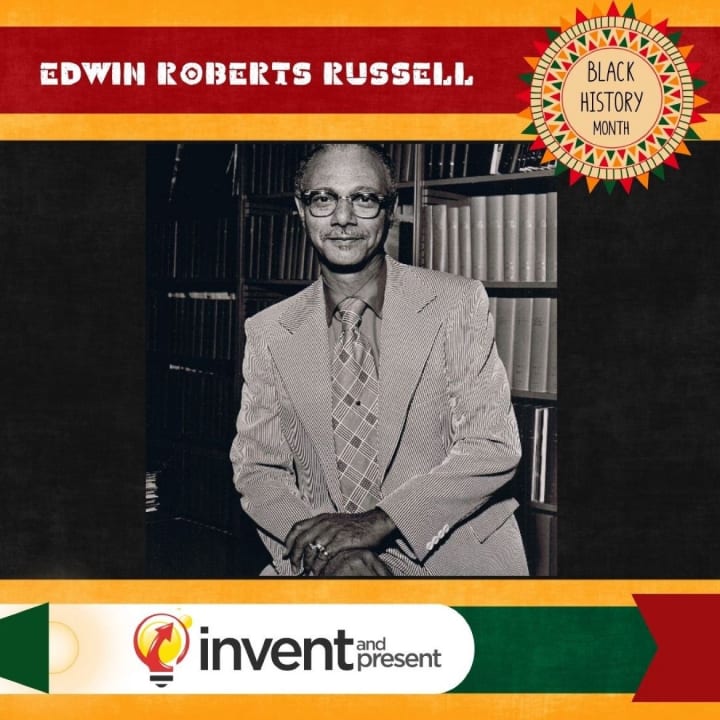
Edwin Roberts Russell: Edwin Roberts Russell
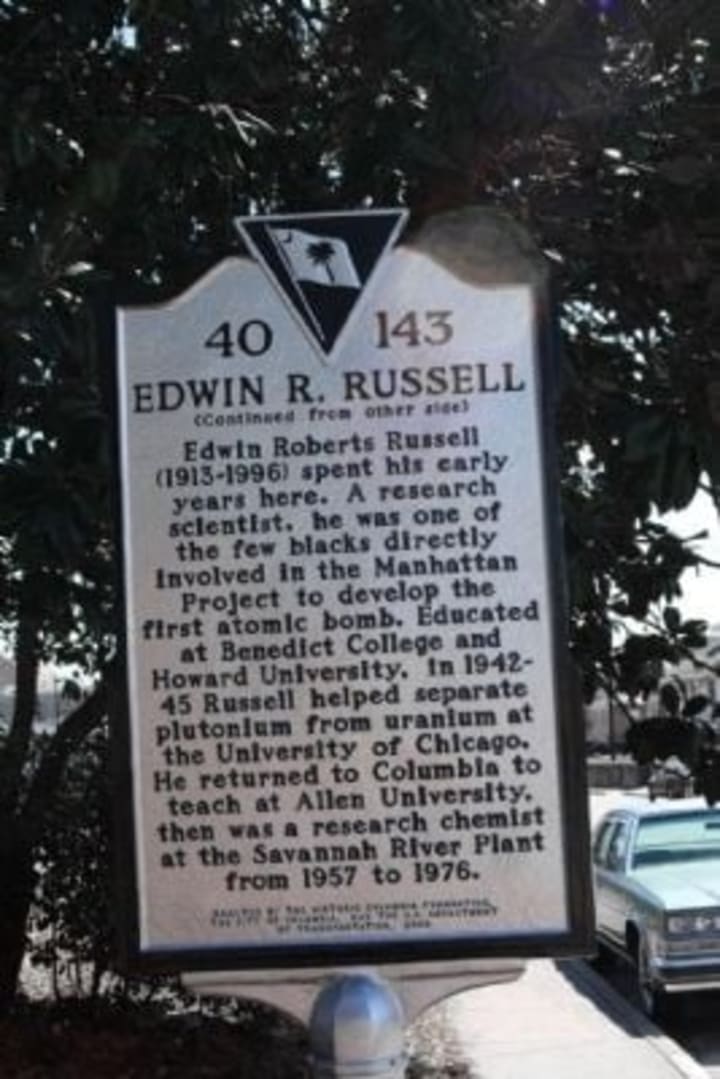
In the shadows of one of the most consequential scientific efforts in human history stood a man whose name remains far less known than the magnitude of his contributions. Edwin Roberts Russell (1913–1996) was not a general, politician, or battlefield commander — yet his work would shape the outcome of World War II and alter the global landscape for generations.
Russell’s journey into the heart of nuclear science began long before the world understood the power contained in the nucleus of an atom. Born in 1913, he came of age during a period of rapid scientific discovery. Chemistry, at that time, was undergoing a quiet revolution, and Russell found himself drawn to the immense potential locked within the elements.
By the onset of World War II, his expertise placed him on the frontlines of an extraordinary and secret mission: the Manhattan Project.
The Collision of Science and World Conflict
When the United States mobilized its greatest scientific minds to develop the atomic bomb, the government created a network of research sites hidden behind code names and guarded by secrecy. One of those sites was the Metallurgical Laboratory at the University of Chicago, where Russell took his place among physicists, chemists, engineers, and mathematicians working tirelessly under immense pressure.
Their objective was unprecedented: to harness nuclear fission and create a weapon powerful enough to bring an end to the war.
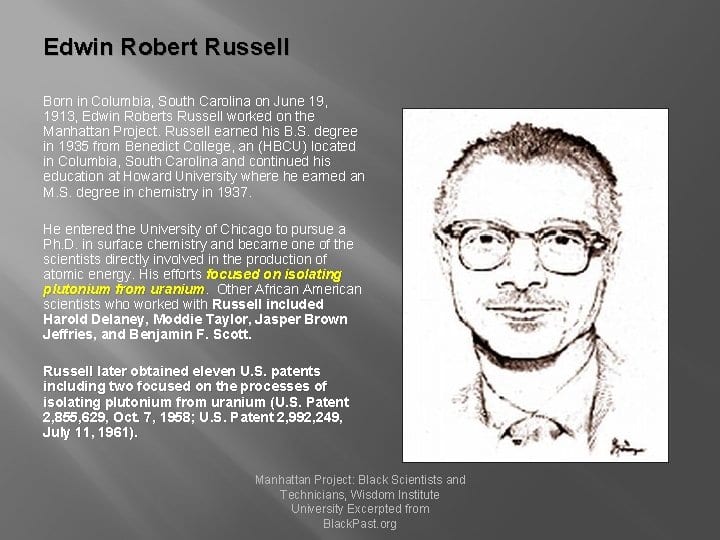
While many brilliant minds focused on physics, chain reactions, and reactor design, Russell turned his attention to an equally critical puzzle — how to separate plutonium from uranium in a way that was efficient, precise, and scalable to wartime needs. Without plutonium, one of the two atomic bomb designs would have been impossible.
The Chemistry Behind Power
Plutonium does not exist naturally in usable quantities. It must be created inside a nuclear reactor and then extracted from irradiated uranium fuel — a process involving staggering technical complexity.
This is where Russell thrived.
Through meticulous experimentation and chemical insight, he helped develop a method to isolate plutonium from uranium, making it possible to obtain the fissile material required for nuclear weapons. His contributions included advancements in ion‑exchange absorption, an approach that dramatically improved the efficiency and purity of plutonium separation.
This was not the work of explosions or dramatic breakthroughs. It was the work of quiet precision — experimenting, revising, measuring, and refining until the impossible became practical.
The outcome of that work ultimately contributed to the creation of the two bombs history knows as “Little Boy” and “Fat Man,” used in 1945 during the bombings of Hiroshima and Nagasaki. Russell’s methods made it possible to produce plutonium on the necessary scale, altering the course of the war and ushering in a nuclear age.
Eleven Patents and a Legacy Forged in Science
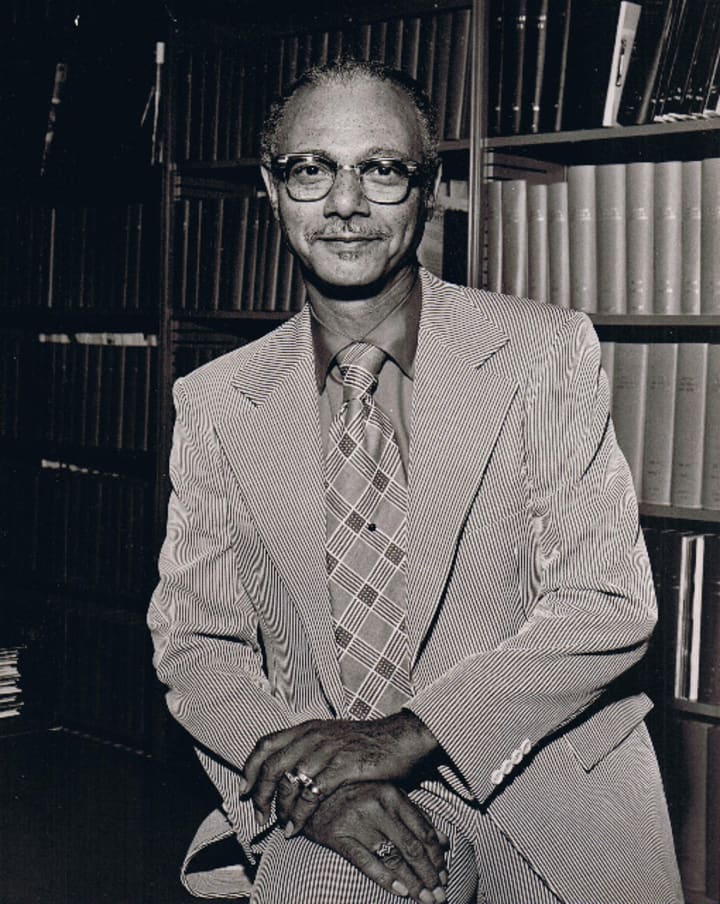
While the Manhattan Project was a monumental moment in his career, Russell’s impact did not end with the war. Throughout the rest of his life, he continued to push the boundaries of nuclear chemistry, securing eleven patents related to nuclear energy.
Some of these patents further refined the processes for plutonium separation, while others explored new directions in nuclear material handling and energy production. Collectively, his work helped lay the foundation for the development of peaceful nuclear energy and advanced the understanding of radioactive materials.
Russell was not a man who sought public recognition. Like many who worked in the classified world of wartime science, he carried his accomplishments quietly. But the echoes of his work remain woven into both history and modern technology.
Beyond the Lab: A Lasting Influence
After World War II, Edwin Roberts Russell continued contributing to the scientific community, influencing nuclear research well into the era of civilian atomic energy. As nuclear power plants emerged, medical isotopes advanced, and nuclear technology evolved, the principles and methods he helped pioneer continued to guide the industry.
Though the world may not speak his name often, the world we live in — shaped by nuclear deterrence, nuclear medicine, and nuclear energy — bears the imprint of the breakthroughs he helped achieve.
Russell’s life is a reminder that history is often moved forward not only by the people in the spotlight but by those working quietly in the controlled hum of laboratories, guided by curiosity, precision, and an unwavering commitment to solving the unsolvable.
Enjoyed this story?
🔔 Subscribe to my Vocal channel for more deeply researched historical features, science stories, and hidden biographies.
About the Creator
TREYTON SCOTT
Top 101 Black Inventors & African American’s Best Invention Ideas that Changed The World. This post lists the top 101 black inventors and African Americans’ best invention ideas that changed the world. Despite racial prejudice.
Keep reading
More stories from TREYTON SCOTT and writers in Chapters and other communities.
The Future of Coding and AI
In the ever-evolving world of technology, the future of coding is undergoing a profound transformation driven by the rapid rise of artificial intelligence (AI). What was once the exclusive domain of human programmers is now becoming a dynamic partnership between humans and intelligent machines. As AI continues to advance, it’s not replacing coders, it’s redefining what it means to code.
By Gus Woltmann5 days ago in Chapters
Staying sane in the insane world.
”It is no measure of health to be well adjusted to a profoundly sick society.” Jiddu Krishnamurti This quote has been one of my favourites since the moment I first laid my eyes on it. To me, it cuts right through the fog of the illusion of normality that permeates our lives. And since I am someone who has never felt (well) adjusted to this society, Krishnamurti’s words gifted me with the realisation that there isn’t anything inherently wrong with me.
By Eva Smitte6 days ago in Humans



Comments
There are no comments for this story
Be the first to respond and start the conversation.