
Bagram Air Base Targeted? Pakistan–Afghanistan Border War Intensifies
Conflicting claims emerge as both sides report heavy losses and destruction of checkpoints and military assets.

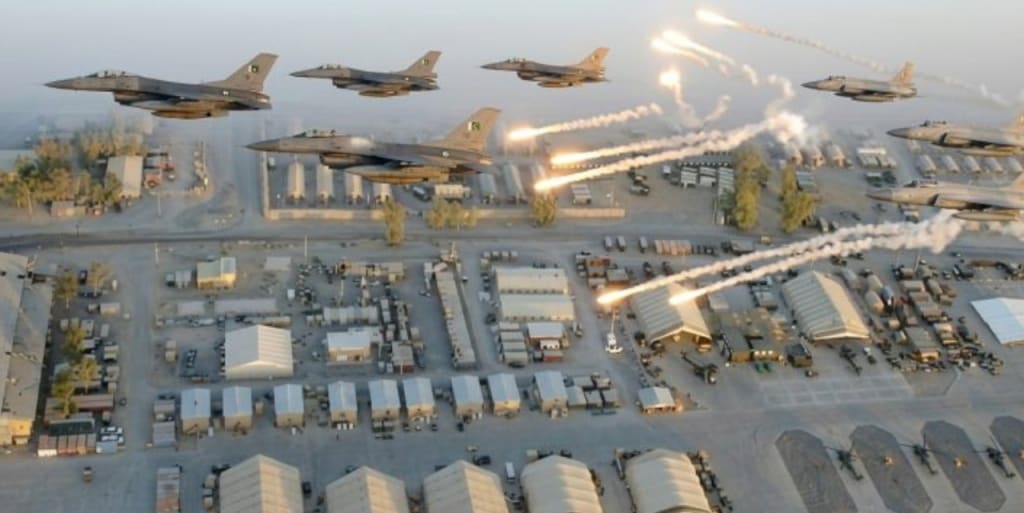
Clashes between Pakistan and the Taliban in Afghanistan have entered their sixth day, during which Pakistan has claimed to have carried out airstrikes on 56 locations inside the neighboring country. Meanwhile, the Afghan Taliban claim they have foiled an operation targeting Bagram Air Base.
Although Pakistani authorities have not confirmed targeting Bagram Air Base, Afghan Ministry of Defense spokesperson Enayat Khwarazmi said in a press conference that Bagram Air Base was attacked but there were no casualties.
Pakistan has claimed that, in addition to “terrorist hideouts,” it has targeted military installations such as weapons depots and battalion headquarters inside Afghanistan.
In a message on Tuesday, Pakistan’s Information Minister Attaullah Tarar claimed that during the six days of clashes, 464 Afghan Taliban personnel have been killed, 188 checkpoints destroyed, 31 posts captured, and 192 tanks, armored vehicles, and artillery guns destroyed.
On the other hand, Afghanistan’s Ministry of Defense has claimed that 100 Pakistani security personnel were killed in cross-border attacks and that 25 checkpoints were captured. It has also claimed to have carried out drone strikes inside Pakistan.
The claims made by both sides cannot be independently verified. However, some images and videos circulating on social media show damage to civilians living in border areas.
So far, neither Pakistan nor the Afghan Taliban have indicated a willingness to resume negotiations to halt the ongoing operations against each other.
Analysts believe that while U.S. and Israeli air operations are ongoing in Iran, Pakistan also appears to be seeking to achieve certain objectives inside Afghanistan.
It is worth noting that Pakistan accuses the Afghan Taliban government of supporting militant groups, which the Taliban deny, describing attacks in Pakistan as its internal matter. Pakistan maintains that militants cross into its territory from Afghanistan to carry out attacks and that Afghan authorities should stop them. Afghan officials deny this and say they do not allow their soil to be used against any country.
How much damage has occurred in Pakistan and Afghanistan during the clashes?
At the outset of the six-day clashes, Pakistan and the Afghan Taliban were claiming attacks on each other’s border posts, while Pakistan also claimed to have carried out air operations against militants inside Afghanistan.
However, this marks the first time in recent history that Pakistan has attacked military installations of the interim government inside Afghanistan.
The Afghan Ministry of Defense claimed it thwarted an attack on Bagram Air Base and said there were no casualties.
On Tuesday, Pakistan’s Information Minister Attaullah Tarar said that the Afghan Taliban attacked 16 locations in northern Balochistan, including Qila Saifullah, Nushki, and Chaman. Pakistani security forces reportedly repelled the attacks, killing 27 Taliban fighters, while one Frontier Corps soldier was killed.
He added that attacks by Afghan Taliban in various locations in Khyber Pakhtunkhwa were also repelled, with 40 Afghan Taliban fighters killed.
Similarly, Afghanistan’s Ministry of Defense said it carried out drone strikes on certain military installations in major Pakistani cities, though it reported no casualties or material damage.
The Taliban’s deputy spokesperson, Hamdullah Fitrat, said during a press conference that Pakistan had conducted airstrikes in Paktika, Paktia, Khost, Kabul, Nangarhar, Kunar, and Kandahar. According to him, 110 civilians were killed and 123 injured in these strikes, including women and children. He added that more than 350 homes were partially or completely destroyed and 8,400 families were displaced.
Pakistan’s Deputy Prime Minister and Foreign Minister Ishaq Dar said on Tuesday that Pakistan had no option but to launch operations inside Afghanistan, claiming that this directive had come from the United States.
He said during a press conference that intelligence-based airstrikes were carried out on military installations on Afghan soil.
According to him, 12 Pakistani soldiers have been killed, 27 injured, and one is missing in attacks from the Afghan side.
How long will attacks on military targets continue?
A few days ago, the spokesperson for Pakistan’s Prime Minister, Musharraf Zaidi, said that operations in Afghanistan would continue until the Taliban sever ties with militant groups and take action against them.
Speaking at a press conference in Kabul, Taliban Ministry of Defense spokesperson Enayatullah Khwarazmi said Afghanistan has the strength and capability to continue the war against the Pakistani military.
Khwarazmi said Afghanistan reserves the right to defend its sovereignty and would give a “strong response” to any further action.
During the press conference, Afghan officials mentioned retaliatory actions but also said that “the doors to dialogue are not closed” if serious diplomatic efforts are made to reduce tensions.
The clashes between Pakistan and Afghanistan began at a time when the United States and Israel have attacked Iran, and Iran has responded by targeting U.S. installations in the region.
Pakistan has, for the first time in recent history, directly targeted military installations inside Afghanistan.
Senior journalist and analyst Talat Hussain believes Pakistan is targeting military objectives that may be used to support militants.
In a message on X, he wrote that Islamabad claims these locations have been used to train suicide bombers. According to him, capturing strategic checkpoints inside Afghanistan near the border aims to create a buffer zone to monitor infiltration.
He said the objective is also to send a message to the Afghan Taliban leadership to reconsider its policies.
Senior analyst and researcher Abdul Sayed said that Pakistan targeting Afghan Taliban military centers rather than Pakistani Taliban suggests that this time the attacks on Afghanistan are part of a long-term plan.
According to him, the aim is to weaken Taliban forces through sustained attacks and force them to accept Pakistan’s demands.
However, he believes the attacks do not appear to have had much impact on the Afghan Taliban, as their media statements suggest they are preparing supporters for a prolonged war with Pakistan.
Last October, when clashes began between Pakistan and Afghanistan, Qatar, Turkey, and Saudi Arabia helped persuade both countries to agree to a ceasefire.
During the current tensions while U.S. and Israeli attacks on Iran and Iran’s retaliatory actions dominate regional developments—the Pakistan-Afghanistan clashes are receiving relatively little global attention.
Analyst Abdul Sayed said the Afghan Taliban, having been a guerrilla force and lacking the military capability required to counter Pakistan’s airstrikes, are responding with guerrilla-style attacks to demonstrate their military strength.
He said this is why they are attempting nighttime attacks on Pakistani security posts near the Durand Line to destroy them and inflict casualties, as seen in recent attacks from southern Afghanistan’s Kandahar and Zabul provinces.
He noted that this time Afghan Taliban forces, rather than the Tehreek-e-Taliban Pakistan (TTP), are being targeted. It appears that concerns about U.S.-supplied weapons remaining in Afghanistan are now driving efforts to eliminate that arsenal, possibly with U.S. consent, as such weapons could not otherwise be neutralized.
About the Creator
Keep reading
More stories from Real content and writers in Chapters and other communities.
Will Russia and China Support Iran Against the US and Israel?
Britain has allowed the United States to use its airbases in connection with the ongoing attacks against Iran, sparking debate over what kind of support Tehran might receive from its allied countries.
By Real contentabout 17 hours ago in Chapters
A Powerful, Personal Review of Kikoff
👉👉👉FOR MORE INFROMATION CLICK HERE Building credit today isn’t just about improving a number—it's about reshaping your financial future, increasing your independence, and opening doors that were once closed. Many people want better credit but don’t know where to begin, and traditional systems are often designed to make the process confusing, slow, or expensive. That’s where Kikoff comes in, and why I personally believe it stands out as one of the most effective, accessible, and stress‑free credit‑building solutions available.
By Organic Products about 23 hours ago in Chapters
Cassie and Johnny
I’m the kind of dame you notice. I’m no femme fatale, but you can’t ignore me, at least not until I warn you about what’s coming, then everybody ignores me. Hell, they usually blame me afterwards and give Johnny all the credit for saving the day, but my Johnny couldn’t save a seat at the movies without my help. Sure, he’s brawny, but brainy? Not so much. Like that time I asked him to spot me five bucks, and he said he didn’t see it anywhere on me, and believe you me, he looked but good.
By Harper Lewis5 days ago in Critique


Comments
There are no comments for this story
Be the first to respond and start the conversation.