
How AI-Powered Design Is Changing Digital Experience Creation
The shift from static templates to adaptive interfaces in modern software.

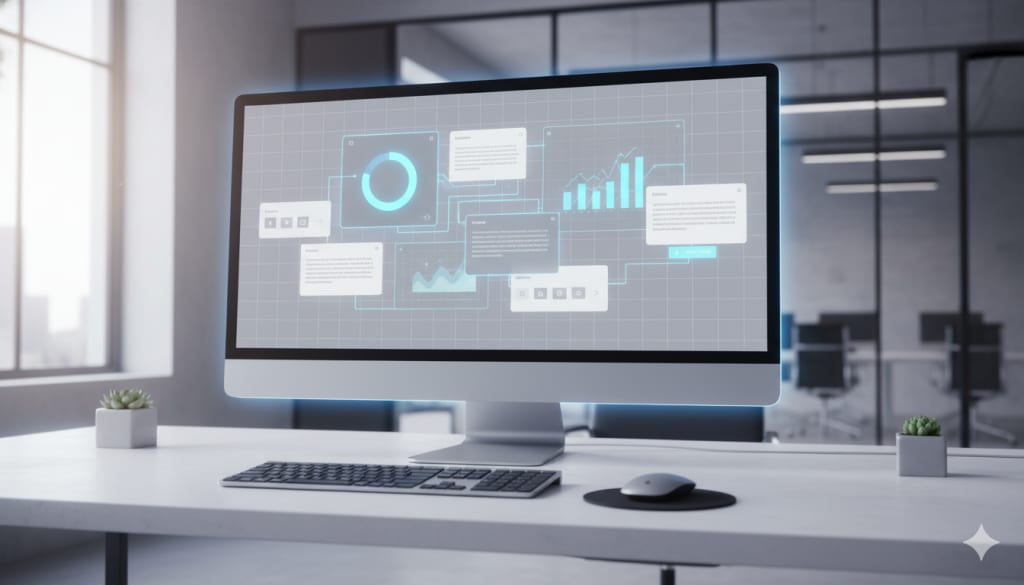
Software design traditionally required human designers to manually draw every screen. A team created fixed layouts and navigation paths. Every user saw the exact same interface, regardless of their specific goals. This approach is inefficient for complex applications. Today, AI-powered design alters this entire process. It introduces algorithms that assemble interfaces dynamically. The software builds the screen based on the specific needs of the person using it in real time.
The Shift from Static to Dynamic Interfaces
In the past, digital experience design relied entirely on static wireframes. A designer anticipated the average user's needs and built a generalized layout. Now, artificial intelligence models process real-time user data to adjust the screen.
If a user struggles to read small text, the AI detects the hesitation and the device's distance from the user's face. It automatically increases the font size. If a user frequently accesses a specific reporting dashboard, the AI moves that dashboard to the home screen. The interface adapts to the individual. It learns patterns and rearranges digital elements to provide the fastest route to task completion.
Automating the Production Process
The production phase of design involves many repetitive tasks. Designers spend hours resizing images, adjusting padding, and checking color contrast. AI-powered design tools automate these actions.
A designer defines the core brand guidelines, including typography and primary colors. The AI then generates hundreds of layout variations within those strict parameters. The human designer reviews the options and selects the most effective one. This division of labor speeds up software development. It allows humans to focus on user research and cognitive psychology instead of pixel alignment.
AI tools also handle accessibility compliance directly during the design phase. They scan layouts to ensure color contrast meets legal standards. They automatically generate descriptive text for images. This guarantees that visually impaired users can navigate the software using screen readers without the development team writing manual descriptions.
Hyper-Personalization and Context
This automation enables a true AI-powered digital experience. Consider an online grocery application. A traditional application displays the same weekly specials to everyone. An AI-driven application analyzes a user's past purchases and current context.
It detects that the user buys vegan products every Tuesday. On Tuesday morning, the application generates a custom layout highlighting new vegan items. It removes meat promotions from the screen entirely. This reduces visual clutter. It saves the user time. The technology serves the human by removing irrelevant information.
Another example occurs in enterprise software. A financial analyst and a human resources manager log into the same corporate portal. The analyst sees charts and raw data feeds. The HR manager sees employee leave requests and payroll summaries. The AI-powered design engine constructs two completely different environments from the same central database. It evaluates the user's role and immediately presents the necessary tools.
Continuous Iteration Through Data
Traditional software undergoes redesigns every few years. The company collects user feedback, builds a new version, and releases a massive update. AI-powered systems iterate continuously.
The software runs performance tests in the background automatically. It presents two different button placements to different users. It measures which placement results in faster task completion. It then deploys the winning design to all users. This process happens daily. The interface improves itself through direct observation of user behavior. The design team oversees the logic of the tests, but the AI handles the execution and deployment.
The Role of the Specialized Agency
Implementing these adaptive systems requires complex data engineering. A standard graphic design firm cannot build them. Enterprises now partner with a specialized AI-powered design company. These firms connect user databases to generative design algorithms safely.
Companies like ViitorCloud are helping businesses solve this problem by integrating AI directly into their digital experience solutions. They build the infrastructure that allows the interface to learn and adapt without constant human coding. They ensure the data flows securely from the database to the visual interface in milliseconds.
Reducing Cognitive Load for Humans
Technology often creates frustration. Complex menus hide important functions. Users spend minutes searching for a simple account setting. AI-powered design directly addresses this frustration. It anticipates the user's objective.
According to research by the Nielsen Norman Group, AI introduces an intent-based interaction paradigm. Users state their goal, and the system configures the optimal interface to achieve it. This replaces the old command-based system, where users had to click through multiple menus to find a specific function.
When a user opens a banking application after a missed payment, the AI displays the payment resolution screen first. The human user avoids clicking through five different menus while stressed. The software accommodates the human's immediate situation.
The creation of digital products relies on data and continuous adaptation. AI-powered design removes the limitations of static templates. It provides a personalized, efficient environment for every user. Businesses that adopt these AI-powered digital experience solutions provide better service. They eliminate friction, respect the user's time, and deliver exact outcomes.
About the Creator
ViitorCloud Technologies
As a leading software development company, we’ve empowered 500+ startups, SMBs, and enterprises to transform their operations. Upgrade your business with our AI-First Software and Platforms that automate and scale, keeping you future-ready.
Keep reading
More stories from ViitorCloud Technologies and writers in 01 and other communities.
How AI-Powered Digital Experience Solutions are Redefining Customer Journeys in 2026
In 2024, the digital customer journey was a series of clicks. A user visited a website, navigated a menu, applied a filter, and scrolled through results. In 2026, the journey has changed. The "click" is dying. It is being replaced by intent.
By ViitorCloud Technologies4 days ago in 01
How to Hire a Mobile App Developer in St. Louis 2026
The regional tech landscape has shifted significantly. The decision to hire a mobile app developer in St. Louis 2026 is now a strategic choice. St. Louis has evolved from a traditional manufacturing hub. It is now a center for agtech and geospatial technology. Financial services also drive the local economy forward.
By Del Rosarioa day ago in 01
Reducing AI Integration Failures by 40% With the Right Generative AI Consulting Partner
In the rush to adopt cutting-edge technologies, many organizations have jumped into artificial intelligence projects without a solid strategy, experienced guidance, or realistic expectations. As a result, a growing number of businesses report stalled initiatives, failed integrations, or tools that never deliver meaningful ROI. But when organizations align with the right generative ai consulting services, the narrative changes — often dramatically. With expert support, companies can reduce AI integration failures by up to 40% and unlock the full potential of intelligent systems.
By Steve Waugh7 days ago in 01


Comments
There are no comments for this story
Be the first to respond and start the conversation.